Categories
Vilchis Blogs

Tree Trimming Cost in Georgia: What to Budget in 2026

Tree Trimming Cost in Georgia: What to Budget in 2026

If you are wondering how much does tree trimming cost in Georgia, you are not alone. It is one of the most common questions homeowners across metro Atlanta and North Georgia ask before calling a tree service company. The answer depends on tree height, species, access conditions, and how much deadwood has accumulated.

This guide breaks down tree trimming prices for 2026 so you can plan your budget with confidence.

  • Average Tree Trimming Cost by Size

    Tree size is the single biggest factor determining what you will pay. Here is what Georgia homeowners can expect in 2026:

    Small Trees (Under 25 Feet)

    Typical cost: $150 to $400

    This includes ornamental trees like dogwoods, crepe myrtles, Japanese maples, and young hardwoods. Most small tree trimming jobs take one to two hours with a two-person crew.

    Medium Trees (25 to 50 Feet)

    Typical cost: $400 to $800

    Medium trees include mature red maples, sweetgums, Bradford pears, and mid-size oaks. These jobs require more equipment and sometimes a bucket truck. Expect two to four hours depending on canopy spread and branch density.

Large Trees (50 Feet and Above)

Typical cost: $800 to $1,500+

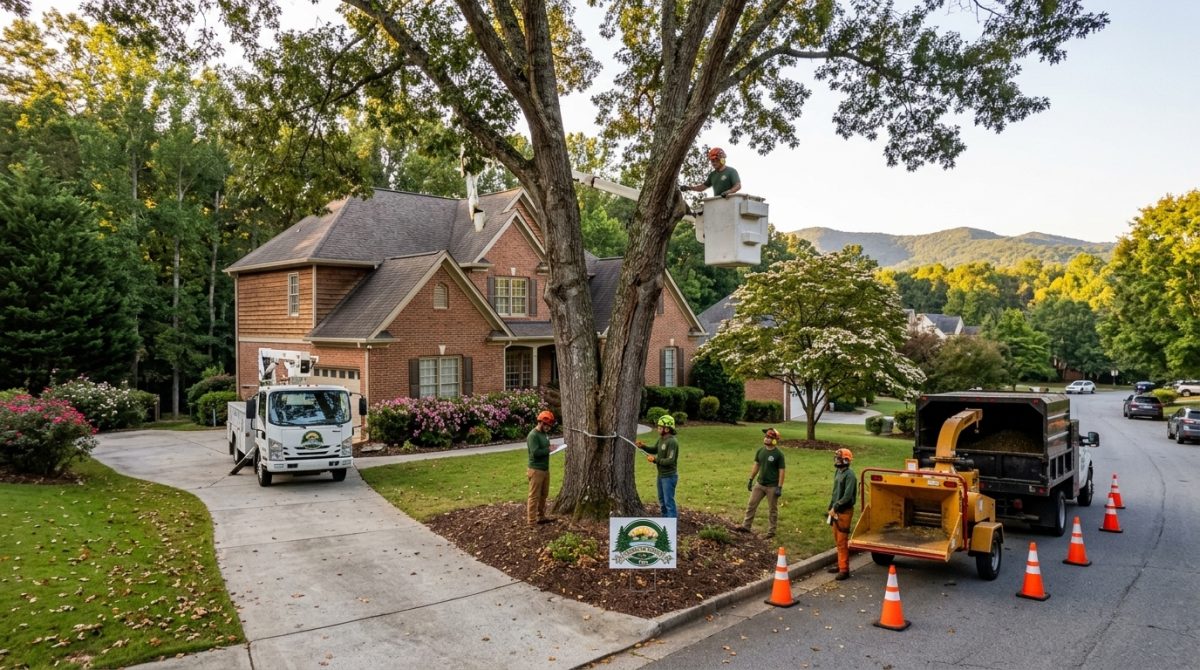
Large trees like mature white oaks, tulip poplars, and tall loblolly pines demand heavy equipment, skilled climbing, and careful planning. These jobs run four to eight hours. If the canopy overhangs a roof, power lines, or a neighbor’s property, expect to land at the higher end of this range.

For trees that have grown beyond the point where trimming makes financial sense, removal may be the better investment. Our tree removal cost guide covers those numbers in detail.

Factors That Affect Tree Trimming Prices

Knowing the size-based averages is a starting point, but several other factors determine your final quote.

Tree Height and Canopy Spread

A 40-foot oak with a 50-foot canopy spread costs more to trim than a 40-foot pine with a narrow profile. Wide canopies require more cuts, more time on the clock, and more debris to haul away.

Species and Wood Hardness

Georgia’s native hardwoods (oaks, hickories, black walnuts) have dense wood that dulls chain and blade edges faster. Softwoods like pine and cedar trim faster. Species with aggressive growth patterns, like water oaks and sweetgums, often need more extensive crown reduction.

Access and Obstacles

If your tree sits in a tight backyard with no gate access, crews may need to carry everything by hand, adding labor hours. Trees near power lines in neighborhoods along Canton Road in Marietta or residential streets in Acworth require coordination and additional safety measures.

Number of Trees

When you bundle multiple trees in one service call, the per-tree cost drops because setup and cleanup happen once. A property with five medium trees might run $2,500 to $3,500 total rather than $800 each if quoted individually.

Deadwood Percentage

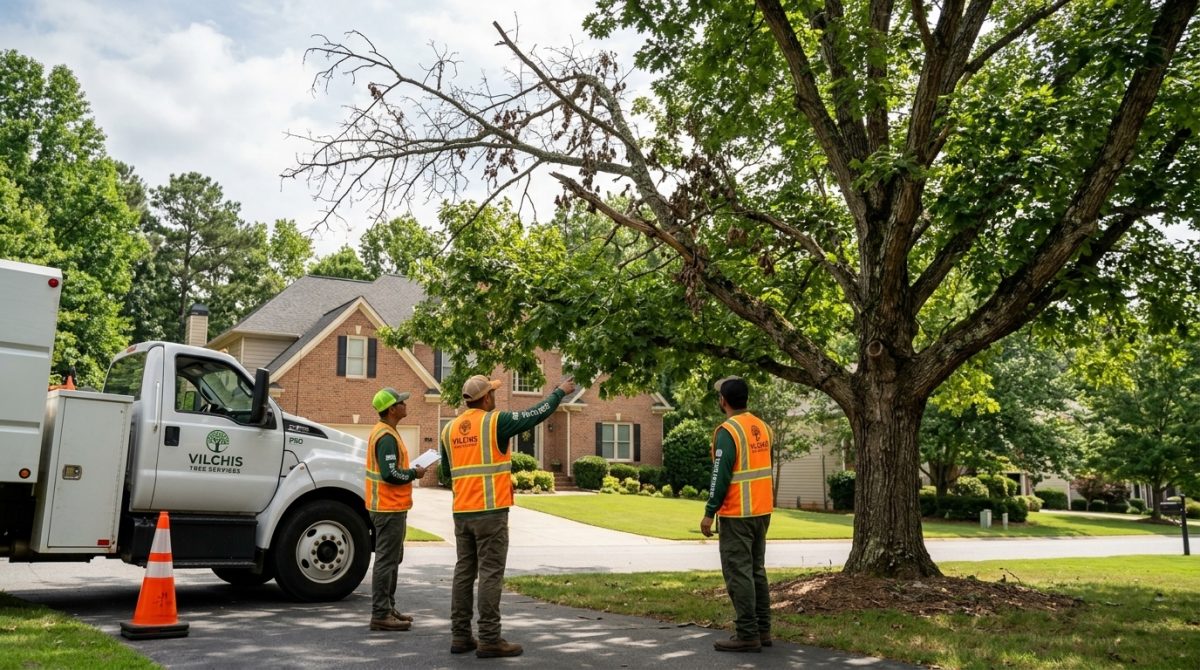
A healthy tree that just needs shaping costs less than one carrying 30% deadwood through the canopy. Deadwood removal requires more careful cuts and more time identifying hazard branches. Trees that survived Georgia ice storms or drought years often carry dead material that should come out before it falls.

Emergency vs. Scheduled Service

Storm damage calls after Georgia’s spring thunderstorms or summer hurricanes come with premium pricing. Scheduling your trimming during a slower season saves money and gives you more control over timing.

Tree Trimming Cost by Georgia Metro Area

Pricing varies across the region based on cost of living, competition, and travel distances.


Area

Small Tree

Medium Tree

Large Tree

Dallas / Paulding County

$150 – $350

$400 – $750

$800 – $1,400

Marietta / East Cobb

$175 – $400

$450 – $850

$900 – $1,600

Kennesaw / Acworth

$150 – $375

$400 – $800

$850 – $1,500

Douglasville / West Cobb

$150 – $350

$375 – $750

$800 – $1,400

Powder Springs / Austell

$150 – $350

$400 – $775

$825 – $1,450


Homeowners closer to Atlanta proper (Buckhead, Sandy Springs, Dunwoody) often see prices 10 to 20 percent higher due to traffic, tighter lot sizes, and permit requirements.

Vilchis Tree Services Pro serves all of these areas from our Dallas, GA headquarters. We offer tree trimming in Marietta, Acworth, Kennesaw, and throughout the metro Atlanta region.

When Trimming Is More Cost-Effective Than Removal

Not every overgrown tree needs to come down. In many cases, proper trimming and pruning saves you thousands compared to full removal and stump grinding. Here is when trimming makes financial sense:

  • The tree is structurally sound with a healthy trunk and root system
  • Less than 25% of the canopy is dead or damaged
  • The tree adds property value, shade, or privacy screening
  • Proper pruning can redirect growth away from structures or power lines

On the other hand, if more than 50% of the crown is dead, the trunk shows large cavities or fungal growth, or roots are lifting your driveway, removal is the smarter long-term investment. Georgia’s red clay soil makes root problems worse during heavy rain seasons, and a compromised tree near your home is a liability during summer storms.

Seasonal Pricing Differences

Tree trimming prices in Georgia fluctuate throughout the year based on demand.

Winter (December through February): The slowest season for most tree companies. Deciduous trees are dormant with no leaves, making branch structure easy to see. Many homeowners find lower prices during this window.

Spring (March through May): Demand picks up as homeowners notice overgrowth. This is also storm season in Georgia, which fills schedules with emergency calls. Booking in early March before the rush gives you better options.

Summer (June through August): Peak season. Full canopies mean more debris, heat slows crew productivity, and thunderstorm damage keeps companies booked. Expect the highest prices and longest wait times.

Fall (September through November): A second quiet window opens after summer storms pass but before holiday schedules tighten. An excellent time to schedule trimming before winter dormancy.

Our article on how often trees should be trimmed in Georgia covers recommended schedules by species and property type.

How to Budget for Recurring Tree Maintenance

Most trees benefit from professional trimming every three to five years. Budgeting a fixed amount annually keeps your property safe and your trees healthy.

A practical approach for Georgia homeowners:

  1. Get a full property assessment. Know how many trees you have, their sizes, and their current condition.
  2. Create a rotation schedule. Rotate through your property so each tree gets attention on its ideal cycle rather than trimming everything at once.
  3. Set aside $500 to $1,500 annually. For a typical lot in Cobb or Paulding County with six to ten mature trees, this covers one to three trees per year on rotation.

Combine services when possible. Ask about trimming nearby trees the same day for a bundled rate.

Frequently Asked Questions

What is a reasonable price for tree trimming in Georgia?

A reasonable price depends on tree size. Small trees under 25 feet run $150 to $400. Medium trees (25 to 50 feet) typically cost $400 to $800. Large trees over 50 feet range from $800 to $1,500 or more. Quotes significantly below these ranges may indicate unlicensed or uninsured operators, which creates liability risk for the homeowner.

How much does tree trimming cost for trees near power lines?

Trees near power lines require additional safety precautions and sometimes coordination with Georgia Power. Expect to pay 20 to 40 percent more than standard rates for the same size tree. In some cases, Georgia Power will trim branches within their easement at no cost, but only the portions directly threatening the lines.

Can I save money by trimming trees myself?

For small ornamental trees under 15 feet, basic pruning with hand tools is manageable for homeowners. However, any tree requiring a ladder, chainsaw, or proximity to structures and power lines should be left to professionals. Georgia law holds homeowners liable for damage caused by improper tree work that affects neighboring properties.

Does the time of year affect tree trimming cost?

Yes. Winter months (December through February) often bring lower prices because demand drops and dormant trees are easier to prune. Summer is peak season with the highest prices and longest wait times. Booking during shoulder seasons like early spring or mid-fall gives you a balance of availability and fair pricing.

Get Your Free Tree Trimming Estimate

Vilchis Tree Services Pro has served homeowners across metro Atlanta and North Georgia since 2013. We provide honest, detailed estimates for every job.

Call us today at (470) 914-2221 for a free on-site estimate. We will assess your trees, explain what work is needed, and give you a clear price before any work begins.


Categories
Kennesaw

Tree Removal in Kennesaw, GA: A Local Guide for Homeowners

Tree Removal in Kennesaw, GA: A Local Guide for Homeowners

Kennesaw sits in one of Cobb County’s most tree-rich corridors. From the hardwood canopy surrounding Kennesaw Mountain National Battlefield Park to the towering oaks lining Barrett Parkway, trees define this city’s character. But they also create real challenges for homeowners: root systems cracking driveways, dead limbs threatening rooflines, and storm-weakened pines leaning toward power lines.

If you own property in Kennesaw and a tree on your lot is causing concern, this guide covers what you need to know about tree removal in Kennesaw before calling a professional.

Why Kennesaw Properties Face Unique Tree Challenges

Kennesaw’s geography and development history create conditions that send homeowners looking for tree removal more often than in many surrounding cities.

Kennesaw Mountain National Battlefield Park Proximity

Properties bordering the Battlefield Park boundary face a specific situation. The park’s 2,965 acres of protected forest create a dense tree line that doesn’t stop at property fences. Seeds from park hardwoods and pines establish themselves in adjacent yards, and decades of growth produce trees that now interfere with structures, fences, and sight lines.

Important distinction: trees on National Park Service land are federally protected. Trees on your private property, even if they grew from park seeds or their canopy extends over park land, are your responsibility. A qualified tree service in Kennesaw GA can assess which trees sit on your property and advise on removal options.

Barrett Parkway Corridor

The Barrett Parkway commercial corridor features some of the largest oaks in the city. Many of these trees predate the shopping centers and office parks built around them. Commercial property owners along this stretch regularly need removal when root systems buckle parking lots, canopies block signage, or aging specimens become liability risks during storms.

Residential neighborhoods just off Barrett Parkway, including those near Town Center Mall, inherited many of these same mature oaks when lots were subdivided. A 60-year-old water oak that was 30 feet from any structure in 1990 may now overhang a garage addition or second-story deck.

Established Neighborhoods vs. Newer Subdivisions

Kennesaw’s older neighborhoods, particularly those near Legacy Park and the Cobb County International Park area, were developed around existing trees. Builders in the 1970s and 1980s often preserved large hardwoods as selling points. Those trees are now 50 to 80 years old, and many have reached the end of their healthy lifespan.

Newer subdivisions in western Kennesaw face different problems. Builders planted fast-growing species like Bradford pears and Leyland cypress for quick curb appeal. These species are now notorious for structural failure: Bradford pears split at the crotch under ice loads, and Leyland cypress develops fungal disease that kills them from the inside out.

Common Problem Species in Kennesaw

Based on the work Vilchis Tree Services Pro performs across Kennesaw and surrounding areas, these species account for the majority of removal calls:

Water Oaks

Water oaks grow fast and large in Kennesaw’s red clay soil, but their wood is brittle compared to white oaks or red oaks. They’re prone to internal decay that isn’t visible from outside. A water oak that looks healthy can be hollow through 60% of its trunk. When one of these fails in a storm, it typically takes out whatever is beneath it: roof sections, vehicles, fences, or power lines.

Bradford Pears

Cobb County is full of Bradford pears planted in the 1990s and early 2000s. They were marketed as ornamental, fast-growing shade trees. The problem is their branch structure: multiple leaders emerge from a single point, creating weak attachment points. Once they reach 20 to 25 years old, major limbs begin splitting. Many Kennesaw homeowners have watched a Bradford pear go from healthy-looking to split in half during a single thunderstorm.

Leaning Pines After Storms

Loblolly pines are everywhere in Kennesaw. Their shallow root plates sit in Georgia’s red clay, which becomes slick when saturated. After heavy rain events or tropical storm remnants (which hit North Georgia several times per year), pines develop root plate lift. The tree doesn’t fall immediately. Instead, it leans 10 to 15 degrees and stays there, held by remaining roots and neighboring trees. These leaning pines are among the most dangerous removal situations because they’re under tension and can release unpredictably.

Cobb County Permit Requirements for Kennesaw Tree Removal

Kennesaw falls under Cobb County’s tree ordinance, and the rules depend on your property’s zoning and the size of the tree.

Key points for Kennesaw homeowners:

  • Trees with a trunk diameter of 6 inches or greater (measured at 4.5 feet above ground, called DBH) generally require a permit for removal on residentially zoned property.
  • Dead, dying, or hazardous trees can qualify for expedited permits. Documentation from a certified arborist supports your application.
  • Properties in active development or with approved land disturbance permits follow separate commercial tree regulations.
  • Penalties for unpermitted removal of protected trees include fines and mandatory replanting requirements.

A professional tree service handles permit coordination as part of the removal process. Vilchis Tree Services Pro manages the permitting paperwork for Kennesaw removals so homeowners don’t have to navigate county offices themselves.

Typical Removal Scenarios on Kennesaw Properties

Every property is different, but certain scenarios repeat across Kennesaw neighborhoods:

Trees too close to structures: A tree planted (or self-seeded) 8 feet from a foundation 30 years ago now has a trunk 24 inches wide and roots pushing against the slab. Removal before foundation damage occurs is far less expensive than foundation repair plus removal later.

Storm damage with partial failure: Half the canopy came down in last night’s storm, but the trunk is still standing. The remaining structure is compromised and unstable. This requires prompt removal before additional failure occurs.

Root conflicts with hardscaping: Roots cracking driveways, lifting sidewalks, or invading sewer lines. Once root conflicts begin, they only worsen. Removal eliminates the ongoing damage source.

Canopy interference with solar panels or roofing: Trees that shade a roof create moisture retention that shortens shingle life. Homeowners replacing a roof often schedule removal at the same time to protect the new roofing investment.

For a breakdown of what these scenarios typically cost in the North Georgia market, see our tree removal cost guide for Georgia.

What to Expect from Professional Tree Removal in Kennesaw

Professional tree removal on a Kennesaw residential property typically follows this sequence:

  1. On-site assessment: The crew evaluates the tree’s condition, lean direction, proximity to structures, access for equipment, and any obstacles (power lines, fences, neighboring structures).
  1. Plan and equipment selection: Based on the assessment, the crew determines whether the tree can be felled in sections from a climb, requires a crane, or can be directionally felled if open space allows.
  2. Work zone preparation: Ground protection for lawns (especially important in Kennesaw’s clay soil, which ruts easily under equipment), neighbor notification if work happens near property lines, and coordination with utility companies if lines are involved.
  3. Removal execution: Sectional removal from top down is most common on Kennesaw residential lots because space is limited. Each section is rigged and lowered, not dropped.

Cleanup and stump decision: All debris is removed. The homeowner decides whether to grind the stump (most common) or leave it for later.

Frequently Asked Questions

Do I need a permit to remove a tree in my Kennesaw yard?

In most cases, yes. Cobb County requires permits for trees 6 inches DBH or larger on residential property. Dead or hazardous trees can qualify for expedited approval. Your tree service should handle permit coordination as part of the project.

How long does a typical Kennesaw tree removal take?

Most single-tree residential removals take half a day to a full day, depending on size, access, and proximity to structures. Large water oaks or pines near homes that require rigging and sectional removal may take a full day. Multi-tree projects may extend to two days.

Can I remove a tree that’s near the Kennesaw Mountain Battlefield Park boundary?

If the tree is on your private property, yes. The boundary is surveyed and recorded. Trees on park land are federally protected regardless of whether they affect your property. If you’re unsure where the boundary falls, a survey or consultation with a certified arborist can clarify.

What time of year is best for tree removal in Kennesaw?

Tree removal can be performed year-round in Kennesaw’s climate. Winter (December through February) is often preferred because deciduous trees have dropped their leaves, reducing weight and improving visibility for the crew. However, hazardous trees should be removed as soon as they’re identified, regardless of season. Waiting for a “better time” with a compromised tree is a risk that isn’t worth taking.

Schedule Your Kennesaw Tree Removal Assessment

Vilchis Tree Services Pro has served Kennesaw and the greater Cobb County area since 2013. Our crews work in Kennesaw neighborhoods weekly, from the older homes near Kennesaw Mountain to the newer developments off Jiles Road and Moon Station Road.

If you have a tree on your Kennesaw property that concerns you, whether it’s dead, leaning, too close to your home, or simply too large to manage safely, call us for an on-site assessment.

Call Vilchis Tree Services Pro today: (470) 914-2221

We’ll evaluate your tree, explain your options, provide a clear estimate, and handle Cobb County permitting if removal is the right call.

Categories
Acworth

Tree Removal in Acworth, GA: What Homeowners Should Know

Tree Removal in Acworth, GA: What Homeowners Should Know

Acworth sits in a unique position among North Georgia cities. Straddling the Cherokee County and Cobb County line, bordered by Lake Acworth and Lake Allatoona, and filled with mature tree canopy from decades of growth, the city presents specific challenges when a tree needs to come down. Whether you live in an older neighborhood near Downtown Acworth or a newer subdivision off Mars Hill Church Road, understanding the local factors that affect tree removal will help you make better decisions for your property. 

Vilchis Tree Services Pro has served Acworth homeowners since 2013, and we see the same issues come up year after year: lakefront trees threatening erosion, massive loblolly pines towering over rooflines, and dying hemlocks that pose a falling hazard. This guide covers what you need to know before scheduling a tree removal in Acworth.

Lakefront Properties: Lake Acworth and Lake Allatoona

Homes along Lake Acworth Drive and properties backing up to Lake Allatoona face a distinct set of tree removal concerns. Trees growing on sloped lakefront lots serve as natural erosion barriers, and removing them without a plan can destabilize the shoreline. Red clay soil, which dominates the ground composition throughout Cobb and Cherokee counties, is especially prone to washing away once root systems no longer hold it in place.

At the same time, overgrown trees on waterfront lots can block dock access, drop limbs onto boat lifts, and lean dangerously toward the water after storms. Dead trees along the shoreline often need priority removal because they can fall without warning during high winds off the lake.

If your property borders either lake, a tree removal plan should account for:

  • Erosion control measures before and after removal
  • Stump grinding depth (shallow grinding may be preferable near shorelines to preserve root structure)
  • Access logistics, since many lakefront lots have steep grades and limited equipment paths
  • Any Army Corps of Engineers regulations for properties on Lake Allatoona
  •  

Cherokee County vs. Cobb County: Two Sets of Rules

One of the things that makes tree service in Acworth GA different from neighboring cities is the county boundary. Acworth straddles both Cherokee County and Cobb County, and the regulations governing tree removal differ depending on which side of the line your property falls on.

Cobb County Tree Regulations

Properties in the Cobb County portion of Acworth generally fall under Cobb County’s tree preservation ordinance. For residential lots, you typically need a permit to remove trees above a certain diameter at breast height (DBH). The city of Acworth may also have additional overlay requirements depending on your zoning district, especially in the historic downtown area.

Cherokee County Tree Regulations

The Cherokee County side tends to have fewer restrictions on residential tree removal, though subdivisions with HOA covenants may impose their own rules. Newer developments near Mars Hill Church Road and along the Highway 92 corridor often have tree preservation easements written into their plats.

Before scheduling any removal, confirm which county your property is in and whether your neighborhood has HOA restrictions. Vilchis Tree Services Pro can help you determine what applies to your specific lot when we provide a free estimate in Acworth.

Common Species Requiring Removal in Acworth

The tree species growing in Acworth reflect the broader North Georgia Piedmont landscape, but a few stand out as the most frequent removal candidates.

Loblolly Pines

Loblolly pines dominate the Acworth canopy. They grow fast, often reaching 80 to 100 feet, and their shallow root plates make them vulnerable to toppling in storms. Neighborhoods near North Cobb High School and the Proctor Creek area have particularly dense stands of mature loblollies planted when those subdivisions were developed in the 1980s and 1990s. Many of these trees are now at the end of their healthy lifespan and show signs of pine beetle damage or crown dieback.

Sweetgums

Sweetgum trees are aggressive growers with invasive root systems. Their roots crack driveways, lift sidewalks, and infiltrate sewer lines. In older Acworth neighborhoods near Downtown and Main Street, sweetgums planted decades ago now cause significant hardscape damage. Removal often includes extensive stump grinding to address the lateral root spread.

Eastern Hemlocks

Acworth sits at the southern edge of the eastern hemlock’s range, and the woolly adelgid infestation has devastated these trees across North Georgia. Dying hemlocks become brittle quickly, making them unpredictable when they fall. If you have hemlocks on your property showing thinning needles or white cotton-like masses on the undersides of branches, removal sooner rather than later reduces risk.

Water Oaks

Water oaks grow rapidly but have a relatively short lifespan of 50 to 60 years. They are prone to interior rot that is not visible from the outside. Many water oaks in Acworth’s established neighborhoods are reaching that age, and what looks like a healthy tree can be hollow at the core.

Older Neighborhoods vs. Newer Subdivisions

Tree removal logistics vary significantly between Acworth’s established areas and its newer developments.

Downtown Acworth and surrounding streets: Homes near Main Street and the historic district often have large, mature trees growing close to structures. Tight lot lines, overhead power lines, and proximity to neighboring homes mean these removals frequently require sectional dismantling rather than felling. Access for heavy equipment can also be limited on narrow residential streets.

Mars Hill Church Road corridor and newer subdivisions: Properties in newer developments tend to have younger trees, but builders often left select large trees in place during construction. These “saved” trees sometimes decline after construction compacts their root zones. The good news is that newer subdivisions typically have wider streets and better equipment access.


Proctor Creek and Lake Acworth Drive areas: These properties often combine mature trees with sloped terrain and water proximity, creating the most complex removal scenarios in the city.

When to Schedule Tree Removal in Acworth

Timing matters for tree removal projects in Acworth. While emergency removals happen year-round (storm damage does not wait for convenient scheduling), planned removals benefit from seasonal timing.

Late fall through early spring (November to March) is generally the best window. Trees are dormant, the canopy is thinner, and the ground is typically drier. Dry ground matters in Acworth because saturated red clay becomes slippery and can make equipment access difficult on sloped lots.

Summer removals are common but come with challenges: heat stress on crews, active bird nesting (some species are protected), and afternoon thunderstorms that halt work.

For guidance on when trimming makes more sense than full removal, read our guide on when you should trim trees in Acworth, GA.

What Tree Removal Costs in Acworth

Removal costs in Acworth depend on the tree’s size, species, location, and access difficulty. A straightforward loblolly pine in an open backyard costs considerably less than a large oak overhanging a roofline on a lakefront slope. Stump grinding, debris hauling, and permit fees (if applicable) add to the total.

For current pricing ranges and the factors that affect your quote, see our Georgia tree removal cost guide.

Frequently Asked Questions

Do I need a permit to remove a tree in Acworth, GA?

It depends on which county your property is in and the size of the tree. Cobb County has a tree preservation ordinance that may require a permit for trees above a certain trunk diameter. Cherokee County has fewer residential restrictions, but HOA rules may still apply. The city of Acworth also has overlay requirements in certain zoning districts, particularly near the historic downtown area.

How long does a typical tree removal take in Acworth?

Most single-tree removals are completed in one day, often in just a few hours. Larger projects involving multiple trees or difficult access (steep lakefront lots, tight spaces near Downtown Acworth) may take a full day or extend into a second day. Stump grinding is sometimes scheduled as a separate visit.

What happens to the wood and debris after removal?

Vilchis Tree Services Pro removes all branches, limbs, and trunk sections from your property as part of the job. Wood chips from the chipper can be left on-site for mulch if you want them. For stump grinding, the grindings are used to fill the hole, and any excess is raked level.

Is winter or summer better for tree removal in Acworth?

Late fall through early spring is ideal for planned removals. Dormant trees are lighter without full leaf canopy, the ground is typically firmer, and scheduling availability tends to be better. However, dead or hazardous trees should be removed as soon as possible regardless of season. Storm-damaged trees are always treated as urgent.

Get a Free Tree Removal Estimate in Acworth

Vilchis Tree Services Pro serves all of Acworth, from lakefront homes on Lake Allatoona to neighborhoods near North Cobb High School and every street in between. With experience working in both the Cherokee County and Cobb County portions of the city since 2013, we understand the local conditions, regulations, and tree species that affect your property.

Call (470) 914-2221 for a free, no-obligation estimate on your tree removal project in Acworth, GA. We will assess the tree, explain your options, and provide straightforward pricing with no hidden fees.

Categories
Marietta

Stump Grinding in Marietta, GA: Cost, Process, and Local Considerations

Stump Grinding in Marietta, GA: Cost, Process, and Local Considerations

If you have a tree stump sitting in your Marietta yard, you already know it is more than an eyesore. Old stumps attract termites, create tripping hazards, and make mowing a chore. Whether you are dealing with a single pine stump in an East Cobb backyard or a row of hardwood stumps on a West Cobb property near Kennesaw Mountain, this guide covers everything Marietta homeowners need to know about stump grinding before scheduling the work.

How Stump Grinding Works

Stump grinding uses a specialized machine with a rotating carbide-tipped wheel that chips away the stump below grade level. Most residential stumps are ground 6 to 12 inches below the soil surface, which is deep enough to cover with topsoil, plant grass seed, or install landscaping.

The process is straightforward:

  1. The crew positions the grinder over the stump.
  2. The cutting wheel sweeps side to side, reducing the wood to small chips.
  3. Surface roots extending from the stump are ground down as well.
  4. The resulting wood chips and mulch fill the hole.

For a full walkthrough of each step, see our guide on what to expect during stump grinding.

Cobb County Requirements: Call 811 Before Grinding

Before any stump grinding work begins in Marietta, Georgia law requires a call to 811 (Georgia Utility Protection Center) at least 48 hours in advance. This free service sends utility locators to mark underground gas lines, water lines, fiber optic cables, and electrical conduits near the work area.

Marietta properties, especially those in older neighborhoods near Marietta Square, often have utility lines running in unexpected paths. Homes built in the 1950s and 1960s did not follow the same utility routing standards used today. Skipping this step is not just illegal: it is dangerous and can result in costly repairs.

When you hire Vilchis Tree Services Pro as your stump grinding company in Marietta, we handle the 811 call as part of our standard process so you do not have to worry about timing or coordination.

Hardwood vs. Pine Stumps: What Marietta Homeowners Should Know

Marietta’s tree canopy is a mix of Southern hardwoods and pines, and the type of stump on your property directly affects the grinding process.

Hardwood Stumps (Oak, Hickory, Maple)

Hardwood stumps are dense, heavy, and slow to grind. A 24-inch oak stump can take two to three times longer than a pine stump of the same diameter. The root systems on mature hardwoods spread wide and deep, often extending 10 to 15 feet from the trunk. East Cobb properties with large, established oaks frequently have multiple surface roots that also need grinding to restore a level yard.

Pine Stumps (Loblolly, Shortleaf, Virginia Pine)

Pine stumps are softer and grind faster. However, pine produces a significant volume of wood chips because the wood is less dense and shreds into larger pieces. The root spread on pines tends to stay closer to the surface, which is good news for grinding but means more visible roots to address. Georgia’s red clay soil makes pine roots particularly noticeable since they tend to push up through the thin topsoil layer.

Cost Factors for Stump Grinding in Marietta

Several variables determine the cost of stump grinding on a Marietta property. Here are the main factors:

Stump diameter: This is the primary cost driver. Larger stumps require more grinding time and put more wear on the equipment. A 12-inch stump costs significantly less than a 36-inch stump.

Number of stumps: Multiple stumps on one property bring the per-stump price down because the crew is already set up and on site. East Cobb homeowners with larger lots (half-acre or more) often have three to five stumps from storm damage or planned removals.

Wood density: As noted above, hardwood stumps cost more than pine stumps due to the extra time and equipment wear involved.

Root grinding: If visible surface roots need grinding beyond the main stump, this adds time and cost.

Access and terrain: This is a major factor in Marietta specifically, and deserves its own section below.

For detailed pricing information, visit our Marietta tree services page where we outline service options for the area.

Neighborhood Access Challenges in Marietta

Marietta’s neighborhoods vary dramatically in layout, and access is one of the biggest variables in stump grinding work.

Older Neighborhoods Near Marietta Square

Homes in the historic districts near the Square, along Whitlock Avenue, Church Street, and the surrounding blocks, were built on narrow lots with short driveways and mature trees planted close to the home. Getting a full-size stump grinder through a 36-inch gate or down a narrow side yard requires either a compact machine or partial fence removal. These jobs take longer due to equipment maneuvering, but the work is absolutely doable with the right setup.

East Cobb Subdivisions

East Cobb neighborhoods like Walton and Indian Hills feature larger lots with wide driveways and open backyards. Access is rarely an issue here. The challenge in East Cobb is volume: large properties often have multiple stumps from mature trees that came down in storms or were removed for construction.

West Cobb Near Kennesaw Mountain

Properties in West Cobb, particularly those bordering Kennesaw Mountain National Battlefield Park, sit on hilly terrain with slopes and uneven ground. Stump grinders are heavy machines, and operating on a grade requires experience and proper technique to maintain safety and grinding depth.

HOA Rules in Marietta Subdivisions

Many Marietta subdivisions have homeowners association rules that affect tree and stump work. Common HOA requirements include:

  • Submitting a request before tree removal (which creates the stump)
  • Completing stump grinding within a set timeframe after removal (often 30 to 60 days)
  • Restoring the lawn to a finished condition after grinding
  • Disposing of excess wood chips rather than leaving a large pile

If your HOA requires proof of professional service, Vilchis Tree Services Pro provides written documentation of completed work. We have served dozens of HOA-managed communities across Cobb County since 2013.

What Happens to the Mulch and Wood Chips

Stump grinding produces a large volume of wood chips, typically three to four times the volume of the original stump. Homeowners have several options:

  • Leave them in place: The chips can fill the hole and be covered with topsoil and grass seed. They break down over 12 to 18 months in Georgia’s warm, humid climate.
  • Use as mulch: The chips work well as garden mulch around flower beds and trees. They are free of chemicals and break down naturally.
  • Haul away: If you want a clean slate, the crew can remove the chips and fill the hole with topsoil. This is an add-on service.

One important note for Marietta’s red clay soil: wood chips decompose faster in our climate than in cooler regions, but they also temporarily pull nitrogen from the surrounding soil as they break down. If you plan to plant grass immediately over a ground stump, adding a nitrogen-rich fertilizer helps the new grass establish quickly.

Timeline: From Tree Removal to Stump Grinding

Many homeowners ask how long they should wait after tree removal before grinding the stump. Here is the timeline:

Immediately after removal: Grinding can happen the same day as tree removal if scheduled together. The stump is easiest to grind when it is fresh because the wood has not dried and hardened.

One to four weeks after removal: Still ideal. The stump has not begun to attract pests, and the wood grinds easily.

Months to years after removal: Old, dried stumps are harder to grind (especially hardwoods) and may have begun attracting carpenter ants or termites. These stumps still grind fine, but the work takes slightly longer.Stumps with new growth: Some species, particularly certain hardwoods, will send up new shoots from the root system after the tree is cut. Grinding eliminates the root crown and stops regrowth permanently.

The best approach is scheduling stump grinding at the same time as tree removal in Marietta. This saves a second trip and gets your yard back to a finished state quickly.

Frequently Asked Questions

How deep does a stump grinder go?

Most residential stump grinding reaches 6 to 12 inches below grade level. This depth is sufficient for planting grass, installing a garden bed, or laying sod. If you plan to plant a new tree in the same spot, deeper grinding (12 to 18 inches) may be needed to give new roots room to establish.

How long does stump grinding take?

A single average-sized stump (12 to 18 inches in diameter) takes 30 to 60 minutes including setup. Larger hardwood stumps (24 inches or more) can take 1 to 2 hours. Multiple stumps on one property are faster per stump since the machine is already in position.

Will stump grinding damage my lawn?

The grinder operates directly over the stump, so the surrounding lawn stays intact. There may be minor tire tracks from equipment access, but these recover quickly. In situations with tight access (common in older Marietta neighborhoods), we use plywood or mats to protect turf when rolling equipment across the lawn.

Do the roots die after grinding?

Yes. Once the root crown (the central hub connecting all roots) is ground below grade, the root system loses its ability to send up new growth. The remaining roots in the soil decompose naturally over several years. They do not cause problems for lawns or nearby structures as they break down.

Get Your Marietta Stump Grinding Quote

Vilchis Tree Services Pro has served Marietta and Cobb County homeowners since 2013. Whether you have a single stump in a tight side yard near the Square or a dozen stumps on an East Cobb lot, our crew has the equipment and experience to handle it efficiently.

Call (470) 914-2221 today for a free estimate on stump grinding in Marietta, GA. We will assess your stumps, check access, and provide straightforward pricing with no hidden fees.


Categories
Kennesaw

Storm Damage and Tree Care in Kennesaw, GA

Storm Damage and Tree Care in Kennesaw, GA

Kennesaw homeowners know the sound: a deep rumble rolling in from the northwest, wind picking up speed, and within minutes, limbs crashing across yards and driveways. Georgia storm season hits hard in Cobb County, and the trees in your yard face real threats from March through September every year.

Whether you are dealing with a tree that just came down or looking for ways to protect your property before the next storm, this guide covers what Kennesaw residents need to know about storm damage tree care.

Georgia Storm Season: What Kennesaw Faces Each Year

Georgia’s storm season brings three distinct threats to Kennesaw properties:

Spring severe thunderstorms (March through May): These storms produce straight-line winds that regularly exceed 60 mph. The spring months generate the most tree damage calls we receive, particularly in neighborhoods along the Acworth Due West Road corridor where mature hardwoods line older lots.

Summer microbursts (June through August): Quick, intense downdrafts that hit without much warning. These events can snap healthy trees at the trunk and scatter debris across multiple properties in seconds. Legacy Park and surrounding subdivisions see frequent microburst activity due to heat convection patterns over paved surfaces.


Ice events (rare but destructive): When freezing rain hits North Georgia every few years, the weight of ice accumulation brings down limbs that survived wind events for decades. Pines and Bradford pears suffer the most.

Why Kennesaw’s Geography Makes Storm Damage Worse

Kennesaw Mountain creates a wind tunnel effect that many residents don’t realize until a storm hits. As weather systems move through Cobb County, the terrain forces wind around and over the mountain, accelerating gusts in the neighborhoods on the eastern and southern slopes.

Properties near Kennesaw Mountain National Battlefield Park, along Old Mountain Road, and in the subdivisions between Stilesboro Road and Dallas Highway experience stronger wind impacts than areas just a few miles away on flat ground. Homeowners in these zones need to take tree maintenance more seriously than average.

The red clay soil common throughout Kennesaw also plays a role. When saturated from heavy rainfall, red clay loses its grip on root systems. Trees that appear stable in dry conditions can topple when their roots lose friction in waterlogged soil.

Most Vulnerable Tree Species During Storms

Not every tree on your property carries the same risk. In Kennesaw, these species cause the most storm damage:

Loblolly Pines

Tall, top-heavy, and brittle in high winds. Loblolly pines grow fast and reach 80 to 100 feet, but their wood snaps under stress rather than bending. A single loblolly falling across your home can cause $30,000 or more in damage.

Water Oaks

Shallow root systems make water oaks prone to uprooting entirely, especially in saturated red clay. They look solid above ground but have surprisingly little anchoring below the surface.

Bradford Pears

Their tight branch structure creates weak crotch angles that split apart under wind or ice load. Bradford pears rarely survive a major storm intact. Most split down the middle, sending large sections across driveways and rooflines.

Sweetgums and Tulip Poplars

Both species grow tall quickly and develop brittle wood as they mature. Their height makes them targets for lightning strikes, which can explode bark and send shrapnel across your yard.

What to Do Immediately After Storm Damage

When a tree comes down on your property during a storm, follow these steps:

  1. Stay away from the tree. Branches under tension can release suddenly and cause serious injury.
  2. Check for power lines. If any part of the tree contacts electrical lines, stay at least 35 feet back and call Georgia Power immediately. Never attempt to move branches off power lines yourself.
  3. Document the damage. Take photos and video from a safe distance before anything gets moved. Your insurance company will need this documentation.
  4. Call a professional tree service. Storm-damaged trees require trained crews with the right equipment. Chainsaws in untrained hands cause more emergency room visits during storm cleanup than the storms themselves.
  5. Secure your property. If the tree created an opening in your roof or fence, cover it with a tarp to prevent water damage from subsequent rainfall.

If you have a tree emergency in Kennesaw, Vilchis Tree Services Pro provides emergency tree removal in Kennesaw with fast response times when storms hit our service area. We also offer 24-hour emergency tree removal services for urgent situations that cannot wait until morning.

Emergency Tree Removal Process and Response Times

When Vilchis Tree Services Pro responds to a storm damage call in Kennesaw, our process follows a specific order:

Assessment: We evaluate the tree’s position, structural integrity, and proximity to power lines, structures, or other hazards. This determines our approach and equipment needs.

Stabilization: If the tree poses an immediate danger of further movement, we secure it before beginning removal.

Sectional removal: Storm-damaged trees rarely come down in one piece safely. Our crews work from the top down, removing sections in a controlled sequence to prevent additional property damage.

Debris cleanup: Storm damage cleanup in Kennesaw includes hauling away all wood, leaves, and debris. We leave your property clear.

During major storm events, response times depend on call volume and severity. Trees on structures and trees blocking emergency access routes get addressed first. Vilchis Tree Services Pro has served the metro Atlanta area since 2013, and our crews know Kennesaw’s neighborhoods well enough to route efficiently even when roads are partially blocked.

Preventative Tree Care to Reduce Storm Damage

The best time to address storm damage is before the storm arrives. These preventative services dramatically reduce your risk:

Crown Thinning

Removing 15 to 25 percent of a tree’s interior canopy allows wind to pass through rather than catching the crown like a sail. Tree trimming in Kennesaw performed before storm season is the single most effective way to prevent wind damage.

Deadwood Removal

Dead branches break first in any wind event. Removing deadwood eliminates the weakest links and reduces the debris that hits your roof, vehicles, and landscaping during storms.

Cabling and Bracing

For high-value trees with structural weaknesses (split trunks, heavy lateral limbs, included bark), steel cables and braces provide support that keeps the tree intact during high winds. This is especially relevant for mature oaks in Kennesaw’s older neighborhoods.

Root Zone Care

Compacted red clay soil restricts root growth. Vertical mulching and proper drainage improve root development, giving trees better anchoring against wind and saturated soil conditions.

Insurance Claims for Storm-Damaged Trees

Most homeowner’s insurance policies in Georgia cover tree removal when a tree falls on an insured structure (your home, garage, fence, or shed). Here’s what Kennesaw homeowners should know:

  • A tree that falls in your yard but hits no structure is typically not covered for removal costs.
  • Most policies cap tree removal at $500 to $1,000 per tree, though the structural damage itself has separate coverage.
  • You are responsible for trees that fall from your property onto a neighbor’s property in most cases.
  • Document everything before cleanup begins. Photos, video, and a written estimate from your tree service all support your claim.
  • File your claim within 48 hours of the event for the smoothest process. 

Vilchis Tree Services Pro provides detailed written estimates that insurance adjusters accept, and we work directly with your claims process to keep things moving.

Frequently Asked Questions

How quickly can Vilchis Tree Services Pro respond to storm damage in Kennesaw?

During normal conditions, we respond to emergency calls within hours. During major storm events affecting all of Cobb County, we prioritize by severity: trees on occupied structures first, then trees on unoccupied structures, then trees blocking access. Our team has served Kennesaw since 2013 and responds as fast as conditions allow.

Does homeowner’s insurance cover emergency tree removal in Kennesaw?

Insurance typically covers removal when a tree damages an insured structure. If a tree falls in your yard without hitting your home, garage, fence, or other covered structure, you will likely pay for removal out of pocket. Check your specific policy and document all damage with photos before any work begins.

What trees should I remove before storm season in Kennesaw?

Priority removal candidates include dead or dying trees within striking distance of your home, Bradford pears over 15 years old, loblolly pines leaning toward structures, and any tree with visible root heaving or trunk cracks. A professional assessment from Vilchis Tree Services Pro can identify specific risks on your property.

When is the best time for preventative storm pruning?

Late winter (January through February) is ideal because trees are dormant and branch structure is fully visible. However, deadwood removal and crown thinning can be done year-round. The key is completing the work before Georgia’s severe storm season starts in March.

Protect Your Kennesaw Property Before the Next Storm

Storm damage to trees is not a question of if in Kennesaw. It is a question of when. The combination of Georgia’s severe weather patterns, Kennesaw Mountain’s wind effects, and the mature tree canopy throughout Cobb County means every homeowner faces risk.

Vilchis Tree Services Pro has helped Kennesaw homeowners prepare for and recover from storms since 2013. Whether you need emergency tree removal in Kennesaw right now or want to schedule preventative pruning before the next storm season, our crews are ready.

Call Vilchis Tree Services Pro at (470) 914-2221 for emergency response or to schedule a storm preparedness assessment for your property.

Categories
Marietta

Tree Removal in Marietta, GA: What Cobb County Homeowners Should Know

Tree Removal in Marietta, GA: What Cobb County Homeowners Should Know

If you own a home in Marietta, trees are part of your daily life. Mature hardwoods shade your roof in summer, pines tower over power lines, and old water oaks send roots pushing against driveways. But when a tree becomes a hazard, outgrows its space, or dies from the inside out, removal becomes the responsible choice.

This guide covers what Marietta homeowners need to know before scheduling a tree removal in Marietta: Cobb County permit rules, the species most likely to cause problems, neighborhood-specific considerations, and what the actual process looks like from first call to final cleanup.

Cobb County Tree Ordinance and Permit Requirements

Cobb County enforces a tree preservation ordinance that applies to both residential and commercial properties. The rules are designed to protect the area’s canopy while still allowing homeowners to manage dangerous or declining trees on their property.

When a Permit Is Required

You will need a tree removal permit from Cobb County if:

  • The tree has a diameter at breast height (DBH) of 6 inches or more on a developed residential lot
  • You plan to remove more than a few trees in a 12-month period
  • The tree is located within a county-designated buffer zone, stream bank, or floodplain
  • Your property falls within a zoning district with additional canopy coverage requirements

The county’s Community Development office handles permit applications. Processing typically takes 5 to 10 business days, though it can move faster for straightforward requests.

When Permits Are Exempt

Not every removal requires county approval. Common exemptions include:

  • Dead, dying, or diseased trees that pose an immediate safety threat
  • Trees uprooted or severely damaged by storms
  • Trees under 6 inches DBH
  • Routine pruning that does not remove the tree entirely

Even when a permit is not required, documentation matters. Photographs of the tree’s condition, a written assessment from a certified arborist, or a note from your insurance company can protect you if questions arise later.

HOA Rules Add Another Layer

Many Marietta subdivisions enforce their own tree removal policies on top of county regulations. In East Cobb communities like Indian Hills Country Club and the neighborhoods surrounding Walton High School, HOA architectural review committees often require written approval before any tree comes down, even if the county itself would not require a permit. Ignoring these rules can result in fines or forced replanting.

Problem Tree Species in Marietta

Marietta’s clay-heavy soil, humid summers, and occasional ice storms create conditions where certain species become liabilities faster than others.

Water Oaks

Water oaks grow fast and die young by oak standards. They typically live 50 to 80 years, and many planted during Marietta’s subdivision boom of the 1970s and 1980s are now reaching the end of their lifespan. Their shallow root systems heave sidewalks and crack foundations, and their brittle wood drops large limbs without warning. In neighborhoods near the Marietta Square with older homes and narrow lots, a single water oak failure can damage two properties at once.

Bradford Pears

Bradford pears were planted across Cobb County for decades because of their uniform shape and spring blooms. The problem: their branch structure creates tight V-shaped crotches that split apart under wind, ice, or the weight of their own growth. A 25-year-old Bradford pear is essentially a ticking clock. Georgia has moved to ban new plantings of Callery pear varieties, but thousands remain in Marietta yards.

Tulip Poplars

Tulip poplars are native to Georgia and grow to impressive heights, sometimes exceeding 100 feet. Near foundations, their size becomes the issue. Root systems spread wide in Marietta’s red clay soil, and the trees themselves become lightning magnets. When a large tulip poplar near a home needs to come down, the project requires careful sectional dismantling rather than a simple fell-and-drop approach.

Leyland Cypress

Planted heavily as privacy screens in the 1990s and 2000s, Leyland cypress trees are now succumbing to Seiridium canker and bagworm infestations throughout Cobb County. Once one in a row becomes infected, the rest usually follow. Removing an entire row of 40-foot Leylands is one of the most common tree cutting service in Marietta, GA requests we receive.

East Cobb vs. West Cobb: Neighborhood Differences

Marietta stretches across a wide area, and tree removal projects differ significantly depending on which side of town you call home.

East Cobb Neighborhoods

East Cobb areas like the Walton High School corridor, Indian Hills, and the neighborhoods along Johnson Ferry Road tend to have larger lots with mature hardwood canopies. Properties here often feature 80- to 100-year-old oaks and hickories. HOA oversight is common, lot access is generally good due to wider setbacks, and homeowners are typically dealing with aging specimen trees rather than overgrown volunteer growth.

The soil in East Cobb tends toward heavier clay, which means shallow root systems and more frequent root-related foundation concerns.

Typical Project Timeline

Understanding what to expect helps you plan around the disruption. Here is a general timeline for a standard residential tree removal in Marietta:

Week 1: Assessment and planning. A certified arborist visits the property, evaluates the tree’s condition, identifies potential hazards, and determines the safest removal method. If a permit is needed, the application goes in during this stage.

Week 2: Permit processing (if applicable). Cobb County typically processes residential permits within 5 to 10 business days. Emergency removals can bypass this timeline.

Day of removal: Execution. Most single-tree residential removals take 3 to 8 hours depending on tree size, proximity to structures, and access. Larger projects or multi-tree removals may span two days.

Same day or next day: Cleanup. Debris removal, log hauling, and site cleanup. Stump grinding can happen the same day or be scheduled separately depending on the scope.

For emergency situations like storm damage or trees leaning on structures, the timeline compresses dramatically. Most reputable tree service companies in Marietta maintain emergency response crews.

What to Expect from the Process

When you call for a tree service in Marietta, GA, a professional operation follows a predictable sequence:

  1. On-site consultation: A trained arborist walks the property with you, discusses your concerns, and explains options
  2. Written estimate: You receive a clear proposal covering scope of work, timeline, and cost (for pricing details, see our Georgia tree removal cost guide)
  3. Scheduling: Once approved, the crew is booked based on urgency and permit status
  4. Property preparation: The crew protects landscaping, identifies drop zones, and sets up rigging if needed
  5. Removal: Sectional dismantling for trees near structures, or directional felling on open lots
  6. Cleanup: All wood, brush, and debris removed from the property unless you request logs be left for firewood.
  7. Stump grinding: Grinding to 6 to 12 inches below grade, with chips used to fill the hole.

Frequently Asked Questions

How much does tree removal cost in Marietta, GA?

Costs vary based on tree size, species, location on the property, and access for equipment. A small tree under 30 feet may cost a few hundred dollars, while a large hardwood near a home can run several thousand. Our complete Georgia tree removal pricing guide breaks down costs by size and complexity.

Do I always need a permit to remove a tree in Cobb County?

No. Dead, dying, or storm-damaged trees are typically exempt from permit requirements. Trees under 6 inches in trunk diameter also fall outside the ordinance. However, your HOA may still require approval regardless of county rules.

How long does it take to remove a large tree in Marietta?

Most residential tree removals take a single day, with 3 to 8 hours of active work. Large trees near structures require sectional removal with rigging and may extend to a full day or slightly longer. Stump grinding adds another hour or two.

What is the best time of year to remove trees in Marietta?

Tree removal can happen year-round in Marietta, but late fall through early spring offers some advantages. Deciduous trees are lighter without leaves, the ground is firmer in cooler months, and scheduling is often more flexible outside of storm season. That said, hazardous trees should come down as soon as possible regardless of the calendar.

Schedule Your Free Marietta Tree Removal Estimate

Vilchis Tree Services Pro has served homeowners across Cobb County and metro Atlanta since 2013. From complex removals in tight East Cobb backyards to clearing storm damage along Kennesaw Mountain Road, our crews bring the equipment, training, and local knowledge to handle any project safely.

Call (470) 914-2221 today to schedule a free on-site estimate for your Marietta tree removal project. We will assess the tree, explain your options, handle any permit requirements, and give you a clear written proposal before any work begins.

Categories
Acworth

Shrub and Bush Removal in Acworth, GA: When to Trim vs. Remove

Shrub and Bush Removal in Acworth, GA: When to Trim vs. Remove

That row of foundation shrubs looked great when your Acworth home was built. Now they’re pressing against the siding, blocking windows, and growing into walkways. The question every homeowner faces: can heavy pruning save these shrubs, or is full removal the better investment?

At Vilchis Tree Services Pro, we’ve helped Acworth homeowners make this decision since 2013. Whether you live in a lakefront property off Lake Acworth Drive, an older home near downtown Acworth’s historic district, or a newer subdivision like Brookstone or Mars Hill, the answer depends on a few clear signs.

Signs a Shrub Needs Removal (Not Just Pruning)

Bush trimming and removal in Acworth can solve many overgrowth problems. But certain conditions mean trimming is just delaying the inevitable. Here are the signs that full shrub removal is the right call.

Disease That Has Spread to the Root System

Fungal infections, root rot, and bacterial cankers can kill a shrub from the inside out. If more than 50% of the branches show dieback, the bark is peeling away from the trunk, or you see mushroom growth at the base, the plant is past saving. Removing it promptly also protects neighboring shrubs from infection.

Root Damage to Your Foundation

Shrubs planted too close to your home’s foundation can cause real structural problems. Their root systems grow into foundation cracks, displace drainage systems, and push against retaining walls. In Acworth’s red clay soil, which expands and contracts dramatically with moisture changes, root intrusion makes existing foundation issues worse. If roots are already under your foundation, trimming the top growth does nothing to solve the problem underground.

Overgrowth Past the Property Line

Georgia’s long growing season means shrubs put on aggressive growth from March through October. A shrub that crosses your property line creates liability issues and neighbor disputes. When a shrub has grown so large that it would need to be cut back by more than one-third of its size (the maximum recommended for a single pruning session), removal and replanting with an appropriately sized species makes more sense.

Dead Interior With Only Outer Growth

Many older shrubs develop a condition where the interior is entirely dead wood, with green growth only on the outer few inches. This happens when shrubs are repeatedly sheared without proper thinning cuts. Once the interior is dead, there’s no way to reduce the shrub’s size without exposing bare, dead branches. At that point, removal gives you a fresh start.


Common Problem Shrubs in Acworth and North Georgia

Certain species cause the majority of shrub removal calls we handle in the Acworth area.

Overgrown Leyland Cypress Hedges

Leyland cypress grows 3 to 4 feet per year in North Georgia’s climate. What started as a privacy screen can become a 40-foot wall that blocks light, drops debris on roofs, and develops canker disease. These cannot be pruned back to old wood, so once they’ve outgrown their space, removal is the only option.

Privet Taking Over

Chinese privet is one of Georgia’s most aggressive invasive species. It spreads through bird-dropped seeds and sends up shoots from the root system. A single privet bush left unchecked will colonize an entire fence line within a few years. Complete removal, including root extraction, is essential. Simple cutting just triggers more vigorous regrowth.

Holly Growing Into Siding

Burford holly and other large holly varieties are popular foundation plantings, but they can reach 15 feet or more. In older Acworth neighborhoods near downtown, many homes have hollies that were planted 30+ years ago and are now pressing against siding, trapping moisture, and providing pest pathways into the home.

Old Azaleas Past Their Prime

Azaleas are a North Georgia staple, but they have a productive lifespan. After 30 to 40 years, many azaleas become leggy, produce fewer blooms, and develop bark scale or petal blight. While rejuvenation pruning works for some, severely declining azaleas often respond better to replacement.

The Trim vs. Remove Decision Matrix

Use this framework to decide whether tree trimming and shrub pruning will solve the problem, or whether removal is the better path.

Choose trimming when:

  • The shrub is healthy at its core with good interior growth
  • It only needs to be reduced by one-third or less
  • The species is appropriate for the location long-term
  • You want to preserve mature landscaping for property value

Choose removal when:

  • More than 50% of the plant is dead or diseased
  • Roots are causing foundation or hardscape damage
  • The shrub cannot be reduced to an appropriate size without killing it
  • The species is invasive and will regrow from roots after cutting
  • HOA requirements in newer Acworth subdivisions mandate specific size limits that the current shrub cannot meet

Many newer communities like NorthGrove and Cobblestone have strict landscaping standards. If your HOA requires shrubs to stay under a certain height and your current plants can’t be maintained at that size, removal and replanting with a compact variety is the permanent fix.

Cost Factors for Shrub Removal in Acworth

Several factors affect what you’ll pay for shrub removal. Here’s what determines the scope of the job.

Size and Number of Shrubs

A single small shrub (under 4 feet) is a straightforward removal. A row of 20-foot Leyland cypress or a massive holly that’s been growing for decades requires significantly more labor, equipment, and disposal capacity.

Root System Complexity

Some shrubs have shallow, fibrous root systems that pull out easily. Others, like privet and large hollies, develop woody root systems that extend well beyond the canopy and may require grinding. Root removal is especially important in Acworth’s red clay, where left-behind roots can continue sending up shoots for years.

Access to the Work Area

Shrubs tucked between a home’s foundation and a fence, surrounded by other landscaping, or on steep lakefront lots along Lake Acworth require more careful work to avoid damaging surrounding property. Limited equipment access means more hand labor.

Disposal and Cleanup

The volume of material from shrub removal adds up quickly. A 10-foot privet hedge produces a surprising amount of debris. Full brush clearing and removal of all green waste is part of a complete job.

For a specific estimate based on your property, give us a call. Every property is different, and factors like slope, soil conditions, and proximity to structures all play a role.

What to Plant After Shrub Removal 

Once problem shrubs are gone, you have an opportunity to choose species that fit the space long-term. For Acworth properties, consider these replacements:

For foundation plantings: Dwarf varieties of yaupon holly, compact Indian hawthorn, or distylium stay under 4 feet without constant pruning.

For privacy screens: Green Giant arborvitae (more disease-resistant than Leyland cypress) or Nellie Stevens holly provide screening without the maintenance headaches.

For lakefront properties: Native oakleaf hydrangea, Virginia sweetspire, or Florida anise tolerate the moisture fluctuations common near Lake Acworth and Lake Allatoona.


For HOA-compliant landscapes: Ask your HOA for their approved plant list before selecting replacements. Many Acworth communities specify both species and mature sizes.

How Shrub Removal Connects to Landscape Maintenance

Removing overgrown or unhealthy shrubs isn’t just about aesthetics. It’s a core part of property maintenance that affects:

  • Foundation health: Eliminating root pressure and moisture trapping against your home
  • Pest control: Removing harborage for termites, carpenter ants, and rodents that use overgrown shrubs as bridges to your home
  • Light and airflow: Allowing other plantings and your lawn to receive adequate sunlight
  • Property value: Mature but overgrown landscaping is one of the first things buyers notice negatively during home sales

In a community like Acworth, where property values have climbed steadily, maintaining your landscape investment matters.

Frequently Asked Questions

How much does shrub removal cost in Acworth, GA?

Shrub removal costs vary based on size, root system, access, and the number of shrubs being removed. Small individual shrubs (under 4 feet) are less involved, while removing an entire overgrown hedge row or large foundation plantings with extensive root systems requires more labor and equipment. Contact Vilchis Tree Services Pro for a free estimate specific to your property.

Can I remove shrubs myself, or should I hire a professional?

Small, young shrubs with shallow roots can be a DIY project. However, large established shrubs in Acworth’s dense red clay soil often have root systems that extend far beyond what’s visible. Improper removal can damage underground utilities, irrigation lines, or your foundation. Professional removal also ensures the root system is fully extracted so regrowth doesn’t become an ongoing problem.

What time of year is best for shrub removal in Acworth?

Shrub removal can be done year-round in North Georgia. However, late fall through early spring (November through February) is often ideal because the ground is slightly softer from winter rains, neighboring plants are dormant and less likely to be damaged, and you’ll be ready to replant when spring arrives. If a shrub is diseased, don’t wait for a specific season: remove it immediately to prevent spread.

Will removing foundation shrubs damage my home’s foundation?

Professional shrub removal actually protects your foundation. The process involves careful extraction that pulls roots away from the structure rather than toward it. At Vilchis Tree Services Pro, we use techniques that minimize soil disturbance near foundations. The removal itself won’t cause damage, and eliminating the root system prevents future pressure and moisture problems.

Get a Free Shrub Removal Estimate in Acworth

If your shrubs are overgrown, diseased, or causing property damage, Vilchis Tree Services Pro can help you decide whether trimming or removal is the right solution. Serving Acworth and all of North Georgia since 2013, we handle everything from single shrub extractions to complete hedge removal and site cleanup.

Call us today at (470) 914-2221 for a free on-site evaluation. We’ll assess your shrubs, explain your options, and provide a clear estimate with no pressure.

Schedule your free Acworth shrub removal estimate

Mastodon