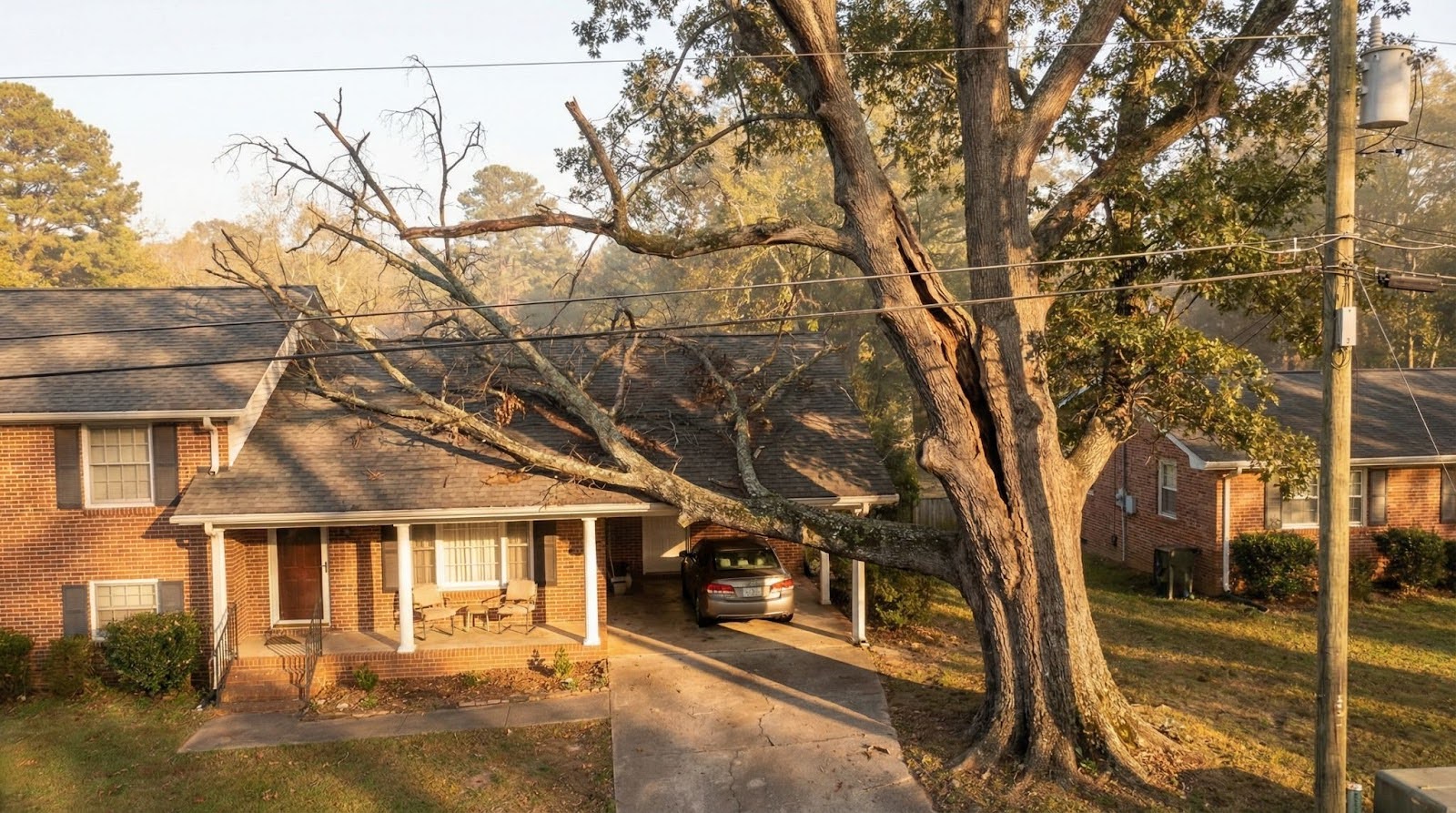
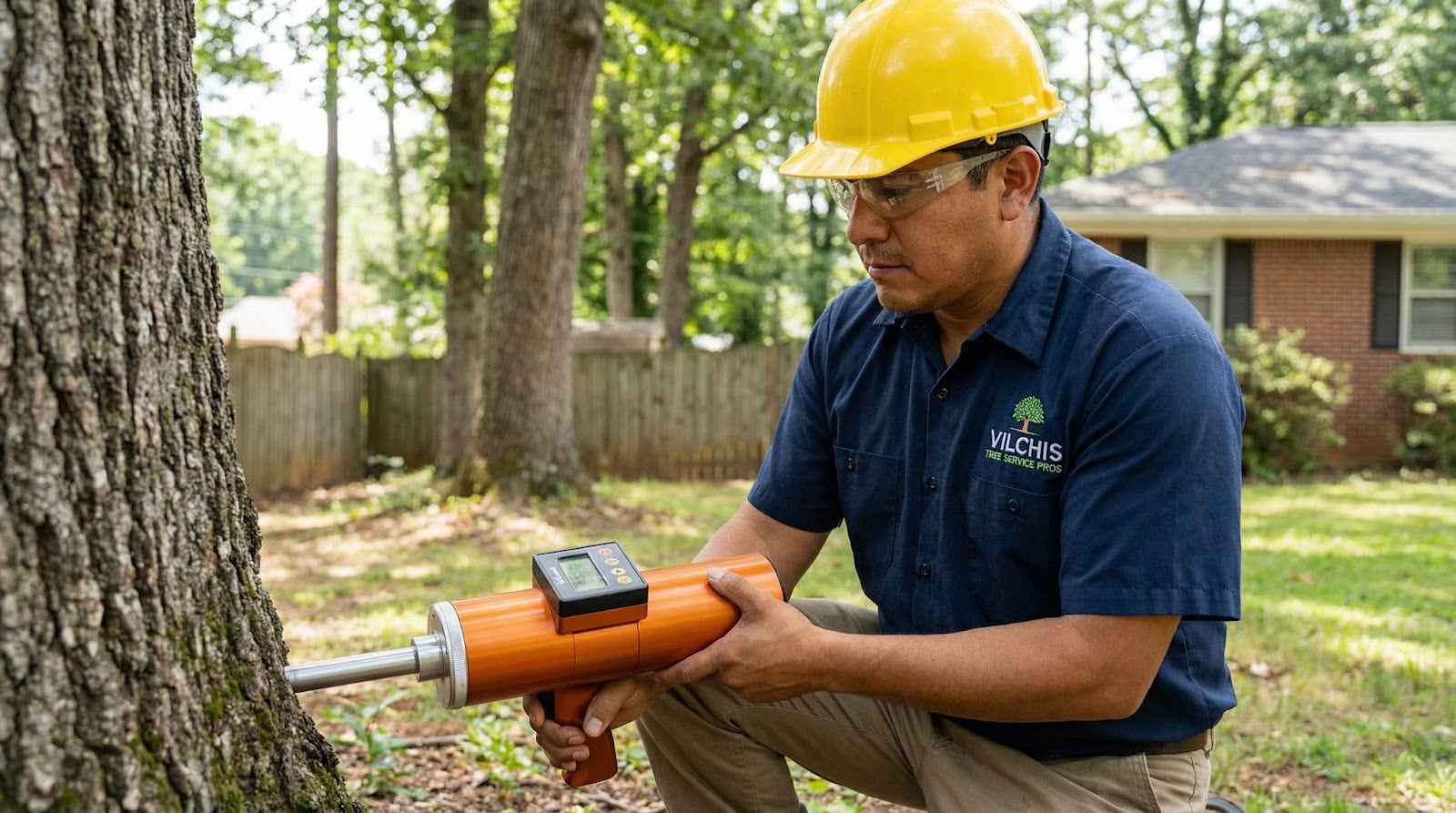
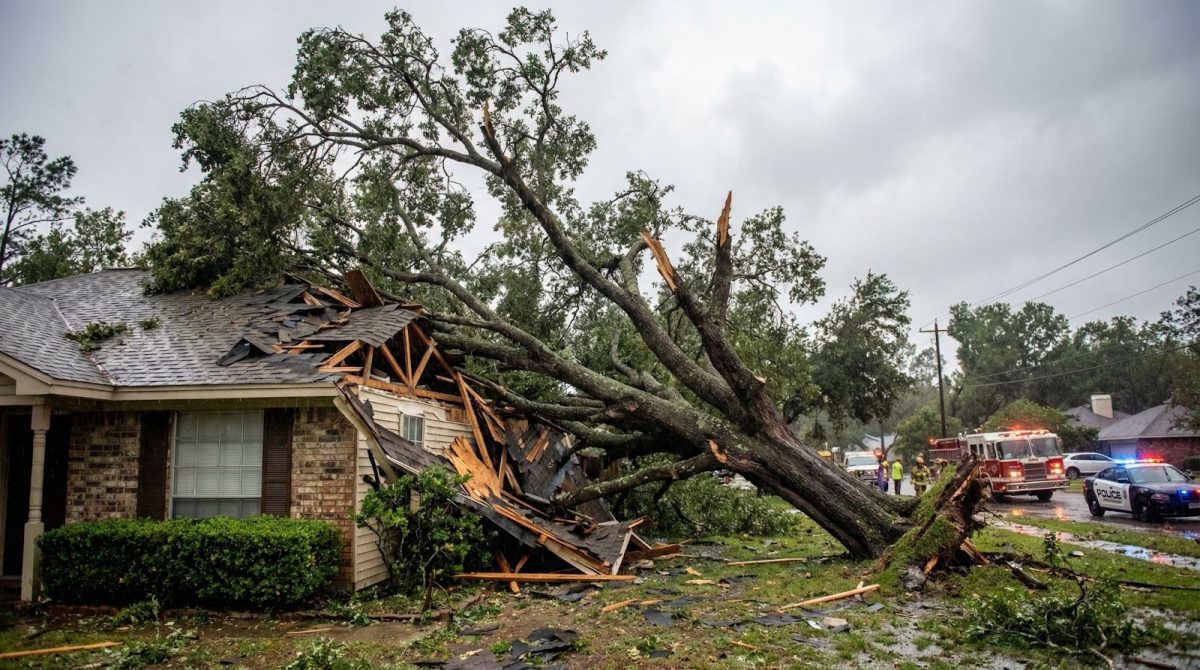
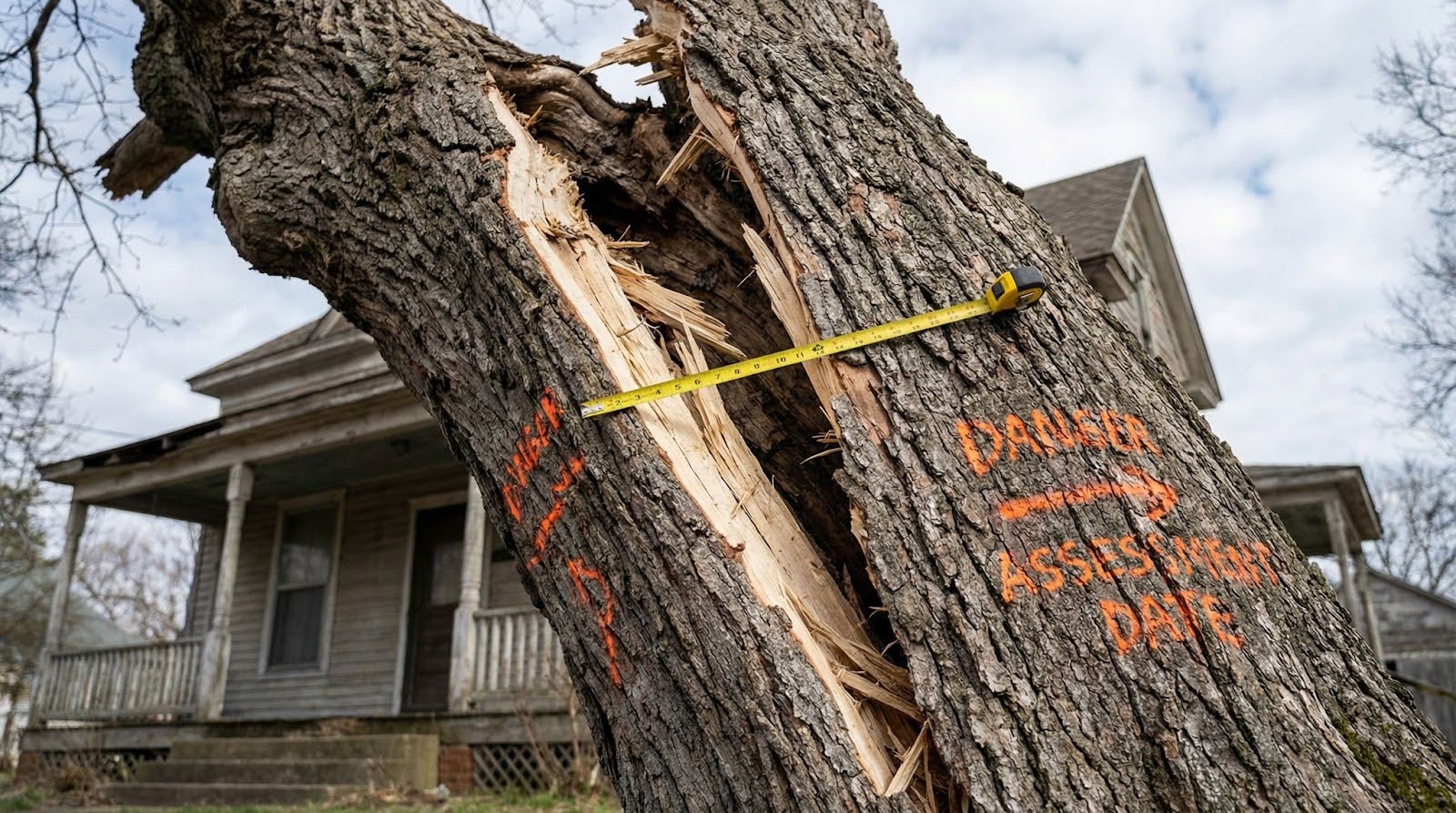
Tree Trimming Cost in Georgia: What to Budget in 2026
If you are wondering how much does tree trimming cost in Georgia, you are not alone. It is one of the most common questions homeowners across metro Atlanta and North Georgia ask before calling a tree service company. The answer depends on tree height, species, access conditions, and how much deadwood has accumulated.
This guide breaks down tree trimming prices for 2026 so you can plan your budget with confidence.
Average Tree Trimming Cost by Size
Tree size is the single biggest factor determining what you will pay. Here is what Georgia homeowners can expect in 2026:
Small Trees (Under 25 Feet)
Typical cost: $150 to $400
This includes ornamental trees like dogwoods, crepe myrtles, Japanese maples, and young hardwoods. Most small tree trimming jobs take one to two hours with a two-person crew.
Medium Trees (25 to 50 Feet)
Typical cost: $400 to $800
Medium trees include mature red maples, sweetgums, Bradford pears, and mid-size oaks. These jobs require more equipment and sometimes a bucket truck. Expect two to four hours depending on canopy spread and branch density.
Large Trees (50 Feet and Above)
Typical cost: $800 to $1,500+
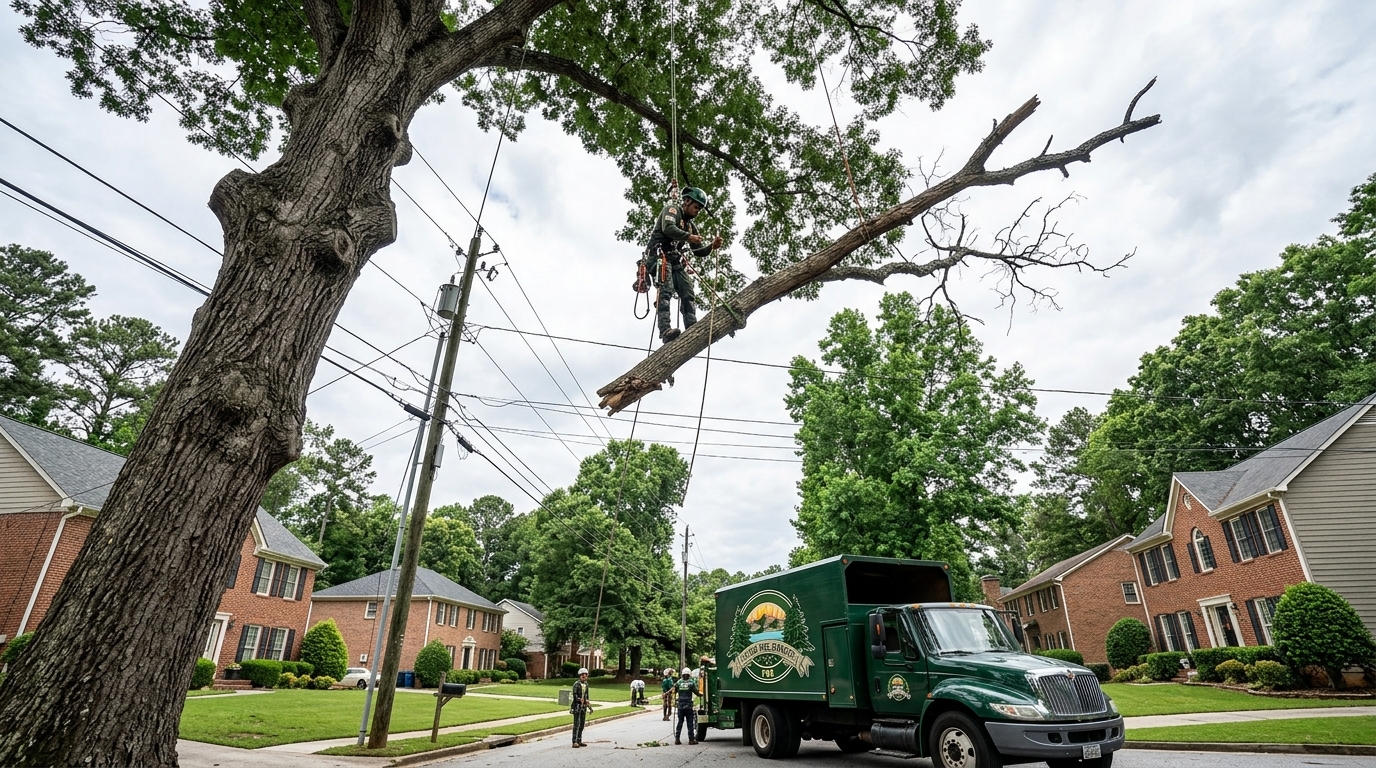
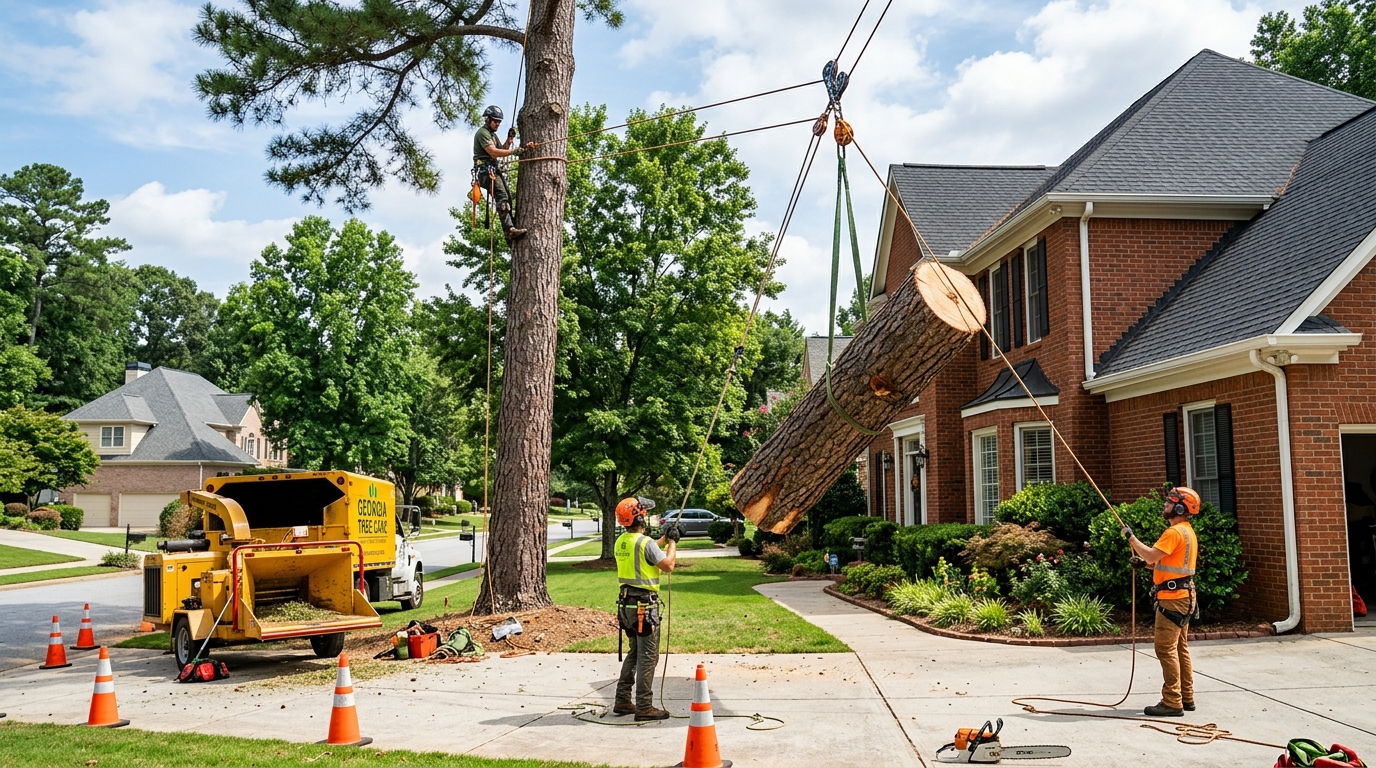
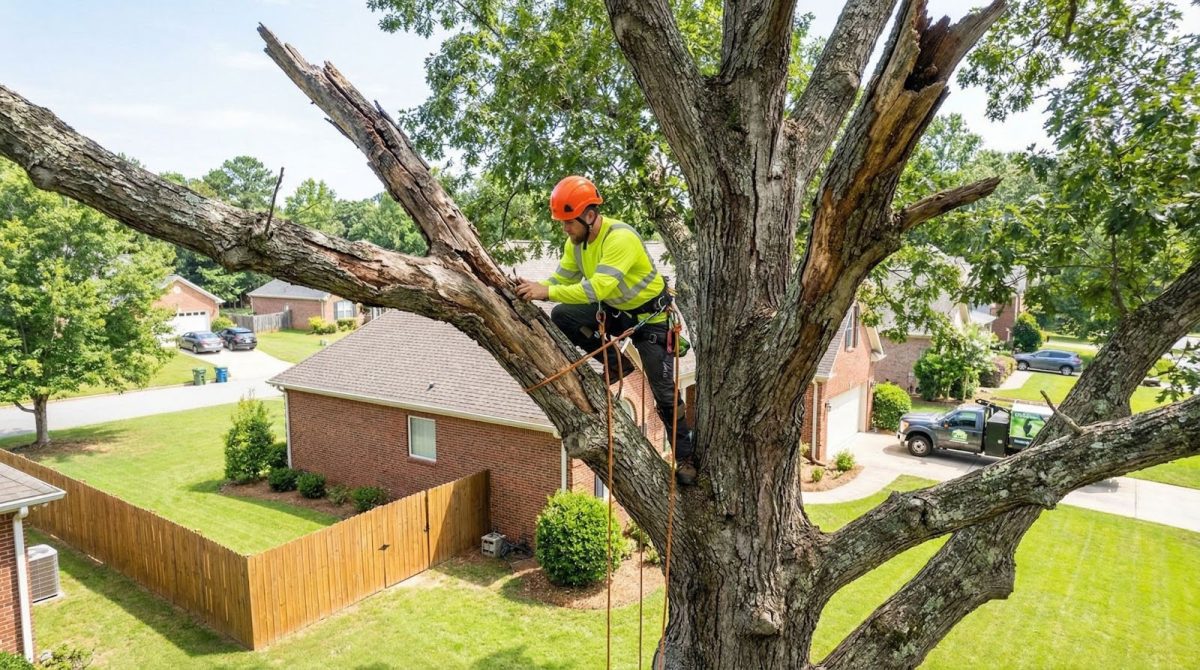
Large trees like mature white oaks, tulip poplars, and tall loblolly pines demand heavy equipment, skilled climbing, and careful planning. These jobs run four to eight hours. If the canopy overhangs a roof, power lines, or a neighbor’s property, expect to land at the higher end of this range.
For trees that have grown beyond the point where trimming makes financial sense, removal may be the better investment. Our tree removal cost guide covers those numbers in detail.
Factors That Affect Tree Trimming Prices
Knowing the size-based averages is a starting point, but several other factors determine your final quote.
Tree Height and Canopy Spread
A 40-foot oak with a 50-foot canopy spread costs more to trim than a 40-foot pine with a narrow profile. Wide canopies require more cuts, more time on the clock, and more debris to haul away.
Species and Wood Hardness
Georgia’s native hardwoods (oaks, hickories, black walnuts) have dense wood that dulls chain and blade edges faster. Softwoods like pine and cedar trim faster. Species with aggressive growth patterns, like water oaks and sweetgums, often need more extensive crown reduction.
Access and Obstacles
If your tree sits in a tight backyard with no gate access, crews may need to carry everything by hand, adding labor hours. Trees near power lines in neighborhoods along Canton Road in Marietta or residential streets in Acworth require coordination and additional safety measures.
Number of Trees
When you bundle multiple trees in one service call, the per-tree cost drops because setup and cleanup happen once. A property with five medium trees might run $2,500 to $3,500 total rather than $800 each if quoted individually.
Deadwood Percentage
A healthy tree that just needs shaping costs less than one carrying 30% deadwood through the canopy. Deadwood removal requires more careful cuts and more time identifying hazard branches. Trees that survived Georgia ice storms or drought years often carry dead material that should come out before it falls.
Emergency vs. Scheduled Service
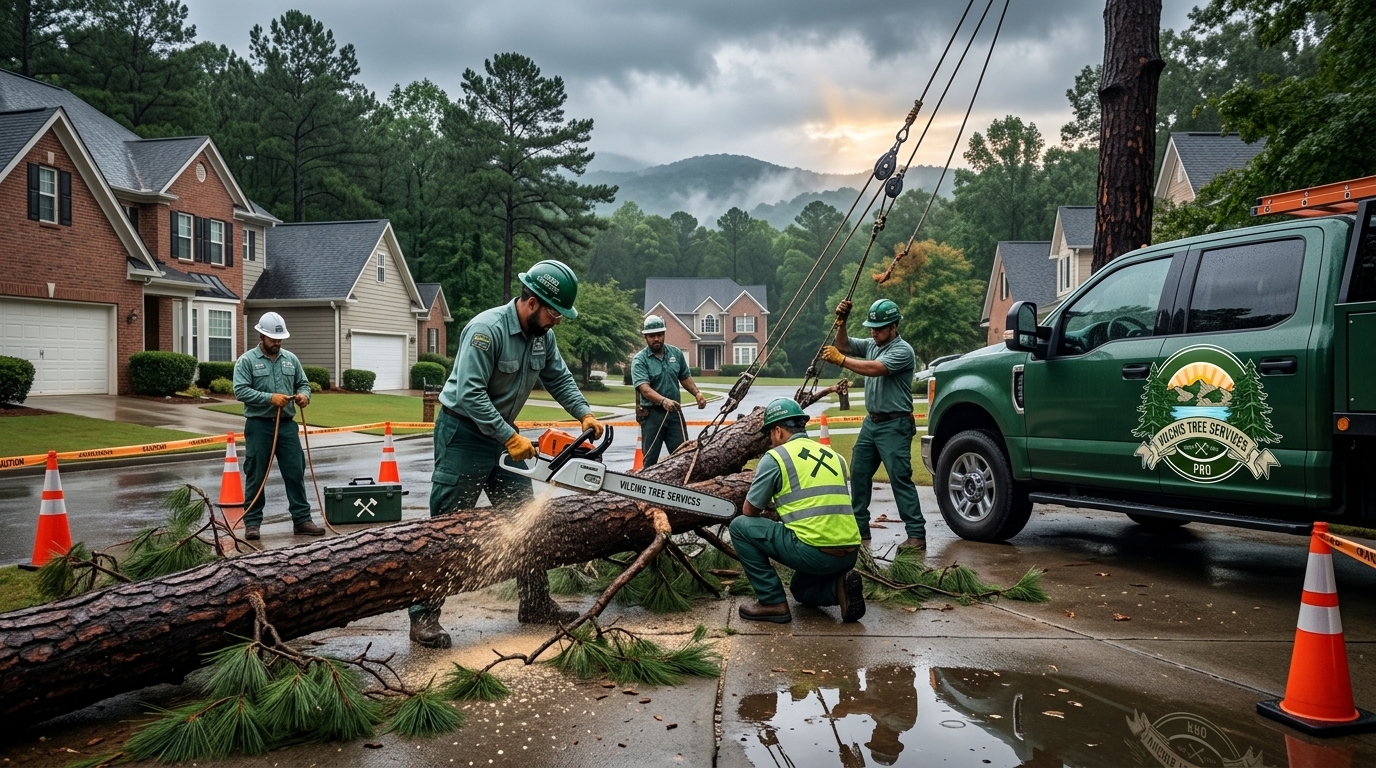
Storm damage calls after Georgia’s spring thunderstorms or summer hurricanes come with premium pricing. Scheduling your trimming during a slower season saves money and gives you more control over timing.
Tree Trimming Cost by Georgia Metro Area
Pricing varies across the region based on cost of living, competition, and travel distances.
Area
Small Tree
Medium Tree
Large Tree
Dallas / Paulding County
$150 – $350
$400 – $750
$800 – $1,400
Marietta / East Cobb
$175 – $400
$450 – $850
$900 – $1,600
Kennesaw / Acworth
$150 – $375
$400 – $800
$850 – $1,500
Douglasville / West Cobb
$150 – $350
$375 – $750
$800 – $1,400
Powder Springs / Austell
$150 – $350
$400 – $775
$825 – $1,450
Homeowners closer to Atlanta proper (Buckhead, Sandy Springs, Dunwoody) often see prices 10 to 20 percent higher due to traffic, tighter lot sizes, and permit requirements.
Vilchis Tree Services Pro serves all of these areas from our Dallas, GA headquarters. We offer tree trimming in Marietta, Acworth, Kennesaw, and throughout the metro Atlanta region.
When Trimming Is More Cost-Effective Than Removal
Not every overgrown tree needs to come down. In many cases, proper trimming and pruning saves you thousands compared to full removal and stump grinding. Here is when trimming makes financial sense:
The tree is structurally sound with a healthy trunk and root system
Less than 25% of the canopy is dead or damaged
The tree adds property value, shade, or privacy screening
Proper pruning can redirect growth away from structures or power lines
On the other hand, if more than 50% of the crown is dead, the trunk shows large cavities or fungal growth, or roots are lifting your driveway, removal is the smarter long-term investment. Georgia’s red clay soil makes root problems worse during heavy rain seasons, and a compromised tree near your home is a liability during summer storms.
Seasonal Pricing Differences
Tree trimming prices in Georgia fluctuate throughout the year based on demand.
Winter (December through February): The slowest season for most tree companies. Deciduous trees are dormant with no leaves, making branch structure easy to see. Many homeowners find lower prices during this window.
Spring (March through May): Demand picks up as homeowners notice overgrowth. This is also storm season in Georgia, which fills schedules with emergency calls. Booking in early March before the rush gives you better options.
Summer (June through August): Peak season. Full canopies mean more debris, heat slows crew productivity, and thunderstorm damage keeps companies booked. Expect the highest prices and longest wait times.
Fall (September through November): A second quiet window opens after summer storms pass but before holiday schedules tighten. An excellent time to schedule trimming before winter dormancy.
Our article on howoften trees should be trimmed in Georgia covers recommended schedules by species and property type.
How to Budget for Recurring Tree Maintenance
Most trees benefit from professional trimming every three to five years. Budgeting a fixed amount annually keeps your property safe and your trees healthy.
A practical approach for Georgia homeowners:
Get a full property assessment. Know how many trees you have, their sizes, and their current condition.
Create a rotation schedule. Rotate through your property so each tree gets attention on its ideal cycle rather than trimming everything at once.
Set aside $500 to $1,500 annually. For a typical lot in Cobb or Paulding County with six to ten mature trees, this covers one to three trees per year on rotation.
Combine services when possible. Ask about trimming nearby trees the same day for a bundled rate.
Frequently Asked Questions
What is a reasonable price for tree trimming in Georgia?
A reasonable price depends on tree size. Small trees under 25 feet run $150 to $400. Medium trees (25 to 50 feet) typically cost $400 to $800. Large trees over 50 feet range from $800 to $1,500 or more. Quotes significantly below these ranges may indicate unlicensed or uninsured operators, which creates liability risk for the homeowner.
How much does tree trimming cost for trees near power lines?
Trees near power lines require additional safety precautions and sometimes coordination with Georgia Power. Expect to pay 20 to 40 percent more than standard rates for the same size tree. In some cases, Georgia Power will trim branches within their easement at no cost, but only the portions directly threatening the lines.
Can I save money by trimming trees myself?
For small ornamental trees under 15 feet, basic pruning with hand tools is manageable for homeowners. However, any tree requiring a ladder, chainsaw, or proximity to structures and power lines should be left to professionals. Georgia law holds homeowners liable for damage caused by improper tree work that affects neighboring properties.
Does the time of year affect tree trimming cost?
Yes. Winter months (December through February) often bring lower prices because demand drops and dormant trees are easier to prune. Summer is peak season with the highest prices and longest wait times. Booking during shoulder seasons like early spring or mid-fall gives you a balance of availability and fair pricing.
Get Your Free Tree Trimming Estimate
Vilchis Tree Services Pro has served homeowners across metro Atlanta and North Georgia since 2013. We provide honest, detailed estimates for every job.
Call us today at (470) 914-2221 for a free on-site estimate. We will assess your trees, explain what work is needed, and give you a clear price before any work begins.
How Much Does Tree Removal Cost in Georgia? 2026 Pricing Guide
Tree removal in Georgia usually costs between $200 and $2,000+ per tree, depending on the size, species, location on the property, and how difficult it is to work the tree safely. Our team at Vilchis Tree Services Pro works across Metro Atlanta every day, and we put this guide together to give homeowners clear, realistic numbers based on what we actually see on local jobs. Below, we break down average tree removal cost by tree size, species, service type, and city across Metro Atlanta so you can plan your budget and avoid surprises.
Average Tree Removal Cost by Tree Size
In our experience, tree size is the main driver of tree removal cost because it affects labor, equipment, and time on site. Here is a quick pricing summary our customers often use as a simple tree removal cost calculator.
Average Cost by Size and Height
Tree size
Height
Trunk diameter
Average cost (per tree)
Small
Under 30 ft
Under 12 in
$200–$500
Medium
30–60 ft
12–24 in
$500–$1,200
Large
60–80 ft
24–36 in
$1,200–$2,000
Extra-large
80+ ft
36+ in
$2,000–$5,000+
These ranges include cutting the tree down, basic debris handling, and haul‑away in typical residential settings. Stump grinding is often quoted as a separate line item, which we cover later in this guide.
Small Trees (Under 30 Feet) — $200–$500
Small tree removal usually covers ornamentals and landscape trees under 30 feet tall, with trunks under 12 inches. Common examples around Metro Atlanta include dogwoods, crape myrtles, and other small front‑yard trees. Our crew can often remove these with climbing gear or a small lift, and we usually do not need a crane or road closures, which keeps the cost on the lower end.[ppl-ai-file-upload.s3.amazonaws]
Medium Trees (30–60 Feet) — $500–$1,200
Medium trees are the most common removals we handle for homeowners in Cobb County and nearby cities. These trees are typically 30–60 feet tall with trunk diameters between 12 and 24 inches, and examples include Bradford pears, smaller oaks, and hollies. Most of these jobs require a bucket truck and proper rigging to protect homes, fences, and landscaping, which is why pricing is higher than for small trees.
Large Trees (60–80 Feet) — $1,200–$2,000
Large tree removal covers mature hardwoods and bigger specimens that can cause serious property damage if they fail. We often see this size range with mature oaks, sweetgums, and large poplars in established Metro Atlanta neighborhoods. These jobs usually require a crane or large bucket truck, more crew members, and careful piece‑by‑piece lowering of limbs over roofs, which pushes the cost into the $1,200–$2,000 range.
Extra-Large Trees (80+ Feet) — $2,000–$5,000+
Extra‑large trees are the big ones that dominate a yard or roadway, often over 80 feet tall with very wide trunks. In North Georgia, we see this most often with mature loblolly pines, water oaks, and large pecan trees. These projects may require significant crane work, potential road closures, or coordination with utilities, and the risk and setup time are the main reasons costs can reach $2,000–$5,000+.
Oak Tree Removal Cost — $800–$3,000+
Oak trees are dense, heavy hardwoods with wide canopies and large limbs, and that adds time and rigging work to the job. Around Metro Atlanta, live oaks and water oaks are some of the most common removals, especially in older neighborhoods with mature tree cover. Some cities and counties have protections or permit requirements for larger oaks, so we always recommend checking local rules, and our team can help you understand what applies in your area.
Dead or Dying Tree Removal Cost — $200–$1,000
Dead or severely declining trees can sometimes cost less to remove because the structure may come down more quickly. At the same time, dead limbs and internal decay make the tree less predictable, so we use extra rigging and safety measures to control how the tree comes apart. From an insurance perspective, homeowners may be responsible if a dead tree they ignored damages a neighbor’s property, which is why we encourage clients to act promptly instead of waiting. In our experience, dead trees become more dangerous and can cost more to remove the longer they are left standing.
Tree Trimming and Stump Costs
Tree removal cost is only part of the picture. Many homeowners also ask about tree trimming cost and stump services on the same project.
Tree Trimming Cost — $200–$800 Per Tree
Tree trimming helps reduce risk, clear roofs, and improve tree structure without taking the tree down. For most residential jobs, tree trimming cost ranges from $200–$800 per tree depending on size, access, and scope of work. We may perform light deadwood removal, crown reduction, or full canopy shaping, and regular annual trimming is almost always cheaper than waiting until a tree needs heavy corrective work.
Stump Grinding Cost — $100–$400 Per Stump
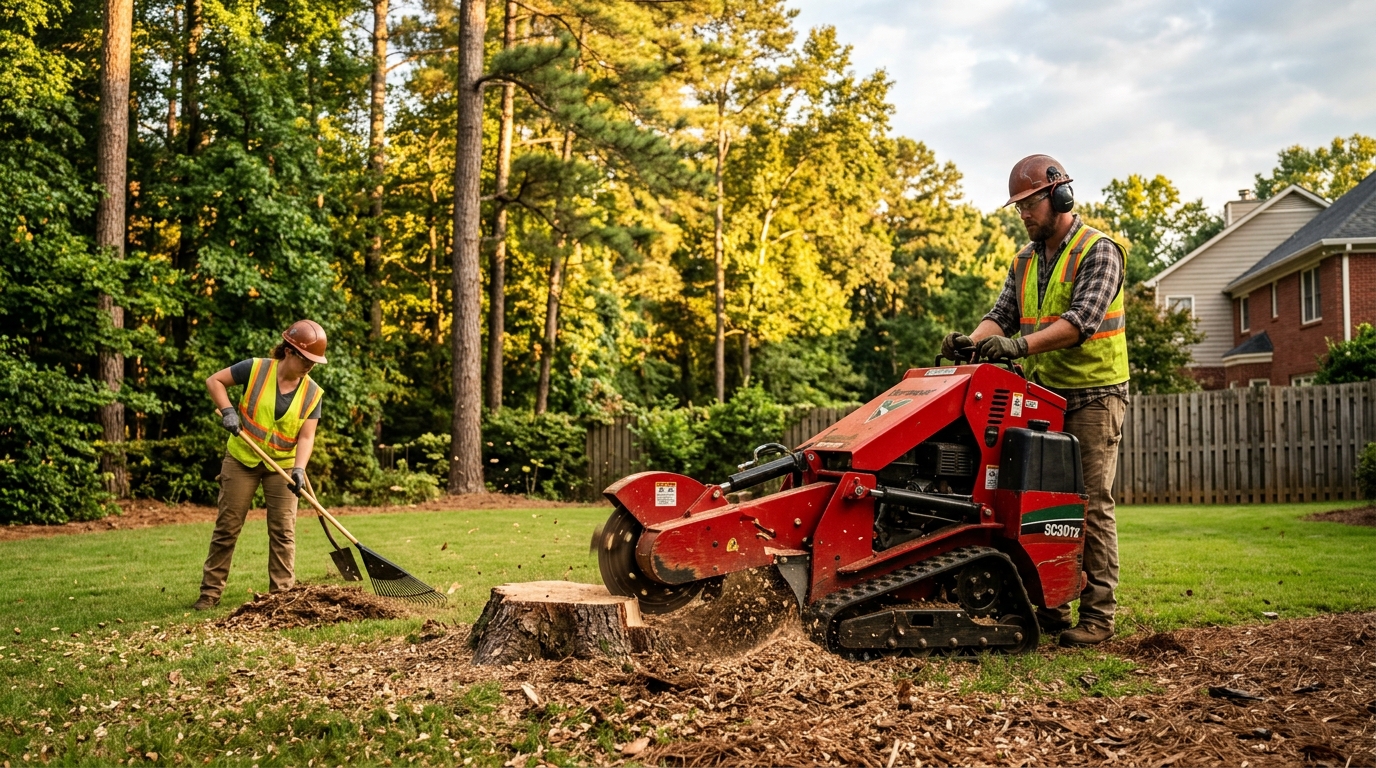
Stump grinding is the most common follow‑up service after tree removal. In Georgia, stump grinding cost typically runs $100–$400 per stump, and most companies charge by diameter, usually about $2–$5 per inch measured at the widest point. Our grinders usually go 6–12 inches below grade so you can re‑sod, re‑mulch, or re‑landscape the area more easily. If you have several stumps on your property or you are clearing multiple trees, we often apply a discount for grinding all of them in one visit.
Stump Removal Cost — $200–$600 Per Stump
Stump removal refers to pulling out the entire root ball instead of grinding the stump down below the surface. This is more labor‑intensive and usually requires heavy equipment, but it is the right approach if you plan to replant in the same exact spot or pour a foundation or hardscape in that area. Because stump removal leaves a larger hole to fill and involves extra work, it usually costs $200–$600 per stump.
Emergency Tree Removal Cost
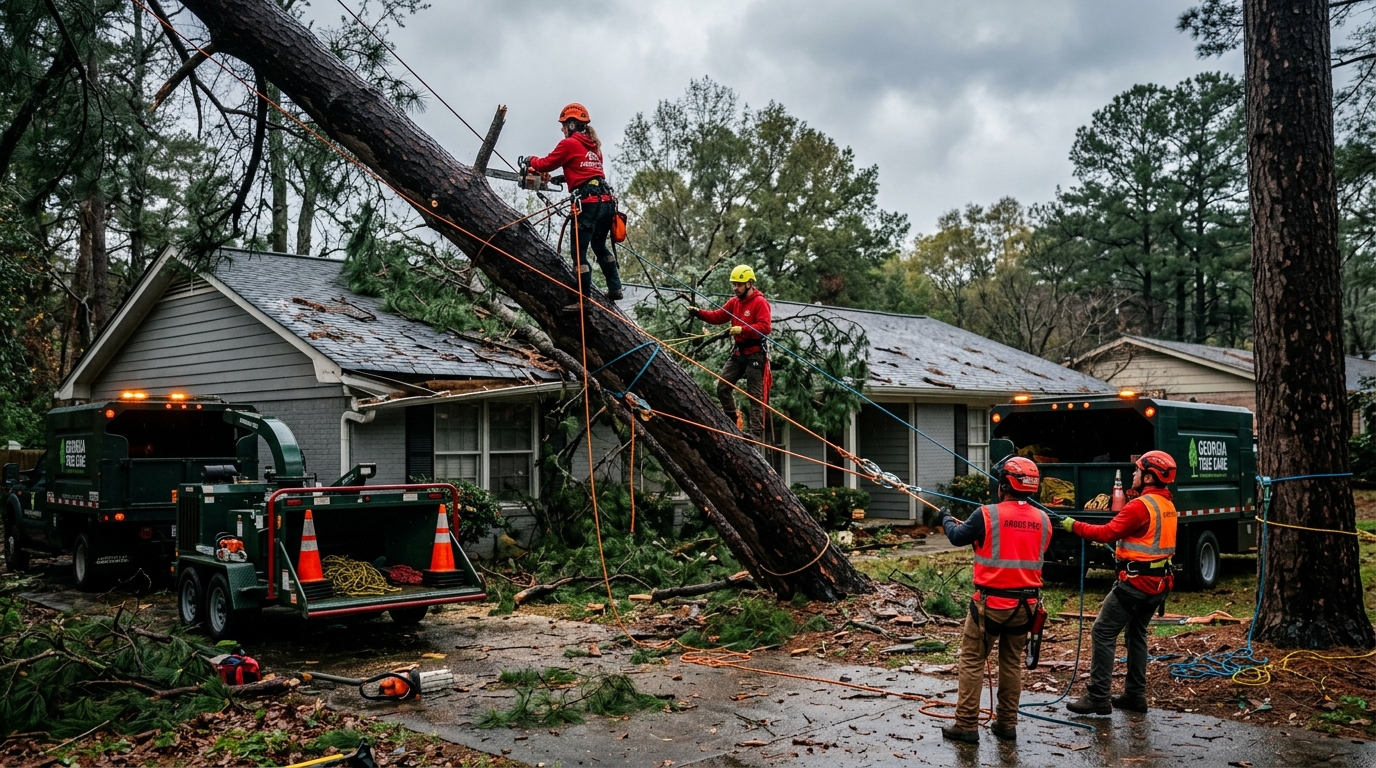
Emergency tree removal costs more because it often happens after hours, on weekends, or during severe weather. In these situations we are prioritizing safety, preventing further damage, and restoring access to driveways and structures as quickly as possible.
For Metro Atlanta homeowners, emergency tree removal typically runs $1,000–$3,000+ depending on tree size, damage, and access. After‑hours and weekend work usually adds a 50–100% premium over standard pricing because we have to mobilize crews and equipment immediately. Storm damage from spring thunderstorms, summer downpours, and tropical systems is common in Georgia, and insurance often helps when a tree damages an insured structure, but coverage details vary by policy. We always suggest taking clear photos of the damage before cleanup begins and keeping all estimates and invoices for your claim file.
Key Factors That Affect Tree Removal Cost in Georgia
Every property is different, so we walk each site and explain how these main factors affect your quote.
Tree Height and Trunk Diameter
Taller trees and thicker trunks require more cutting, rigging, and cleanup. This is why tree removal cost per foot and by diameter is a common way the industry thinks about pricing, even if we usually present it to homeowners as a flat project price.
Proximity to Homes, Power Lines, and Other Structures
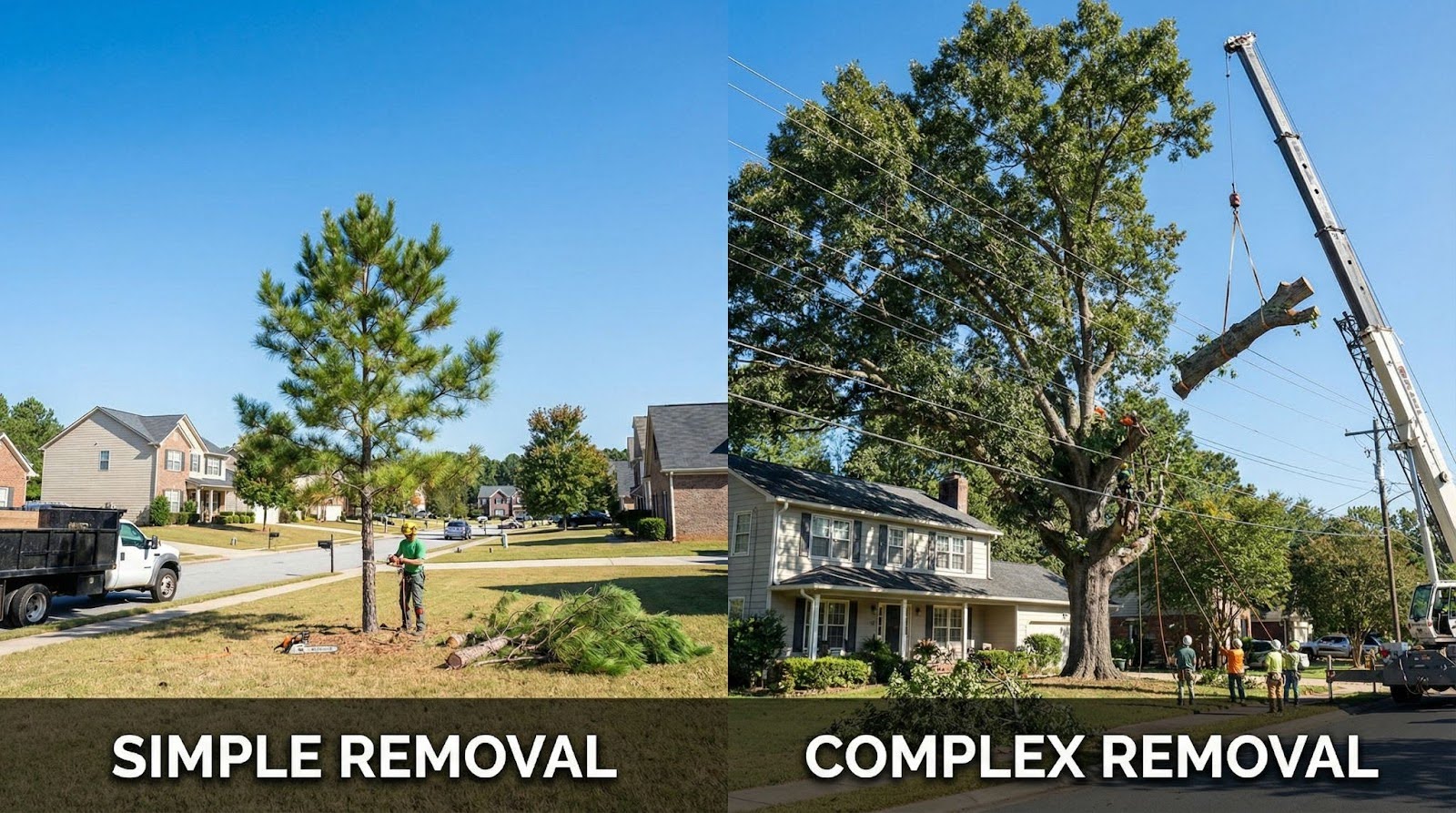
Trees close to homes, sheds, fences, driveways, or power lines require more careful sectional removal. Rather than felling the tree in one piece, we often take it down limb by limb using ropes, friction devices, and lowering equipment to protect your property. If lines are involved, we may need to coordinate with the utility company, and local rules can vary, so we keep those discussions general and confirm details based on location.
Accessibility and Yard Conditions
Access is a big cost factor many homeowners do not think about at first. Trees in backyards with narrow gates, steep slopes, retaining walls, or septic tanks may prevent us from bringing in bucket trucks or cranes. In those cases, our climbers have to do more manual work, which can raise tree cutting cost by 20–40% compared with a similar tree in an open front yard.
Hazards and Tree Condition
Trees with heavy dead limbs, storm damage, or a strong lean are higher risk. We use more advanced rigging and extra ground support on these jobs, and that added time and safety planning is reflected in the final tree service prices.
Number of Trees and Included Services
Removing several trees during the same visit is usually more efficient than handling them one by one over multiple trips. As a result, we often extend multi‑tree discounts or bundle pricing when a homeowner combines tree removal with stump grinding or trimming on the same project. One important note: many tree removal quotes in Georgia do not automatically include stump grinding, so we always encourage customers to confirm what is and is not in the estimate.
Permit Requirements in Georgia
Some counties and cities in Georgia have tree ordinances with permit requirements, especially for larger trees over a certain trunk diameter or for protected “heritage” trees. For example, Cobb County has guidelines that may apply to certain residential removals, and several Metro Atlanta municipalities have their own rules. Because regulations can change, we recommend checking with your local city or county, and our team can help you understand whether a permit may be needed in your area.
Tree Removal Cost by City in Metro Atlanta
Local pricing can vary slightly from city to city based on lot size, tree density, age of the neighborhood, and access for equipment. Below are general notes from what we see across our regular service areas.
Tree Removal Cost in Marietta, GA
Marietta has many historic and established neighborhoods with mature hardwood canopies. Bigger oaks and other large trees, especially in older subdivisions, tend to fall in the $800–$2,500 range for residential removal depending on access and risk. If you live in Marietta and need a quote, you can contact us directly or visit our local page: Get a free estimate in Marietta .
Tree Removal Cost in Acworth, GA
In Acworth, we see a mix of lake area properties and sloped lots with a lot of pine trees. Pine removal is the most common request here, and costs depend on the number of trees and how close they are to structures or the shoreline. For local service details, visit: Get a free estimate in Acworth.
Tree Removal Cost in Kennesaw, GA
Kennesaw has many residential subdivisions with HOA covenants that may require approval before you remove certain trees. We help homeowners factor HOA rules into timing and planning, and we recommend checking your documents before scheduling major work. To learn more or schedule a visit, go to: Get a free estimate in Kennesaw.
Tree Removal Cost in Kennesaw, GA
Kennesaw has many residential subdivisions with HOA covenants that may require approval before you remove certain trees. We help homeowners factor HOA rules into timing and planning, and we recommend checking your documents before scheduling major work. To learn more or schedule a visit, go to: Get a free estimate in Kennesaw.
Tree Removal Cost in Dallas, GA
Dallas, GA includes both rural and suburban areas with larger lots and many pine stands. Larger properties can actually lower cost on a per‑tree basis because we often have better equipment access and fewer obstacles. You can see our local info here: Get a free estimate in Dallas, GA.
Tree Removal Cost in Douglasville, GA
Douglasville is a growing suburban market with a mix of new construction and older neighborhoods. We handle everything from single hazard tree removals to full clear‑outs for additions and pools. For local scheduling: Get a free estimate in Douglasville.
Tree Removal Cost in Powder Springs, GA
In Powder Springs, many of the calls we get involve mature hardwoods in established subdivisions. Larger canopies over roofs and driveways often require more careful rigging, which influences cost. Learn more: Get a free estimate in Powder Springs.
Tree Removal Cost in Smyrna, GA
Smyrna has dense residential areas closer to Atlanta, with tighter access and more structures near trees. Limited space often leads to more technical removals with additional labor and equipment, which can raise pricing compared with open lots. For local help: Get a free estimate in Smyrna.
(We also serve other nearby communities such as Hiram, Mableton, Lithia Springs, Villa Rica, and Vinings; pricing in those areas follows similar patterns based on access, size, and species.)
How to Save Money on Tree Removal
Homeowners often ask how to keep tree removal cost under control without cutting corners on safety. Here are practical steps we see work well in Georgia.
Get 3 or more quotes from licensed, insured tree service companies so you can compare scope and pricing side by side.
Bundle multiple trees or combine tree removal with stump grinding to qualify for volume discounts.
Schedule work during slower months (often December through February), when many tree services in Georgia can offer lower pricing due to reduced demand.
Check your homeowner’s insurance if a storm or sudden event caused the damage, as storm‑related removal is often partly covered when a tree hits an insured structure.
Ask about financing or payment plans if you are facing a larger project and want to spread the cost out over time.
Avoid choosing the lowest bid without checking proof of insurance, licensing where required, and recent reviews.
If you would like a local quote, you can always request a free estimate from us here: Request a free estimate.
Does Homeowners Insurance Cover Tree Removal?
Insurance coverage is a frequent concern after storms, and policies vary by company and by state. Generally, storm damage from wind, lightning, or ice that causes a tree to damage an insured structure is more likely to be covered, while neglected hazard trees may not be.
Many policies in Georgia have limits in the $500–$1,000 per tree range for tree removal and similar deductibles around $250–$500, but you need to review your specific policy for exact numbers. Trees that fall and do not damage anything are often excluded from coverage, even if they block a yard. We advise documenting everything with photos, getting written estimates, and keeping records of regular tree maintenance, as that can support your position if a claim is ever questioned. For detailed insurance or legal guidance, it is best to speak with your agent or a qualified professional in your area.
Frequently Asked Questions
How much does it cost to cut down a tree?
Tree cutting cost in Georgia usually ranges from about $200 for small trees under 30 feet to $2,000–$5,000+ for extra‑large trees over 80 feet, depending on access and risk. Most residential tree removal projects we see land in the $500–$1,200 range. Factors like proximity to structures, yard access, and stump grinding all influence the final price.
How much does it cost to remove a tree?
Complete tree removal, including cutting, debris hauling, and basic cleanup, typically costs $200–$2,000+ per tree in Metro Atlanta. Stump grinding usually adds another $100–$400 per stump, based on size. We always recommend getting at least three estimates from licensed, insured tree services so you can compare scope and value.
How much does stump grinding cost?
Stump grinding cost in Georgia is generally $100–$400 per stump, with most companies charging around $2–$5 per diameter inch. If we grind multiple stumps during the same visit or combine grinding with a removal job, we often apply a discount.
Is tree removal cheaper in winter?
Yes, in our experience tree removal is often cheaper in winter because demand is lower from December through February in Georgia. Many companies, including ours, can offer better scheduling options and more flexible pricing during that time.
Do I need a permit to remove a tree in Georgia?
Permit requirements depend on your city or county and sometimes on your HOA rules. Cobb County and several Metro Atlanta cities require permits for trees above a certain trunk diameter or for specific protected species. Because regulations can change, we keep permit guidance general and help you check the current rules for your address.
How long does tree removal take?
Most standard residential tree removals take about 2–5 hours for our crew, from setup through final cleanup. More complex removals near homes or power lines, or jobs involving crane work, can take most of the day. Emergency storm damage removal may happen at any time and is scheduled based on safety priority rather than convenience.
Get a Free Tree Removal Estimate in Metro Atlanta
Our team at Vilchis Tree Services Pro provides free, no‑obligation estimates for tree removal, tree trimming, stump grinding, and emergency tree work across Metro Atlanta. We regularly serve Dallas, Marietta, Acworth, Kennesaw, Douglasville, Powder Springs, Smyrna, and surrounding communities, and we are happy to walk your property, discuss your goals, and give you clear pricing before any work begins.
7 Warning Signs Your Georgia Tree Needs to Be Removed Immediately
As a local tree removal company serving homeowners in Acworth, Kennesaw, Dallas, Marietta, and nearby Georgia communities, we see many trees that look fine from the street but show clear warning signs up close. We’ve also seen how quickly a tree can go from “let’s just watch it” to a fallen tree on a roof, fence, or driveway. In this guide, we’ll walk through the key signs tree needs removal, what they look like in real yards, and when it is time to get professional help to protect your property’s safety.
Signs A Tree Needs Removal
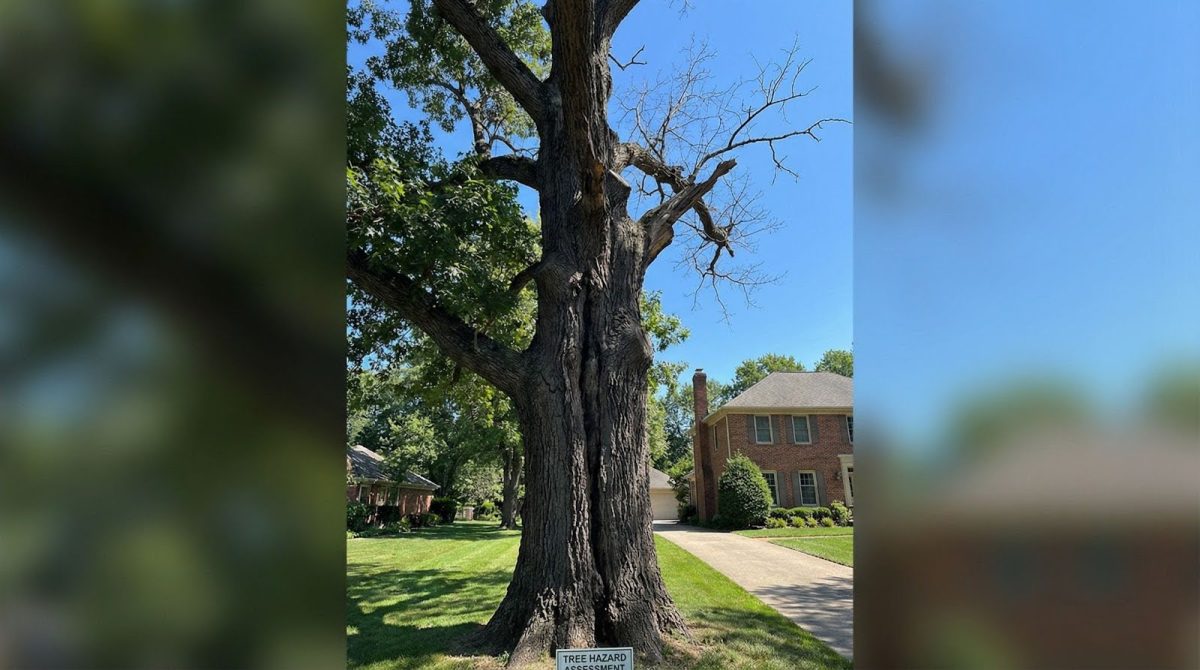
Before we dive into each specific issue, it helps to understand why certain trees become hazardous trees over time. Many trees look normal at a distance, but up close you may notice dead branches, fungi growing at the base, or cracks in the trunk.
We look at the whole picture: how close the tree is to your home, how much space it would cover if it fell, whether there are decaying roots, and how strong the main trunk is. Healthy trees have solid structural support and sound roots. Dying trees, on the other hand, often show a mix of problems that add up to a high risk.
Leaning Trees: When a Lean Becomes a Safety Risk
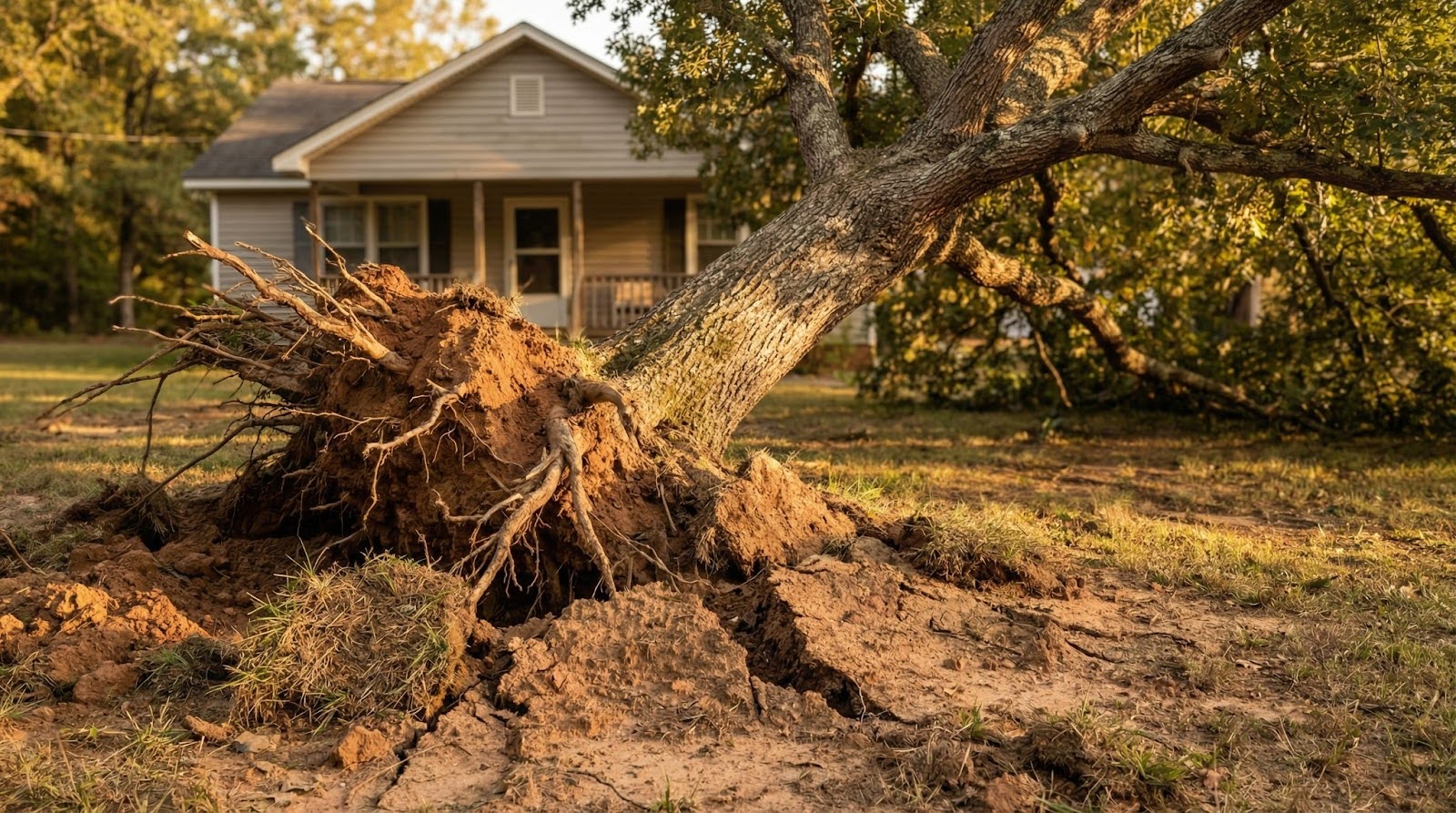
A slight lean can be normal for some tree species, especially if they grew that way from a young age. The real concern is leaning trees that start to tilt more after storms, heavy rain, or soil changes. In Georgia, soft clay soil and strong winds can shift a tree’s roots in just a few hours.
Warning signs a leaning tree may need removal include:
New or worsening lean compared to last season.
Soil lifting, cracking, or mounding on one side of the tree.
Tree’s roots pulling out of the ground or visibly broken.
Large trees leaning over houses, driveways, or power lines.
Across Kennesaw and Marietta, we see many trees start to lean after repeated storms. During a tree risk assessment, we look at the root system, trunk damage, and the direction of the lean. If the structural support is compromised and the tree is over a target like a home or utility lines, removing the tree is often the best course of action.
Dead Branches: Small Clues That Point to Big Problems
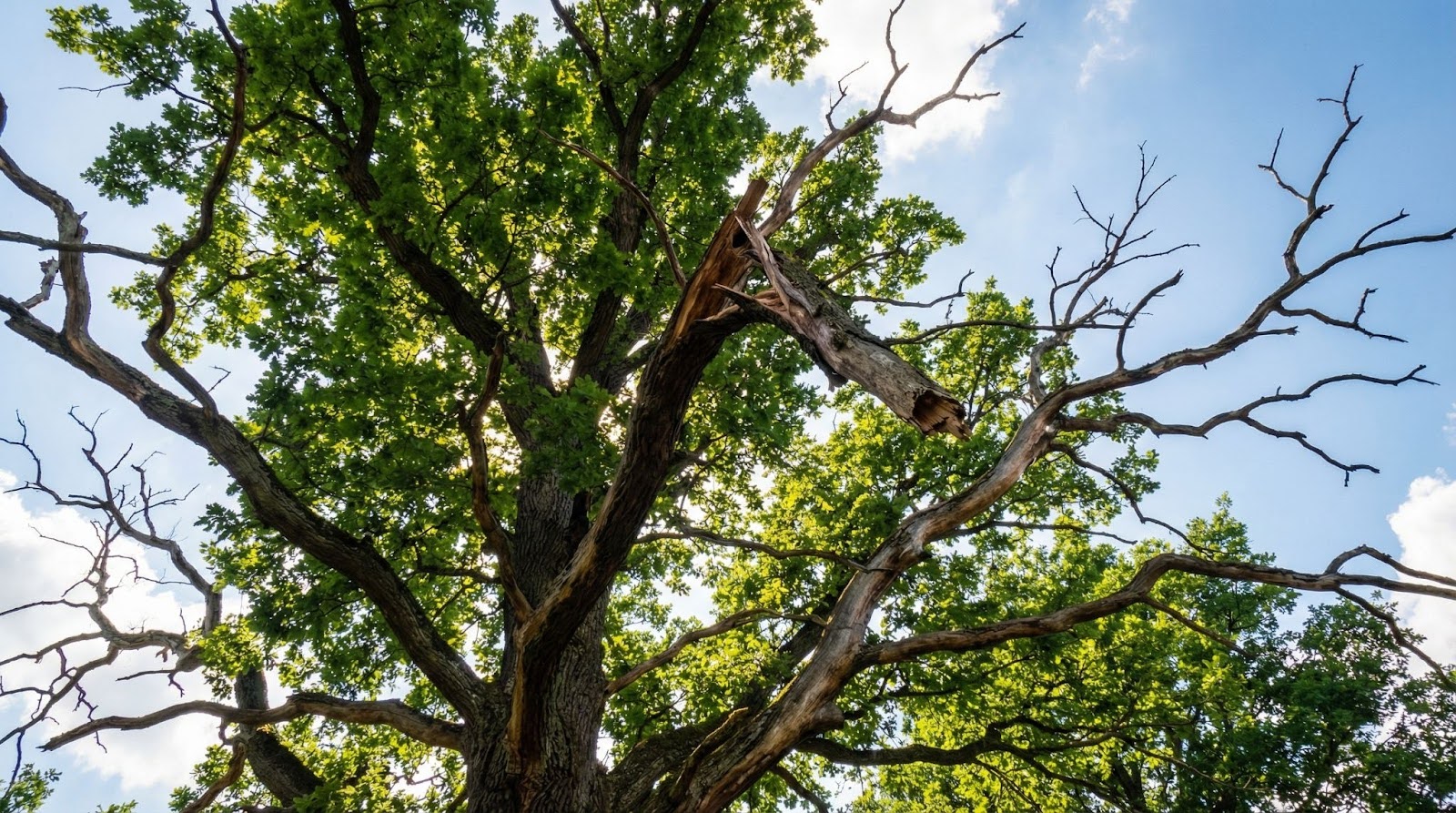
Dead branches and large dead branches in the crown are some of the most common visible signs that a tree is in trouble. Even if the trunk looks solid, dead branches can fall at any time and cause property damage or personal injury.
Look for these signs in the canopy:
Branches with no leaves during the growing season.
Small branches that snap easily and are dry inside.
Large dead branches hanging over roofs, cars, or play areas.
Sections of the crown that look thin, bare, or uneven.
We see this pattern on many trees in Acworth, Dallas, and Kennesaw after years of stress from drought, pests, or root damage. In some cases, careful pruning can help. In others, the number and size of dead branches show that the tree is dying and may eventually die completely. When that happens, we talk through whether it is safer to remove a tree rather than wait for more limbs to fall.
Hazardous Trees: From Healthy Trees to High Risk
Hazardous trees are not always dead trees. Some still have green leaves but have serious structural defects that make them unsafe. A tree becomes hazardous when its structural integrity is weak and it stands where a fall could cause harm.
Common issues that turn healthy trees into hazardous trees include:
Internal decay or internal rot in the trunk.
Structural weakness from past topping or poor pruning.
Trunk damage such as deep cracks or large wounds.
Root damage that reduces support on one side.
In our tree work across Marietta and the surrounding areas, we look not only at the tree itself but at nearby trees and what sits underneath. The more valuable the property under a high risk tree, the more urgent it is to address the problem.
Dying Trees: Visible Signs You Should Not Ignore
Dying trees often show a combination of problems rather than just one. You might see dead branches, thinning foliage, fungi growing at the base, and bark peeling away all on the same tree. These are clear warning signs that the tree’s overall health is failing.
Visible signs a tree may be dying include:
Sparse or patchy leaf growth across the crown.
Many small branches dying back at the tips.
Bark falling off in large sections, revealing bare wood.
Epicormic shoots (weak shoots) sprouting along the trunk after stress.
In many Georgia yards, we see trees decline slowly over several years. During this time, homeowners are often unsure whether to keep them or remove them. A certified arborist or experienced tree professional can review all the signs listed above and help you decide whether removal is the only option or if there is still a safe path to keep the tree.
Decaying Roots and Fungi Growing at the Base
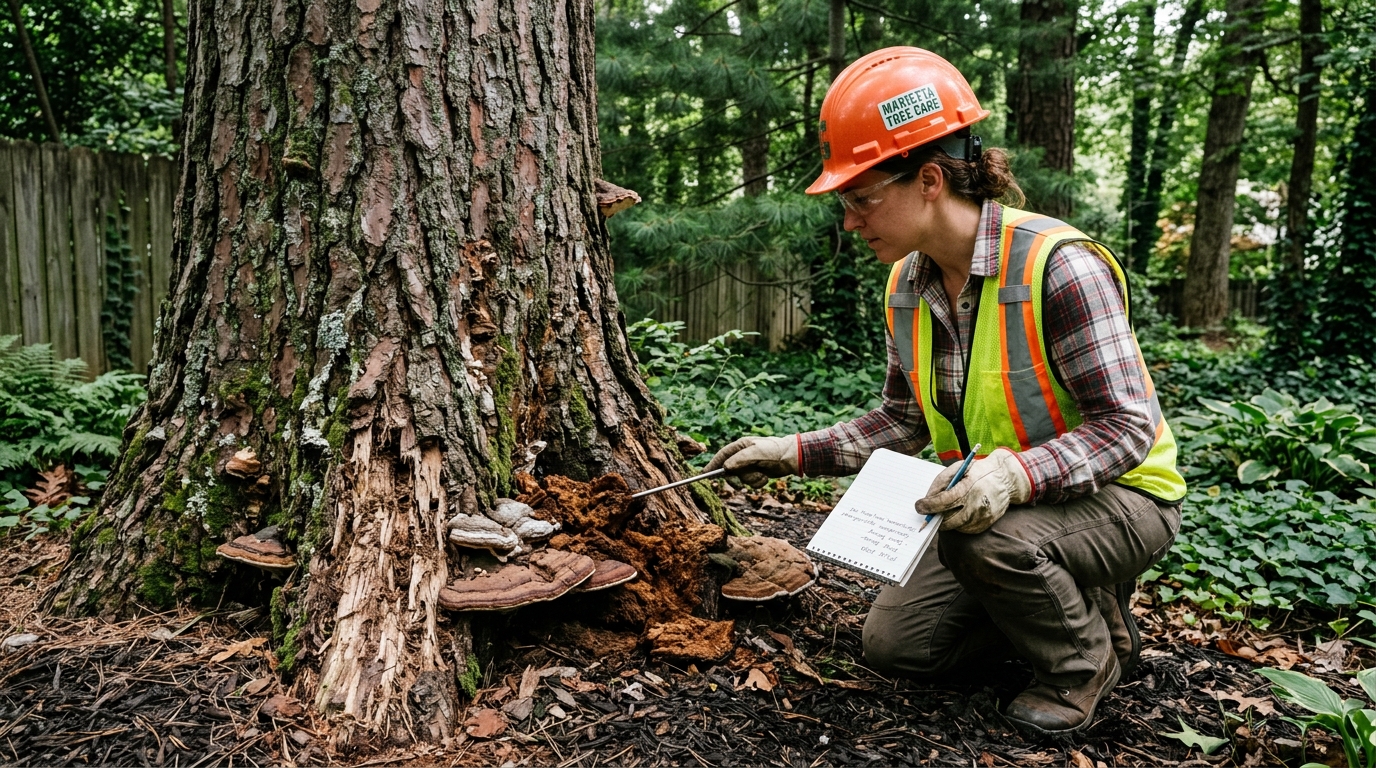
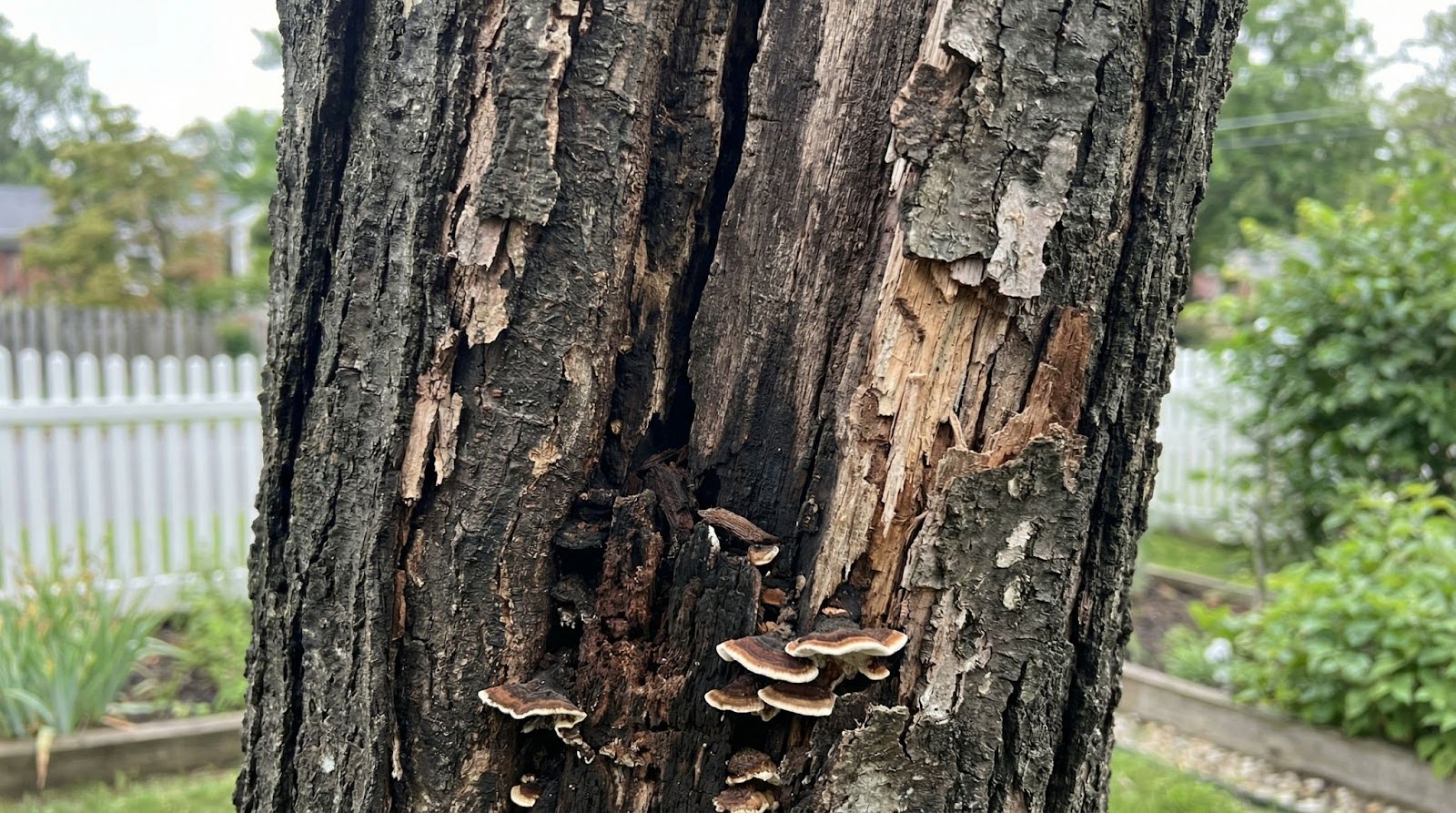
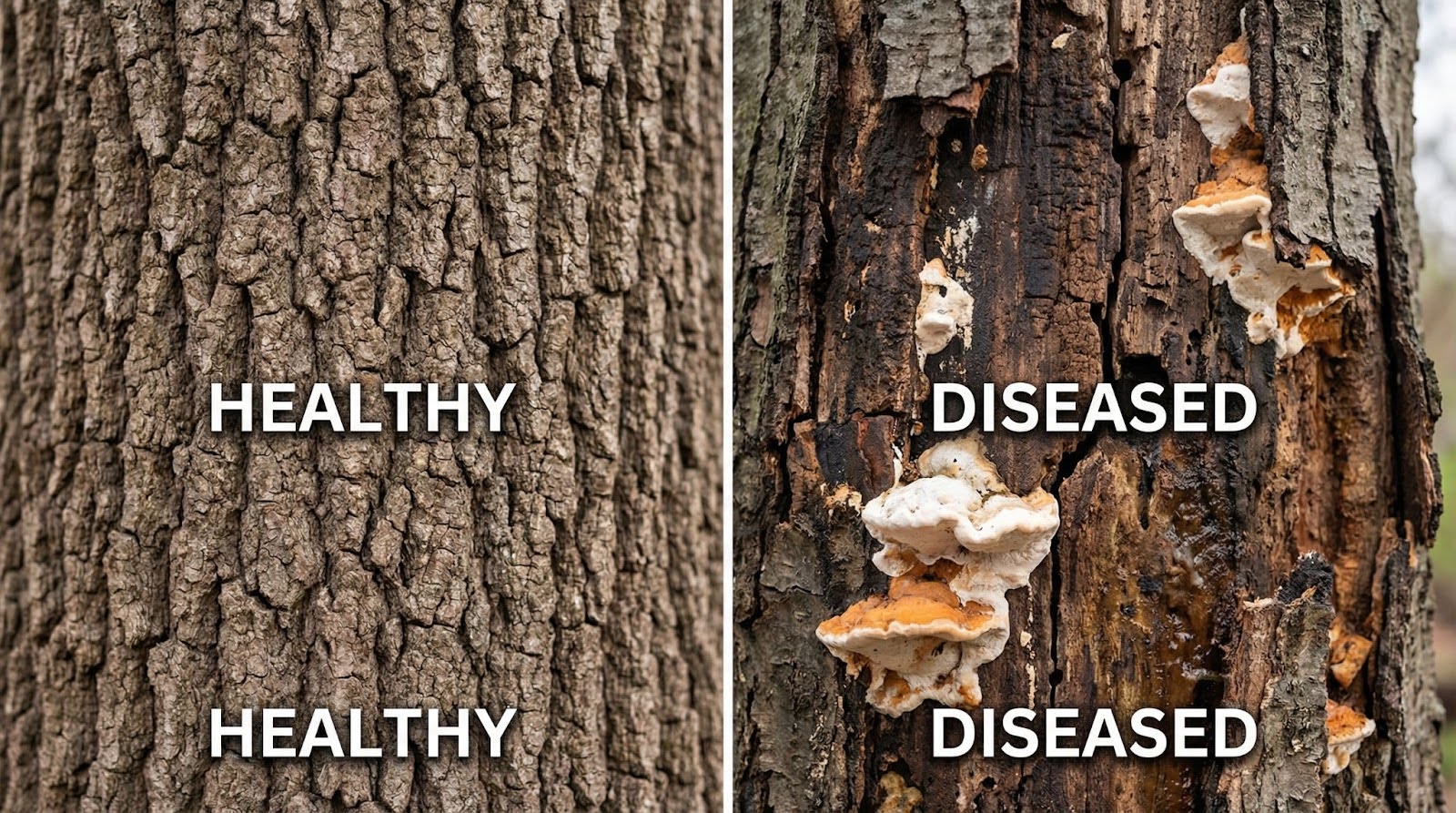
A tree’s roots are its foundation. Decaying roots reduce stability and make the tree much more likely to fall in strong winds. Often, the first visible signs of root problems are large fungus or mushrooms growing near the base.
Red flags around the base include:
Mushrooms growing in clusters at the root flare.
Large fungus or shelf‑like conks attached to the trunk.
Soft, spongy wood around the lower trunk.
Soil that looks sunken or heaved around the tree.
In our Georgia climate, fungi growing at the base usually means internal decay in the roots or lower trunk. Even if the top of the tree still looks green, the structural support at the bottom may be badly weakened. When we see decaying roots and large fungus together, we know the tree is at high risk of failure, especially in high winds. In those cases, removing trees near homes, driveways, or utility lines is often the safest choice.
How Much Space a Falling Tree Can Cover
Many homeowners underestimate how much space a full‑grown tree can cover if it falls. A large tree can reach across driveways, into streets, and over neighboring yards. This is why we look closely at location, nearby trees, and what might be hit in any direction.
When we assess how much space a falling tree might cover, we consider:
Tree height compared to nearby structures.
Angle of lean and likely fall path.
Slope of the ground and soil conditions.
Presence of other trees that could deflect or redirect a fall.
Understanding this helps us judge the safety risk. A tall tree with structural defects directly over a house is much more urgent than the same tree in an open field. By removing a high risk tree before it fails, you reduce the chance of serious structural damage and keep your property safer.
Example: A Fungal‑Damaged Tree Near a Driveway
Recently, we helped a homeowner in Marietta who had a large tree near their driveway. The tree looked mostly green in summer, but there were mushrooms growing at the base and a section of bark missing on one side.
During our tree inspection, we found internal decay and decaying roots on the side facing the driveway. There were also several large dead branches over the parking area. High winds were in the forecast. We explained the safety risk and the many factors involved, including the tree’s height and the potential for trunk failure.
The homeowner chose removal. Once we cut the tree down, you could see how much of the base was hollow. Leaving that tree there would have put cars, family members, and the property’s safety at risk.
Why a Certified Arborist or Tree Professional Matters
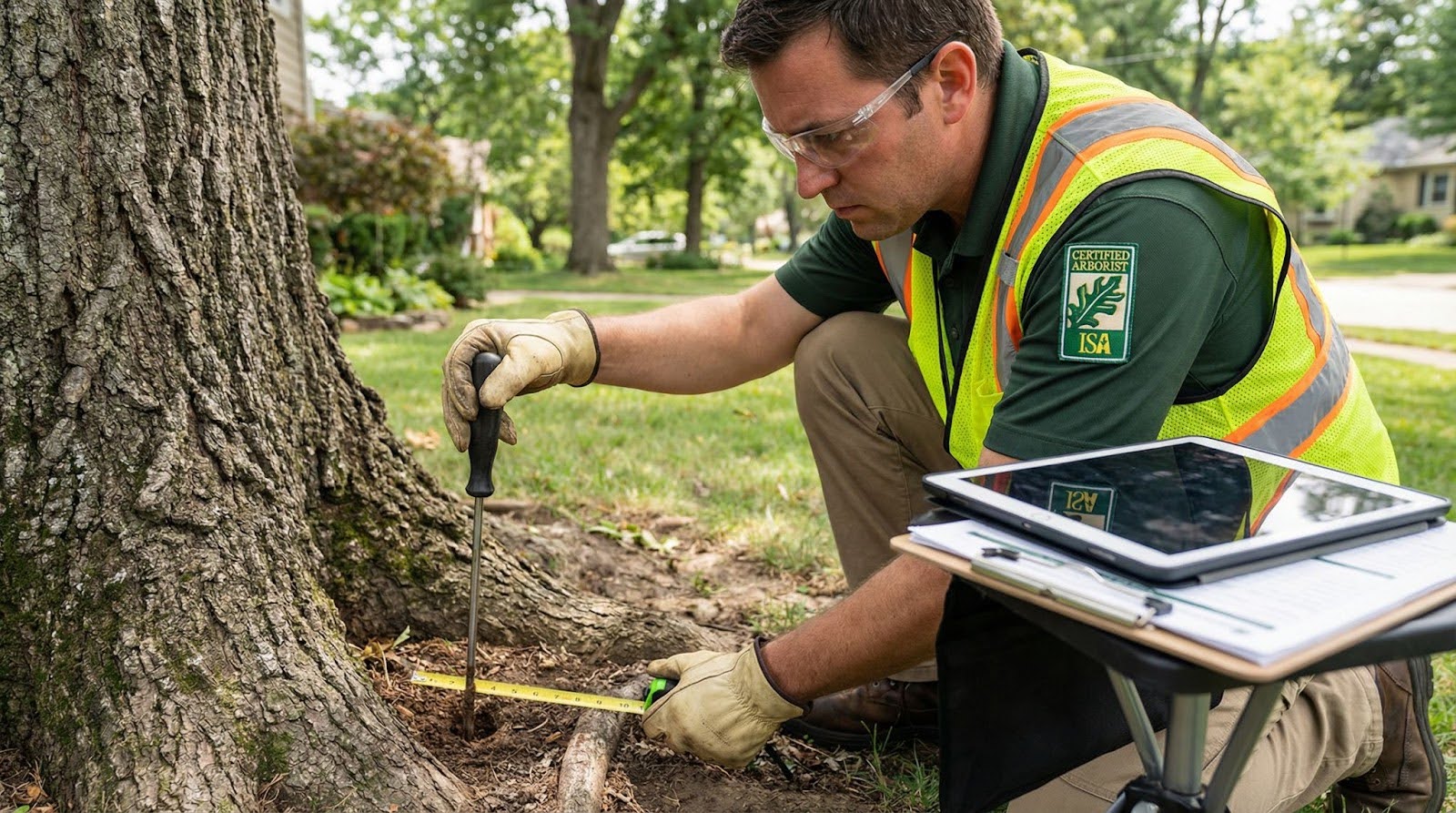
While not every situation needs an ISA certified arborist, working with qualified professionals is important for trees that show multiple warning signs. A trained eye can spot structural defects, internal decay, and root problems that are easy to miss from the ground.
Certified arborists and experienced crews can:
Perform a thorough tree risk assessment.
Explain the tree’s condition in simple terms.
Recommend pruning, bracing, or removal based on risk.
Work safely around power lines, buildings, and other trees.
In our daily work across Acworth, Kennesaw, Dallas, and Marietta, we act as that professional help for local homeowners. We combine safety, practical experience, and knowledge of how local soil and weather affect trees.
Frequently Asked Questions
1. How can I tell if my tree is dead or just dormant?
In winter months or during stress, many trees look bare. To check, scratch a small branch. If the layer under the bark is green and moist, that part is still alive. If it is dry and brown, that branch is dead.
If many branches stay dead into the growing season and there is little new growth, the tree may be dying. At that point, a professional tree inspection can help you decide whether to keep the tree or plan for removal.
2. Are leaning trees always unsafe?
Some leaning trees remain stable for years, especially if the lean developed slowly and the root system is strong. However, a tree that starts leaning more after storms or rain, or one that leans over a house or utility lines, is a safety risk.
A professional can look at the root system, trunk, and soil to see if the tree still has good structural support. If not, they may recommend removing the tree before it falls.
3. Can a tree with fungi growing at the base be saved?
Mushrooms growing at the base or large fungus on the trunk usually mean there is decay inside. Once internal rot sets into the roots or lower trunk, it will not reverse. The tree may still have leaves, but its structural integrity is weaker.
A professional can assess how advanced the decay is. In many cases, especially for large trees near houses or driveways, removal is the safest way to reduce the risk of a fall.
4. How much does tree removal cost in Georgia?
Tree removal costs vary based on tree size, location, access, and complexity. Large trees over structures or close to power lines often require more equipment and time. Removing a tree in an open yard is usually simpler than removing one over a roof.
We always provide clear estimates that explain what is included—cutting, cleanup, and disposal. This helps you understand the cost before any work starts.
5. When should I call for professional help?
You should call for professional help if you notice:
Leaning trees that recently changed position.
Large dead branches over areas you use often.
Fungi growing or large fungus at the base.
Decaying roots, trunk cracks, or multiple warning signs together.
Early action can prevent property damage and reduce the chance of emergency tree work after a storm.
About Vilchis Tree Services Pro
At Vilchis Tree Services Pro, we focus on safe, efficient, and honest tree care for homeowners and businesses in Acworth, Kennesaw, Dallas, Marietta, and surrounding Georgia communities. Our crew works with many tree species in this region and understands how soil, slopes, and weather affect tree’s health and structural strength.
We are fully insured and follow current industry best practices for safety on every job. Our team handles everything from small branches and light pruning to taking down large hazardous trees in tight spaces. We communicate clearly, protect your property, and clean up all tree limbs and debris when the work is finished.
If you need help deciding whether to remove a tree or keep it, we offer straightforward advice. We explain the risks and options in plain language so you can choose what works best for your home and your budget.
Schedule Your Free Tree Assessment
Tree problems rarely get better on their own. Small warning signs today can turn into a tree failure in the next round of strong winds. Our team at Vilchis Tree Services Pro is ready to help you protect your property and the people who live on it.
If you’ve seen any of the signs tree needs removal listed in this article or if a tree simply does not look right contact us today. We can inspect your trees, explain what we find, and help you decide whether to care for them or remove them for your property’s safety.
Would you like me to now help you tweak individual headings or sentences based on the exact Surfer score feedback you’re seeing in the editor?
Loblolly Pine Problems in North Georgia: Signs, Solutions & When to Remove
As a local tree service working in Marietta, Acworth, Kennesaw, and nearby North Georgia neighborhoods, we handle loblolly pine issues every week. These pine trees shape a lot of our local landscape, but they are also one of the first tree species to struggle once stress and disease build up. In this guide, we explain common loblolly pine disease problems, how southern pine beetle and other bark beetle pests attack, and when it makes sense to remove a tree instead of trying to save it.
What Is Loblolly Pine and Why This Tree Species Struggles in North Georgia
Loblolly pine is a native pine species common across the southeastern United States, especially in Georgia. It grows fast, reaches impressive heights, and often forms small pine stands in older neighborhoods. That fast growth can also make mature trees more vulnerable to wind and disease as they age.
You can recognize loblolly pine by:
Needles in bundles of three, usually 6–9 inches long.
Cones around 3–6 inches long with sharp points on the scales.
Bark that develops large bark plates with reddish brown cracks on mature trees.
Tall, straight trunks that give a strong vertical look in the landscape.
On many properties, loblolly pine stands alongside other tree species like oaks and maples. Mixed plantings are usually healthier than pure pine stands, but loblolly pine still tends to be the main host tree for several important insects and diseases in our area.
Common Loblolly Pine Disease Problems Homeowners Should Know
Loblolly pine disease issues come from several directions. Some are fungal pathogens in the needles or stems. Others affect roots below the surface. All of them are more likely to show up on stressed trees that already have problems with soil or moisture.
Main loblolly pine disease problems we see include:
Needle and tip blights that thin the crown over time.
Fusiform rust, which creates spindle‑shaped swellings and can weaken stems.
Pitch canker, which causes resin‑soaked lesions and scattered branch dieback.
Root diseases that cause slow decline and hidden wood decay.
As these diseases progress, they increase tree mortality and make bark beetle attack more likely. A healthy loblolly pine can shrug off minor stress, but a tree weakened by disease becomes much more susceptible to insects.
Southern Pine Beetle: How This Bark Beetle Threatens Loblolly Pine
Southern pine beetle is one of the most serious bark beetle pests in the southern United States. It targets loblolly pine and other pines across the southeastern United States and can spread rapidly through wooded neighborhoods. Even a small southern pine beetle outbreak can kill many loblolly pines if you ignore it.
The beetle itself is tiny, about the size of a grain of rice and roughly a quarter inch long in its adult form. Southern pine beetle and related bark beetle insects spend most of their life cycle under the bark, where they carve S‑shaped larval galleries and carry staining fungus that helps block the flow of water and nutrients.
A southern pine beetle infestation usually hits stressed trees first, but once populations build up, attacking beetles will move into nearby loblolly pines that looked healthy. In a group of pines, one heavily infested tree can act as a center that sends beetles into uninfested trees around it.
Southern Pine Beetle Attack Patterns on Loblolly Pine
We can often spot southern pine beetle and other bark beetle species by the changes they leave on the trunk. The outer bark tells a story if you know what to look for.
Common attack signs on loblolly pine include:
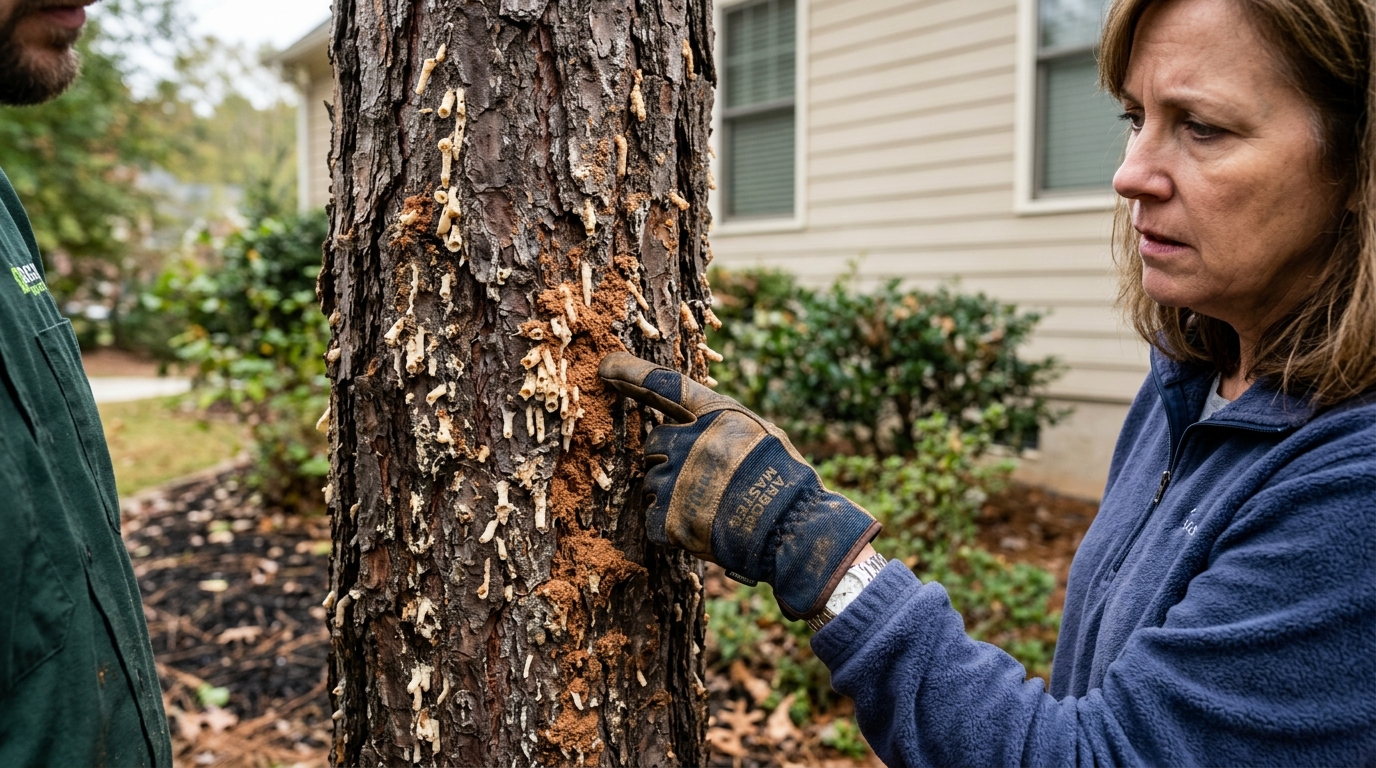
Pitch tubes: Small, popcorn‑like blobs of resin on the bark where beetles bored in. These tubes can be scattered from eye level up the trunk.
Boring dust: Fine, sawdust‑like material that collects in bark crevices, around the tree’s base, or on nearby surfaces.
Crown color change: Needles shifting from green to light green, then yellow, red, and finally brown as the tree declines.
Bark loosening: Sections of bark that peel away easily; under them you may see winding larval galleries carved in the inner wood.
We treat any loblolly pine with multiple pitch tubes and browning needles as a likely infested tree. If that tree stands in a group of pines, we check neighbor trees for early attack signs so we can act before outbreaks spread.
Black Turpentine Beetle and Other Bark Beetle Pests on Loblolly Pine
Southern pine beetle is not the only bark beetle we see on loblolly pine. Black turpentine beetle is another major pest of stressed trees in North Georgia.
Black turpentine beetle usually attacks the lower trunk and tree’s base. Signs include:
Large pitch tubes, often an inch long or more, from ground level up to 10–12 feet on the trunk.
Attacks concentrated on injured or stressed trees near driveways, construction, or recent storm damage.
Overlapping activity with other bark beetle species in the same pine stands.
While black turpentine beetle does not usually spread as fast as southern pine beetle, it still plays a part in overall tree mortality on stressed loblolly pine. Together, these beetles and loblolly pine disease problems can turn a group of mature trees into a line of dead trees if homeowners wait too long.
Early Signs Loblolly Pine Disease Is Affecting Your Pine Trees
We encourage homeowners to walk their yard and look closely at loblolly pine a few times each year. Early detection gives you a chance to protect other tree species and reduce risk around your home.
Key early signs include:
Needle changes: Sudden yellowing, reddening, or browning in parts of the crown.
Thinning crown: One loblolly pine looks sparse compared to other pine trees nearby.
Branch dieback: Random branches with brown needles or dead tips scattered through the canopy.
Swellings and cankers: Spindle‑shaped galls, resin‑soaked patches, or odd bulges on branches and stems.
These issues may come from fungal pathogens, root problems, or early bark beetle activity. In our experience, a loblolly pine that stands out from its neighbors in a negative way usually has something going on that deserves a closer look.
Early Warning Signs Before Pines Become Dead Trees
By the time loblolly pines are completely brown from top to bottom, treatment is no longer realistic. The goal is to spot trouble while the tree still has some green and before it dries out and weakens.
Dead tops: The highest part of the crown turns brown first while lower parts stay green.
Multiple dead branches: Several large limbs die back in a single season.
Leaning: A mature tree shifts or leans more after storms or heavy rain.
Fungi and mushrooms: Fungus at the tree’s base or on the lower trunk, which suggests internal decay.
A tall loblolly pine with a dead top or big dead branches near a house is a real risk. Those limbs can fall in bad weather, and the whole tree may follow.
Managing Loblolly Pine Disease: From Monitoring to Removing Dead Trees
We use a simple step‑by‑step approach when we help homeowners decide what to do with loblolly pine. Treatment or monitoring is sometimes an option. In other cases, removal is the safer move.
You may be able to monitor or support a tree if:
Disease is light and most of the crown is still green and full.
Fusiform rust galls are small and not on the main trunk.
Pitch canker lesions are scattered and not causing major dieback.
The tree stands away from buildings, driveways, and outdoor living areas.
We usually recommend removal when:
A loblolly pine shows clear southern pine beetle infestation or multiple bark beetle attack signs.
The tree has a dead top, widespread browning, or very thin foliage.
There is root decay or base damage combined with a lean.
The tree stands close to a home, garage, or other important structure.
In many jobs, we also look at nearby pine stands and individual trees from other species. Sometimes removing the worst infested tree gives uninfested trees nearby a better chance to stay healthy.
How Loblolly Pine Fits Among Other Tree Species in North Georgia Landscapes
Loblolly pine is a big part of North Georgia landscapes, but it is not the only tree on most lots. Many yards mix loblolly pine with hardwoods and other conifers. That variety can help limit how fast certain pests spread.
From a practical standpoint, we often suggest:
Thinning crowded loblolly pine so individual trees have more space, light, and root room.
Removing the weakest loblolly pine in a group to reduce stress on the others.
Planting a mix of tree species over time so the yard does not rely on just one kind of tree.
These choices cut down stress, which is a key driver for bark beetle attacks and loblolly pine disease. Lower stress means less risk in the long run.
Example: Southern Pine Beetle in a Kennesaw Backyard
A recent job in Kennesaw shows how fast these issues can build. A homeowner called us about one loblolly pine with fading needles and sticky spots on the trunk. When we inspected, we saw multiple pitch tubes, boring dust, and discolored needles in the upper crown. That tree was clearly an infested tree.
We then checked other loblolly pines in the same line. Two more showed early pitch tubes and light crown thinning. We explained that southern pine beetle spreads quickly through small pine stands and that uninfested trees nearby were at risk if we waited. The homeowner chose to remove the worst tree right away and schedule removal of one more, then keep a close eye on the rest.
That early detection and quick action likely stopped a small problem from turning into a bigger southern pine beetle outbreak on the property.
When to Call a Professional About Loblolly Pine Disease and Southern Pine Beetle
Homeowners can spot many early signs, but confirming loblolly pine disease, bark beetle attack, or hidden decay often calls for a trained eye. Our team looks at the whole tree and its surroundings, not just one symptom.
You should call for a professional assessment if:
You see pitch tubes, boring dust, or larval galleries under loose bark.
A tall loblolly pine leans or has a dead top near your house or driveway.
Mushrooms or fungus are growing around the tree’s base.
Several loblolly pines in the same area look weaker than other trees.
We inspect individual trees and the wider landscape, explain the risk in plain language, and help you decide whether to monitor, prune, or remove. Our goal is to keep your family safe and your yard looking good over the long term.
Schedule Your Loblolly Pine Assessment From Vilchis Tree Services Pro
Loblolly pine is a signature tree for our region, but loblolly pine disease and bark beetle attack can turn a strong tree into a hazard if you ignore early warning signs. Our crew works with these trees every day and understands how local stress and site conditions affect them.
If you see browning needles, pitch tubes on the trunk, leaning pines, or fungus at the base, reach out to our team. We’ll walk your property, check each loblolly pine, and give you clear, honest advice on whether to keep, care for, or remove those trees so your home and family stay safe.
How To Tell If a Tree Is Dangerous: A Safety Checklist for Georgia Homeowners
When you live around big Georgia oaks and pines, it is not always easy to tell whether you are looking at healthy trees or quietly dying trees that are turning into a safety risk. This checklist is designed to help you spot dangerous tree signs around your home, and to know when it is time to bring in a certified arborist fromVilchis Tree Services Pro for a closer look.
Why Spotting Dangerous Trees Early Matters
A single unsafe tree can lead to storm damage, property damage, and costly tree removal if it fails over your house, driveway, or power lines. Catching warning signs early gives you options like proper pruning, targeted treatment, or removal before falling trees or large branches become an emergency safety hazard.
Keeping your trees safe is not just about avoiding damage; it also protects your property value and the overall look of your yard. A quick tree inspection from a tree care professional can separate trees that just look rough from truly hazardous trees that need immediate attention.
Warning Signs In The Trunk And Base
Start with the tree’s trunk and the base of the tree, because that is where many serious structural defects show up first.
Cracks, Rot, And Hollow Spots
Look closely at the trunk:
Vertical cracks, trunk splitting, or long splits running up and down the tree’s structure
A hollow trunk you can see into, or places that sound hollow when gently tapped
Missing bark, dead wood, and dead branch stubs along the trunk
Mushrooms growing or fungi growing on the bark or at the base of the tree
These tell tale signs can point to internal decay and structural integrity problems. A tree can look green in the crown and still be extremely dangerous if the interior is rotten.
Root Problems And Lean
Tree roots act like the foundation of a house. When that foundation is failing, it is just a matter of time before the entire tree becomes unstable.
Watch for:
Root rot, soft or spongy wood at the base of the tree, or fungi growing around the roots
Root problems such as lifted soil, cracked ground, or roots suddenly exposed on one side
A leaning tree or sudden lean that you do not remember seeing before
Tree leaning more after heavy rain or other weather events
Severe root damage can make a tree dangerous even if the branches look fine. If you see a sudden lean or big changes at the base, get that tree inspected quickly.
Warning Signs In The Crown And Branches
Next, look up into the tree’s crown and major branches, especially on large trees near your home.
Dead Or Damaged Branches
Focus on how the branches look during the growing season:
Dead branches with no leaves in season while other branches are full
Broken branches hanging up in the canopy or caught on other branches
Thin leaf cover only on part of the tree’s crown, while other trees nearby are full
Many trees in your yard dropping more branches than usual after mild weather
Dead trees or severely stressed trees often show dead wood starting in the upper crown first. These branches can snap and fall without warning, especially in high winds or under heavy snow.
Weak Unions, Multiple Trunks, And Included Bark
Certain growth patterns increase the risk of failure:
Multiple trunks or two or more stems growing from the same point at a tight “V” angle
Included bark (bark pinched between stems instead of a strong, flared union)
Large branches attached at narrow angles with visible cracks near the joint
These structural defects can make large branches or entire sections peel away in storms. Acertified arborist can recommend cabling, bracing, or removal depending on how advanced the problem is.
Location, Targets, And How Much Risk You Are Willing To Carry
A tree becomes more dangerous if there is something important under it. The same structural problems on small trees in a back corner are very different from the same issues hanging over a bedroom.
Ask yourself:
If this tree falls, what will it hit: roof, vehicles, playset, power lines, or other structures?
Are there large branches directly over common walkways, the driveway, or outdoor seating areas?
Is this tree close enough to the house that severe damage would make it hard to live there while repairs happen?
Trees growing in tight spots, over structures, or near power lines deserve extra attention. When a tree dangerous enough to cause major property damage is right next to the house, it is often better to have a local arborist check it sooner rather than later.
When To Call A Professional Tree Service
You do not have to decide on your own whether a tree is safe enough to keep or risky enough to remove. Some warning signs are obvious, but others require training and experience to interpret correctly.
It is time to call a tree service company like Vilchis Tree Services Pro when:
You see multiple warning signs such as vertical cracks, hollow trunk sections, root rot, or a sudden lean.
You notice dead trees, dying trees, or hazardous trees close to the house, driveway, or utility lines.
You are unsure how bad the problem is but your gut says a tree feels like a safety risk.
You have many trees on the property and want a thorough tree inspection to keep them as safe as possible.
A certified arborist can identify hazards, explain what they mean in plain language, and lay out options. That might be proper pruning to remove large branches, support for mature trees that you want to preserve, or full tree removal where the risk is too high.
How Vilchis Tree Services Pro Can Help
Vilchis Tree Services Pro is your local tree service forKennesaw,Acworth,Marietta, andDallas, and the team spends every week walking properties, checking tree roots, trunks, and crowns for safety issues.
When you schedule a visit, you can expect:
A careful look at the entire tree, from the base of the tree to the very top of the crown
Honest feedback about which trees are healthy trees, which need monitoring, and which may need action
Recommendations that balance safety, tree care, and your property value, including options like proper pruning, cabling, or removal
If you are seeing possible warning signs or just want your trees checked before the next round of storms, contact Vilchis Tree Services Pro. A quick visit from a local arborist can help keep your trees safe, your home protected, and your family sleeping easier when the wind picks up.
Emergency Tree Removal Near Me in Kennesaw, Acworth, Marietta, and Dallas
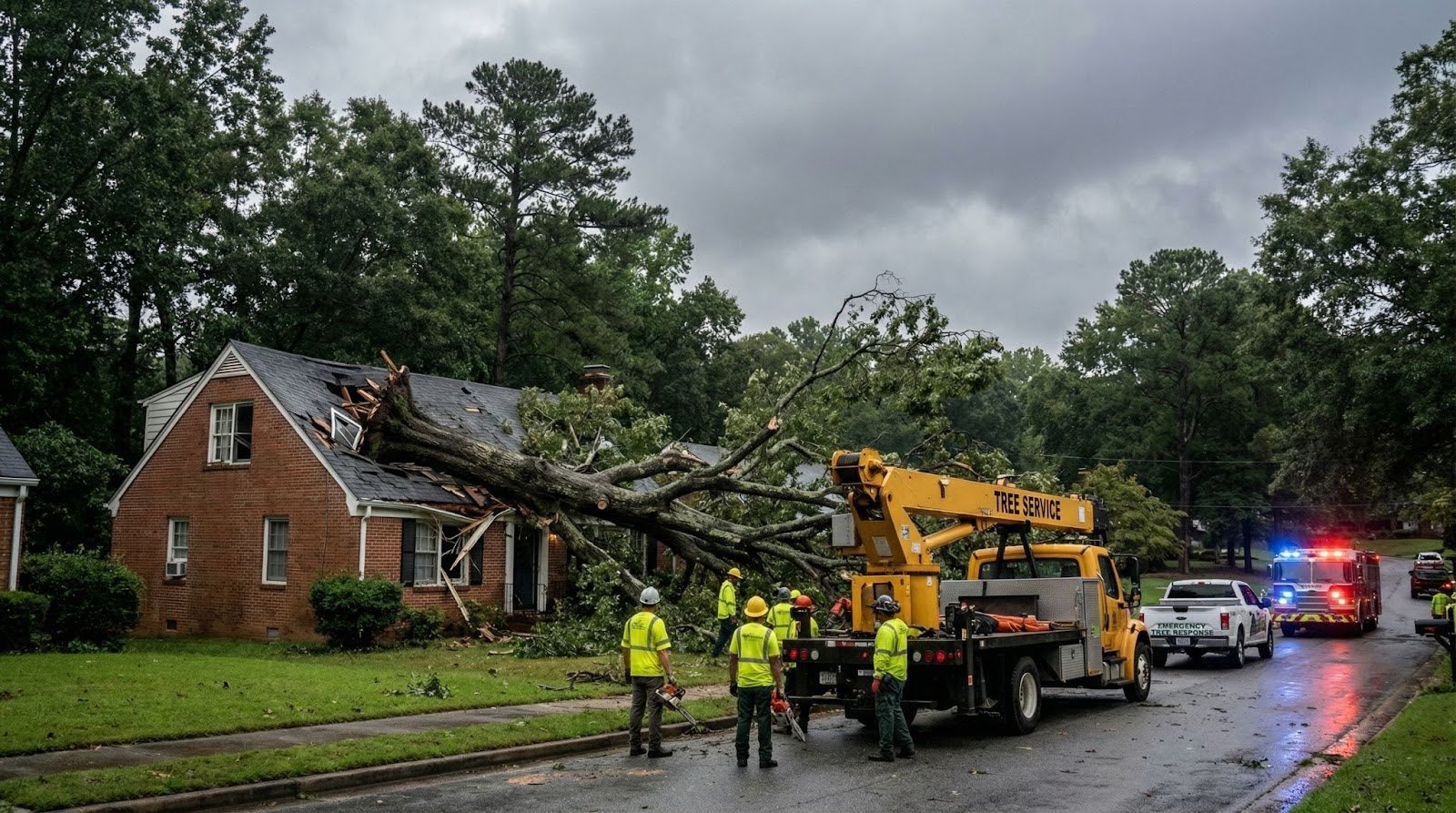
When you are staring at a fallen tree in the yard or watching large limbs sway over your roof in high winds, you are not thinking about maybe having a tree removed, you are thinking about getting your property safe again. This guide explains what really counts as an emergency tree situation, what a professional emergency tree removal looks like, and when it is time to callVilchis Tree Services Pro for immediate assistance.
What Really Counts As Emergency Tree Removal?
Emergency tree removal is not just regular tree removal done faster; it is reserved for situations where there is immediate danger to people, buildings, or access. Emergency situations often involve unstable, storm damaged trees or dangerous trees already affecting your home or other structures.
Common red flags:
A fallen tree or large limbs on your roof, garage, fence, or across the driveway.
Storm damaged, cracked, or broken limbs hanging over bedrooms, walkways, or vehicles.
Trees suddenly leaning toward the house after a storm, especially large trees with obvious structural weakness.
Falling branches or damaged branches coming down in calm weather, showing hidden tree damage.
In these moments, property owners should treat it as an immediate emergency and avoid DIY removal attempts near power lines, roofs, or tight spaces.
First Steps Right After A Tree Falls
Once a tree falls, the order you do things matters for safety and for avoiding costly repairs. The goal is to protect people first, then your property, and only then worry about cleanup.
Protect people and keep a safe distance
Keep everyone away from the area, especially under hanging branches or partially fallen trees that could shift.
If a tree falls near power lines, assume those lines are live until the utility company says otherwise.
Check the extent of tree damage
Look for structural damage to the roof, walls, vehicles, and other structures, but do it from a safe distance.
Note whether there are large limbs pinned in place, broken limbs lodged on the roof, or debris blocking doors or the driveway.
Document your property
Take clear photos and videos of the fallen tree, the debris, and any damaged property from multiple angles.
Capture the location of the tree on the house and other structures; this helps when speaking with the insurance company.
Contact your insurance company
Explain what happened, where the tree is, and what it hit.
Ask what they recommend for emergency tree service and what documentation they will need from you.
Call Vilchis Tree Services Pro for emergency tree removal
Describe the tree size, location, visible tree damage, and whether power lines or other hazards are involved.
Request an immediate response from an experienced team that has the right equipment for prompt removal.
What Professional Emergency Tree Removal Looks Like
A professional tree company does not just show up with chainsaws; it brings specialized equipment, an experienced team, and a clear plan to safely remove trees without causing further damage.
On a typical emergency tree removal, you should expect:
Thorough safety and tree health assessment
Evaluating tree size, structural weakness, and how the tree falls changed the load on your roof or yard.
Identifying potential hazards like cracked branches, unstable trunks, and hidden damage that could cause additional damage during the work.
Planning the removal process
Deciding where to cut, how to rig, and what specialized equipment is required, such as bucket trucks, rigging gear, or cranes.
Mapping out how to protect your property and restore safety while minimizing risk to workers and your home.
Controlled cutting and debris management
Cutting large limbs into manageable sections and lowering them carefully to avoid structural damage.
Organizing debris, branches, and logs for removal, and discussing options like stump removal or stump grinding if you want the area fully cleared.
Professional emergency tree services focus on prompt removal while protecting your property’s safety, using the latest equipment and trained crews instead of risky short‑cuts.
How Insurance Usually Fits Into Emergency Tree Work
Insurance can feel confusing when trees are involved, but a few basics help set expectations. Whether emergency tree removal is covered depends on several factors, especially what the tree hit and why it came down.
Insurance is more likely to help when:
A storm, high winds, or another sudden event caused the tree falls or storm damaged trees.
The fallen tree or large limbs hit your house, garage, fence, or other structures listed on your policy.
There is obvious structural damage and debris that needs to be cleared to access the property.
Insurance is less likely to help when:
You want to remove trees that are leaning or ugly but have not caused damage yet.
A fallen tree only lands in the yard without harming structures or blocking essential access.
You simply want preventative tree cutting or regular maintenance to promote healthy growth.
A good tree service can help by providing a clear written description of the removal process, debris handling, and any stump grinding or additional services, so the property owner can share accurate details with the insurer. For more information on storm damage and insurance claims, theFederal Emergency Management Agency (FEMA) provides helpful resources on disaster preparation and recovery.
How To Choose The Right Emergency Tree Service
When you search for “emergency tree removal near me,” you will see a lot of options. In an emergency, it is tempting to pick the first number you see, but choosing carefully can prevent a lot of stress.
Real reviews, photos, and evidence of comprehensive tree care services, not just a phone number.
Professional emergency tree services and safety focus
Experience handling emergency tree service calls, tree emergencies, and storm damaged properties.
Crews that arrive with the right equipment, proper safety gear, and a plan to restore safety instead of improvising.
Straightforward communication
Explanation of what will be done in this emergency situation, what it will cost, and what is considered non‑emergency or optional work.
Willingness to answer questions about tree care, tree health, and follow‑up trimming or regular pruning to reduce future risk.
Vilchis Tree Services Pro is built to handle this kind of work: from immediate action in emergency response to longer‑term tree care that keeps your yard and property safe.
Preventing Future Emergencies With Regular Tree Care
Emergency services are there when you need them, but you can avoid many emergencies with consistent, thoughtful tree care. Regular maintenance is what helps keep valuable trees healthy and reduces sudden failures.
Simple prevention steps:
Schedule periodic tree service inspections to identify hazards like structural weakness, dead or damaged branches, and dangerous trees before they become emergencies.
Use regular pruning and tree trimming to remove overextended or heavy branches above roofs, driveways, and outdoor living areas.
Remove trees that are clearly declining or in immediate danger of failing close to the house rather than postponing year after year.
Ask about stump removal or stump grinding after major removals so roots and stumps do not create future issues in tight spaces or along driveways.
Good tree care does more than promote healthy growth; it also protects your home, keeps your yard usable, and reduces the need for urgent calls in the middle of the night.
Clear Next Step: Call Vilchis Tree Services Pro
If you are dealing with a fallen tree, broken limbs, or storm damaged trees that worry you, you do not have to figure it out alone or risk DIY removal near your home.
Call Vilchis Tree Services Pro for emergency tree removal and tree service in Kennesaw, Acworth, Marietta, and Dallas. You will get:
Immediate assistance from a team used to handling emergency tree situations and complex removal work.
A clear explanation of the plan, the risks, and the options for debris cleanup and follow‑up tree care.
Professional emergency tree services focused on making your property safe again as quickly and safely as possible.
Whether you need help right now or you want to get ahead of the next storm with an inspection and regular maintenance, reaching out to a professional tree service is the best way to protect your property, your family, and your peace of mind.
Tree Removal Cost & Insurance Guide for Kennesaw, Acworth, Marietta, and Dallas Homeowners
As someone who spends more time with a rope and saddle than a desk and keyboard, this breaks down what really affects tree removal cost around here and how homeowners insurance fits in so you can make smart choices without guessing at the final cost.
What Really Drives Tree Removal Cost
Tree work is more like a small construction project in your yard than a simple flat-fee service, and the cost of tree removal can vary a lot from one property to the next. The same sized tree can be simple in one yard and a full tree removal job in another, especially in hard to reach places or tight spots near the house.
Several factors significantly impact the removal cost:
Tree’s size and type
Taller trees with thick trunks take more cutting, more rigging, and more time, which raises the overall cost.
Small trees or a single healthy tree out in the open are usually on the lower end of the average price range, while large trees or a dying tree with decay are at the higher end.
Tree’s location and risk
The tree’s location matters: close to nearby structures, power lines, fences, pools, or other structures means extra precautions and specialized equipment.
If a tree poses a safety risk because of cracks, a weak tree trunk, overgrown branches, or an immediate risk of failure, it becomes a more technical tree removal process.
Access, cleanup, and additional services
Easy access with proper equipment and a clear surrounding area helps keep the total cost down.
Tight backyards, steep slopes, or multiple trees in cluttered areas mean more labor, more time, and often more debris removal and wood chipping.
Stump removal or stump grinding, hauling, and other additional services add to the final cost when you need everything cleaned up.
If a large tree is big, close to your home, and hanging over important parts of your yard, expect thattree removal service in Dallas to be on the higher side of the average cost range.
Typical Cost Ranges You Can Expect
Every yard in Kennesaw, Acworth, Marietta, and Dallas is different, so any accurate estimate has to come from someone who has actually seen your trees and your root systems up close. In general, though, tree removal services are priced by the tree’s size, tree species, risk level, and how difficult it is to safely remove it.
You will usually see patterns like this:
Small trees
Small trees and simple jobs, like removing a tree that is short, away from structures, and easy to access, often land in the “few hundred” range for a single tree.
Medium trees
Medium trees with moderate height and some obstacles around them typically fall somewhere in the mid hundreds, depending on tree condition and tree type.
Large trees and high‑risk trees
Large trees or damaged trees near roofs, power lines, or other structures cost more, especially if specialized equipment or a stump grinder is needed.
If you want a tree removed plus stump grinding and no debris left behind, expect an additional cost on top of the base removal process.
The average cost people talk about online is just a starting point; what you actually pay will vary based on several factors and your specific yard, not national labor statistics or generic rural areas vs suburbs charts.
When Homeowners Insurance Helps (and When It Does Not)
Homeowners insurance can lower the overall expense of tree work in some storm damage situations, but it does not cover every tree removal job.
In simple terms:
Insurance is more likely to help when:
A storm damage event, like wind or lightning, makes a tree fall and that tree falls on your house, garage, fence, or other covered structures.
The insurance company pays to have the tree removed from the building and for repairs, sometimes including part of the debris removal.
Insurance usually does not help when:
The tree is still standing, looks unsafe, or has an extensive root systems problem, but has not failed yet.
Fallen trees land only in the yard and do not hit anything the policy covers.
You simply want to remove trees for more sun, less mess, or to change the natural beauty of your landscaping.
If a tree falls on something important:
Make sure everyone is safe and stay away if tree falls have brought down lines or created a safety risk.
Call the power company if power lines are involved.
Take photos and videos of the tree removal job area, the surrounding area, and the damage.
Call your homeowners insurance company and open a claim before too much cleanup happens.
Bring inprofessional tree removal services that understand the tree removal process in insurance situations and can document what it took to safely remove the tree.
A good professional tree service does not replace your insurance company, but it makes the removal process smoother by providing a clear invoice, notes on the tree’s location, and before and after photos.
For more details on how homeowners insurance policies typically handle tree damage, the Insurance Information Institute provides comprehensive guidance on coverage scenarios and claim processes.
Ways to Save Money Without Cutting Corners
There are real ways to save money on the overall cost of removing a tree without risking your house or hiring someone who is not insured.
Smart options:
Combine work and plan ahead
If you have multiple trees that need work, doing them in one tree removal job often lowers the average cost per tree.
You can ask about trimming overgrown branches or doing stump grinding at the same time while the crew and equipment are already there.
Be flexible on timing
If it is not emergency tree removal, being flexible about the date lets a professional tree service group your job with others in your area, which can help save money.
Know when not to DIY tree removal
DIY tree removal is tempting when you want to lower the removal cost, but removing a tree near power lines or a roof is risky without proper equipment and training.
Cutting small branches or light pruning is one thing; safely remove a dead tree with heavy branches over a driveway is another.
The one place not to cut corners is safety and insurance; a cheap quote from someone who is not a professional tree removal company can turn into a big bill if something goes wrong.
When Removal Is the Smart Move
As an arborist, the goal is not to remove trees just because they are there; it is to remove a tree when it truly makes sense.
Removal is worth considering when:
The tree condition shows rot, deep cracks, or cavities and the tree poses a clear safety risk.
The tree’s location is over the house, driveway, or where people spend time, especially if you see dead tree limbs over those spots.
Roots and root systems are already lifting sidewalks or damaging structures, or the tree type is known for shallow roots and instability.
You are planning a pool, an addition, or other work and having the tree removed now will save money later.
A walk through with someone who does this every day is usually the fastest way to tell whether you should keep a healthy tree, remove trees that are failing, or just do pruning for now.
How an Arborist Looks at Your Property
When walking your yard in Kennesaw, Acworth, Marietta, or Dallas, a careful pro is looking well beyond just “big or small trees.”
What gets checked:
Structural issues in the tree trunk, main unions, and major branches.
Root systems and soil around the base, including fungi, soft spots, or heaving that show deeper problems.
Clearance around roofs, driveways, decks, and other structures in the surrounding area.
Tree species and how that tree type behaves in storms, plus whether anything might be a protected species.
From there, you get options:
Removing a tree entirely versus heavy pruning, cabling, or monitoring.
Doing the most urgent work now and scheduling less urgent trees later so you can spread out the overall expense.
Choosing whether stump grinding or stump removal should be included, or if you are fine leaving the stump for now.
You should come away with a clear plan, an accurate estimate, and a sense of which trees are just providing shade and which ones really need attention. Whether you’re inAcworth,Marietta, orKennesaw, our team provides the same thorough evaluation process.
Encouragement From a “Tree Person”
If you are staring at a big oak and wondering “How much does tree removal actually cost for this thing?” you are not alone. The best move is usually to have a professional tree removal services crew take a look, explain the removal process, and give you a straightforward number you can understand.
Tree removal cost will always vary based on several factors, but dealing with problem trees before they become storm damage in the middle of the night is almost always the way to save money, stress, and your home’s natural beauty in the long run.
Ready to Get an Accurate Estimate for Your Property?
ContactVilchis Tree Services Pro for a professional assessment and transparent pricing. Serving Kennesaw, Acworth, Marietta, Dallas, and surrounding North Georgia communities with expert tree care since 2013.
Find the Best Tree Service in My Area: 2025 Guide with Top Reviews
Looking for the best tree service in my area? This guide reviews top local options and helps you choose the right one.
Key Takeaways
Carefully evaluate reviews, referrals, and credentials when selecting a tree service provider.
Tree removal costs in 2025 average around $750, influenced by factors such as tree size, type, and location.
Hiring certified arborists ensures high-quality tree care, promoting long-term health and enhancing property value.
How to Find the Right Tree Service Near You
Finding the right tree service near you involves:
Carefully evaluating reviews and referrals.
Checking the company’s credentials.
Looking for a list of references from previous customers to gauge reliability and quality of work.
Consulting resources like the Better Business Bureau to identify tree services that meet accreditation standards.
A company’s reputation within your neighborhood is a strong indicator of reliability. Word-of-mouth and local reviews from neighbors can help you identify trustworthy tree services.
When looking for a tree service, remember to check their licensing and insurance. This ensures that the company complies with local regulations and standards, protecting you from potential liabilities. These steps will guide you to a reputable tree service provider that suits your needs.
Check Reviews and Ask for Referrals
Online reviews are a goldmine of information when it comes to evaluating tree services. Platforms like Yelp and Google host reviews from previous customers, offering insights into the quality of a company’s work. Reading through these reviews can help you decide whether a particular tree service is right for you. Additionally, asking for referrals from friends, family, or professional nurseries can provide trustworthy recommendations.
When comparing tree removal companies, it’s important to look for those with strong reviews, proper insurance, and professional certifications to ensure safety and quality.
Conducting a thorough search across multiple review platforms gives a well-rounded view of the company’s reputation. Combining online reviews with personal referrals ensures you choose a tree service that has consistently satisfied its crew customers and has earned your trust.
Verify Licensing and Insurance
Verifying a tree service’s licensing and insurance is a crucial step. Licensing confirms that the company adheres to local regulations and industry standards, while insurance coverage protects you from potential liabilities. Homeowners should confirm that the tree service has both general liability and workers’ compensation insurance to cover any damages or injuries that might occur during the job.
To ensure the insurance is current, you can directly contact the tree service’s insured insurance provider. Checking for these certifications can save you from unexpected costs and provide peace of mind knowing that any issues will be adequately covered.
Understanding Tree Removal Costs in 2025
Tree removal costs can vary widely, influenced by several factors:
The tree’s size
The tree’s type
The tree’s location
The tree’s accessibility
Whether any permits are required
The layout and features of your yard, such as fences, landscaping, or other obstacles, can also impact the complexity and cost of tree removal.
In 2025, homeowners can expect to pay anywhere between $200 and $2,000 for professional tree removal services, with the average cost around $750.
Understanding these costs helps homeowners budget effectively for tree services. Knowing what to expect can prevent sticker shock and ensure you get the best value for your money.
Average Costs for Different Tree Sizes
The cost of tree removal is significantly influenced by the tree’s size:
Small trees under 30 feet tall typically cost between $150 and $450 to remove.
Trees measuring between 60 and 80 feet can cost between $800 and $1,500 to remove.
Trees over 80 feet tall can cost between $1,000 and $2,000 to be removed.
These costs reflect the increased labor and equipment needed for larger trees. Knowing the size and height of your tree is crucial for accurate budgeting and ensuring you’re prepared for the financial commitment.
Additional Costs to Consider
Budgeting for tree services should include additional costs beyond the base price for tree removal. Services like stump grinding, cleanup, and other post-removal tasks often incur extra fees. Stump grinding, for instance, is typically not included in the initial quote and can add to the overall cost.
Emergency tree services can also lead to higher costs, especially if needed during off-hours or after severe weather. Being aware of these potential additional costs ensures you’re not caught off guard when the bill arrives.
Key Services Offered by Tree Companies
Tree companies offer a range of services beyond just tree removal. Regular maintenance like trimming and pruning promotes tree health and resilience against environmental stresses. Professional tree companies assess the structure of each tree to identify potential risks and ensure safe trimming, removal, or maintenance. Engaging certified arborists for regular inspection and care can significantly reduce the risks of diseases and pests affecting trees.
Emergency services are another critical offering, with tree companies providing rapid response to remove hazardous trees and branches after storms to clean up the area around the house. These services ensure your property remains safe and aesthetically pleasing.
Tree Trimming and Pruning
Regular tree trimming and pruning are essential for maintaining tree health and improving their appearance. This practice promotes growth, reduces the risk of disease, and can significantly extend a tree’s lifespan. Proper pruning also helps shape trees, removing dead or overgrown branches to encourage healthy development.
The best times of year for trimming and pruning are typically during a tree’s dormant season or after blooming, as this timing helps promote healthy growth and minimize stress.
Hiring a professional arborist for these tasks ensures they’re done correctly, using the appropriate tools and techniques. This not only enhances the look of your trees but also supports their overall well-being.
Emergency Tree Services
Emergency tree services are crucial following severe weather events. These services quickly address hazards posed by fallen or damaged trees, preventing further property damage and ensuring safety. Having access to emergency tree care can be the difference between a minor inconvenience and a major disaster.
Tree companies offering exceptional service in emergencies help protect your property and provide peace of mind during extreme weather conditions. Ensuring your chosen tree service provider offers emergency care is a wise precaution.
Questions to Ask Before Hiring a Tree Service
Before hiring a tree service, asking the right questions can help you evaluate their reliability and quality of work. Inquiring about the company’s experience, methods, employee training and qualifications, and references from previous clients can provide valuable insights. A company’s employees play a key role in delivering quality service, so it’s important to ask about their experience and training to ensure the workforce is skilled and committed. Understanding these aspects helps you choose a company that fits your needs and standards.
Requesting a detailed estimate also allows you to enter a note related to compare prices and budget appropriately. This step is crucial in choosing the best value for your money while securing quality service close to your needs and effective communication, avoiding any mistake. A tip for this process is to ensure all details are clearly outlined, as this is worth the effort.
What Equipment Will Be Used?
The type of equipment a tree service uses is a strong indicator of their professionalism. Reputable companies utilize high-quality, professional-grade tools designed for specific tasks such as cutting, pruning, and stump removal. This ensures high safety and performance standards during the job.
Hiring a tree service that prioritizes equipment quality can lead to a safer and more effective tree care experience. Always ask about the tools and equipment they plan to use for your project.
How Long Will the Job Take?
Understanding the expected duration of the job helps you plan your schedule and gauge the company’s experience. A reputable tree service should be able to provide a clear estimate of how long the job will take. This transparency reflects their professionalism and planning capabilities.
Benefits of Hiring Professional Arborists
Hiring professional arborists offers numerous benefits for homeowners:
Certified arborists follow industry standards for best practices in tree care, ensuring your trees receive the highest quality maintenance.
Their expertise leads to enhanced tree longevity.
They contribute to improved property value.
Companies like Davey Tree, an employee-owned provider with a long-standing reputation for quality service and certification standards, exemplify the advantages of choosing an established, reputable tree care company.
Professional arborists are trained to identify and address tree health issues, providing tailored solutions that promote long-term tree health. This specialized care can prevent diseases and pests, ensuring your trees remain healthy and vibrant for years.
Expertise and Knowledge
Professional arborists undergo rigorous training and certification, equipping them with specialized knowledge in tree management. This expertise ensures your trees are managed correctly, promoting their health and longevity. Arborists’ deep understanding of tree biology and ecology allows them to provide the best care for your trees.
By hiring a certified arborist, you gain access to this wealth of knowledge and experience, ensuring your trees are in capable hands. This professional care can significantly enhance the beauty and health of your landscape. If you want to ensure the best results, consider to hire a certified arborist.
Long-Term Tree Health
The long-term health of your trees greatly benefits from professional care. Certified arborists possess in-depth training in tree biology, pest management, and disease prevention, enabling them to address the specific needs of different tree species. Their expertise ensures your trees receive tailored care that promotes their growth and resilience.
Regular inspections and maintenance by an arborist can identify potential health issues early, providing timely interventions to keep your trees healthy for years. This proactive approach helps maintain the beauty and vitality of your landscape.
Tips for Saving Money on Tree Services
Saving money on tree services is possible with a few strategic approaches. Scheduling tree services during off-peak seasons like winter can lead to significant savings, as demand is lower and many companies offer discounts. Homeowners can also save by performing some basic tree care tasks themselves.
Knowing when to schedule and what tasks you can handle on your own while working can help you manage costs effectively while ensuring your trees remain healthy and well-maintained.
DIY Tree Care Tips
DIY tree care can help maintain the health of your trees and reduce the need for professional interventions. Regular watering, mulching, and pruning promote stronger growth and prevent issues. Applying mulch around the base of trees helps retain moisture and suppress weeds.
Conducting regular inspections can catch potential problems early, such as discolored leaves or fungal growth. These simple steps can fill a long way in keeping your trees healthy, providing a strong foundation for their overall well-being. Live trees thrive with proper care.
Off-Season Discounts
Taking advantage of off-season discounts is a great way to save on tree services. Tree companies often offer lower rates during winter months when demand is lower. Scheduling services for late fall or early spring can also lead to better deals and more availability:
Take advantage of off-season discounts.
Consider scheduling services during winter months when demand is lower.
Schedule services for late fall or early spring to get better deals and more availability.
Planning your tree care activities around these off-peak times not only saves money but ensures you can book your preferred services promptly. This strategy maximizes both savings and convenience while allowing you to cut costs effectively.
Summary
Navigating the world of tree services in 2025 involves understanding key factors such as reviews, licensing, costs, and the benefits of professional care. By following the guidelines outlined in this guide, homeowners can find the best tree service providers, ensuring their trees receive the highest quality care.
From checking reviews to verifying certifications, understanding costs, and knowing the advantages of hiring professional arborists, this guide provides a comprehensive roadmap for making informed decisions. Embrace these insights and ensure your trees thrive for years to come.
Frequently Asked Questions
How do I verify a tree service’s insurance and licensing?
To verify a tree service’s insurance and licensing, contact their insurance provider directly to confirm current coverage and request to see their licensing documentation for compliance with local regulations. This due diligence ensures you hire a qualified and protected service.
What factors influence the cost of tree removal?
The cost of tree removal is primarily determined by the tree’s size, species, location, and accessibility. Additional factors such as stump grinding and emergency services can also increase the overall expense.
Why is it important to hire certified arborists?
Hiring certified arborists is crucial as they possess rigorous training and adhere to industry standards, ensuring expert care that promotes the long-term health of your trees. Their expertise minimizes risk and maximizes the beauty and safety of your landscape.
What are the benefits of scheduling tree services during off-peak seasons?
Scheduling tree services during off-peak seasons can lead to cost savings and enhanced availability of professionals. Take advantage of this to ensure your tree maintenance needs are met efficiently and affordably.
What are some DIY tree care tips to maintain tree health?
To maintain tree health, regularly water, mulch, and prune your trees, while also inspecting for signs of distress. These proactive measures can significantly reduce the need for professional intervention.
Tree Removal Near Plumbing: What to Know Before Taking Down That Oak
Thinking about removing that oak tree near your plumbing? It’s crucial to know the risks and precautions to avoid costly damage. This guide on tree removal near plumbing: what to know before taking down that oak covers everything you need to know. From assessing risks to professional advice, we’ll help you make an informed decision.
Key Takeaways
Tree removal near plumbing requires careful assessment to identify risks, including root intrusion that can damage pipes and foundations.
Signs of plumbing issues caused by tree roots include slow drainage, unpleasant odors, and wet spots in the yard; timely professional intervention is crucial.
Implement protective measures such as hiring certified arborists, using specialized equipment, and installing root barriers to safeguard plumbing during and after tree removal.
Assessing the Risks of Tree Removal Near Plumbing
Tree removal near plumbing presents several risks, including tree damage to plumbing lines and the stability of structures. Invasive tree roots can infiltrate plumbing systems, causing leaks and costly repairs. Roots can also compromise a home’s structure by causing cracks in walls or foundations. Removing a tree may be necessary due to health, safety, and property issues stemming from tree encroaching. Diseased trees and unhealthy trees can compromise a tree’s health, increasing the risk that the tree or its branches may fall and cause damage to nearby structures.
Considering the proximity of trees to plumbing lines can reveal potential risks and challenges. Recognizing these risks helps prevent additional harm to the plant’s stability and nearby properties during the removal of dead trees that have been pruned. During the removal process, careful handling of branches is essential to prevent damage to property and ensure safety. Moreover, complying with local regulations ensures that homeowners avoid legal complications. Some trees may be protected by local laws, requiring special permits for removal.
Let’s delve deeper into the specifics, starting with identifying plumbing lines.
Identifying Plumbing Lines
Before removing a tree, identifying plumbing lines is necessary to prevent accidental damage. An arborist should assess the tree and the area to ensure that all plumbing lines are properly identified. This step can prevent a myriad of plumbing issues, such as reduced water pressure caused by tree roots blocking pipes.
Marking and location these lines is a crucial initial step in the tree removal process.
Evaluating Root System Impact
Oak tree roots can spread widely, often growing near plumbing lines and impacting their structural integrity and function. Oak trees are known for their extensive root systems, which can spread large amounts underground and impact plumbing lines over a significant area. The growth of these roots is influenced by factors such as soil type, moisture availability, and the depth of plumbing lines. A tree’s roots can extend far from the trunk, seeking moisture and potentially causing issues by infiltrating pipes, leading to slow drainage or leaks. Signs of plumbing issues, such as wet spots in the yard or unpleasant odors, may indicate tree’s roots intrusion.
When plumbing problems occur, consider the following steps:
Investigate the root system for potential connections.
Consult a professional arborist to gain insights into the extent of root damage and necessary actions.
Have professionals assess whether tree removal is necessary or if root barriers and other solutions could mitigate the issue.
Potential Damage to Foundations
Large tree roots near plumbing lines can cause significant damage by:
Extending towards pipes or foundations.
Entering cracks in foundations and enlarging them, leading to structural damage.
Absorbing moisture from the soil around a home’s foundation, which can leave the soil dry and loose, causing foundation problems.
Destabilizing the soil around a concrete foundation, which can lead to cracks and shifts in the foundation, even though roots do not typically break through the concrete directly.
Exposed roots indicating potential damage to the foundation caused by tree growth.
Survey your foundation for root extension if you suspect damage, and hire a professional if needed. Installing root barriers between the tree and your foundation can help prevent future issues related to tree roots.
Both a home’s foundation and a house’s foundation can be affected by soil movement caused by tree roots, leading to cracks or shifts in the structure.
Assessing a tree’s distance from your house helps determine if it poses a contact or damage risk. Always hire a professional arborist for tree removal to ensure safe and effective removal without damaging plumbing or foundations.
Signs That Your Oak Tree Is Affecting Your Plumbing
Invasive tree roots can lead to multiple plumbing issues. Signs like slow drainage, unpleasant odors, and wet spots in the yard can indicate plumbing issues caused by oak tree roots. These roots can move into cracks in plumbing systems, causing damage and blockages. Regular inspections can help identify early signs of plumbing issues related to tree roots. At this point, it’s crucial to note that early detection of these signs is essential to prevent major plumbing issues.
Let’s explore these telltale signs in more detail.
Slow Drainage
Tree roots searching for moisture can infiltrate plumbing, causing blockages and leading to slow drainage. When roots block pipes, it typically results in a noticeable decrease in water flow.
Experiencing slow drainage should prompt hiring a professional plumber to diagnose if tree roots are the cause.
Unpleasant Odors
A rotten eggs smell often suggests decaying organic matter in pipes caused by invading tree roots. Poor drainage is typically the usual cause of foul smells from drainage pipes. Tree roots can obstruct plumbing, leading to backups and contributing to the decay of organic matter, causing unpleasant odors.
Wet Spots in Yard
Soggy areas in the yard often indicate leaking pipes, which may be caused by tree root intrusion. These wet spots are a common sign that roots have infiltrated the plumbing system, causing leaks that result in excess moisture in the soil.
Consulting your local government website to understand tree ownership and removal regulations.
Using a crane, which is often the best option for tree removal in confined spaces. Professional arborists typically remove a tree branch by branch to ensure safety and prevent damage to surrounding property.
Planning a staging area for placing equipment like chipper and log trucks.
Checking for nearby power lines and ensuring safe clearance before removal to prevent hazards and ensure compliance with safety regulations.
Watering the tree and surrounding soil the day before removal is essential to reduce dust and make the soil softer. Attempting tree removal without experience can cause more disruption and risks property damage.
Next, consider the specifics of hiring arborists for the job, using specialized equipment, and ensuring safety.
Hiring Professional Arborists
Certified arborists can evaluate tree’s health and potential plumbing risks before removal. A professional arborist can identify any potential threats that an oak tree poses to plumbing systems, helping avoid costly repairs.
Immediate repair of any detected pipe damage prevents further complications and maintains plumbing integrity.
Using Specialized Equipment
Using specialized equipment is crucial for safely removing trees near underground utilities. Choose an arborist with appropriate equipment to avoid damage during tree removal. The right equipment helps prevent damage to underground utilities during tree removal.
It’s recommended to use camera inspections to thoroughly check plumbing lines for potential issues post-removal.
Safety Gear and Precautions
Safety gear protects against injuries during the tree removal process. Tree removal can be potentially hazardous, so using safety gear and specialized equipment ensures the safety of the workers and prevents potential damage to the property.
Using protective gloves and goggles is crucial for careful tree removal.
Methods to Protect Plumbing During Tree Removal
Protective measures during tree removal are vital to prevent root damage to plumbing. Developing root systems can potentially damage utilities, plumbing, and foundations. In some cases, tree removal is the only option to prevent ongoing damage to plumbing and foundations. However, pruning can sometimes be used as a less invasive alternative to removal if the tree is not yet causing significant damage. Various methods, such as installing root barriers, using chemical root killers, and mechanical root cutting, can effectively manage and prevent root intrusion.
We’ll examine these methods in detail.
Root Barriers Installation
A root barrier is a physical or chemical barrier that blocks root growth. To effectively block tree roots from plumbing:
Construct root barriers from materials like plastic, metal, or stone.
Install barriers 30 to 60 inches deep for effectiveness.
The best time to install root barriers is before planting new trees.
Remove tree stump after grinding to prevent future root growth and protect plumbing.
A biobarrier, a geotextile fabric with herbicide, inhibits root growth. This type of root barrier combines physical and chemical methods to provide a more robust solution against invasive roots. Proper installation of root barriers can help prevent foundation problems and protect your home’s foundation from root intrusion.
Chemical Root Killers
Chemical root inhibitors are effective for several years but require reapplication. These treatments manage root growth that infiltrates plumbing systems. Reapplication of chemical treatments is necessary to maintain their effectiveness against root intrusion. Follow approved guidelines when using chemical root killers to ensure the safety of underground plumbing systems.
Glyphosate herbicide, containing at least 41% glyphosate, can effectively kill roots. Dying copper sulfate or salt mixtures can also kill roots in plumbing systems.
Use chemical treatments responsibly to avoid environmental harm and ensure plumbing safety.
Mechanical Root Cutting
Mechanical augers are designed to remove tree roots invading plumbing systems. The purpose of a mechanical auger is to eliminate tree roots in plumbing systems.
Use mechanical methods to safely cut and remove roots around plumbing lines. This method is effective in providing immediate relief from root intrusion and preventing further damage to the plumbing system.
Post-Removal Inspection and Maintenance
After tree removal, conducting a thorough inspection and maintenance of plumbing systems is crucial to ensure no damage has occurred during the removal process. Tree roots can infiltrate sewer lines, causing significant plumbing issues such as clogs and leaks.
Pipe liners can repair existing pipes and deflect tree roots without excavation. Regular inspections of newly planted poplar tree ensure they are not encroaching on plumbing systems. Proper watering techniques are crucial for newly planted trees to avoid excess moisture near plumbing.
We’ll break down these steps further.
Inspecting Plumbing Lines
A qualified plumber should inspect plumbing lines prior to using a mechanical auger. Post-removal inspection of plumbing lines is essential to check for any damage. This ensures that any issues caused by tree roots are identified and addressed promptly, preventing further complications.
Regular inspections maintain plumbing system integrity and prevent costly repairs.
Repairing Any Damage
Conducting a thorough inspection of plumbing lines post-removal is crucial to check for any damage. Immediate repair is necessary if significant damage is found to prevent further structural damage.
Consider how the tree’s roots might affect your home’s foundation and other structures during removal. Promptly addressing these issues ensures property stability and plumbing system longevity.
Regular Maintenance Tips
Ongoing maintenance practices keep roots at bay after using a mechanical auger. Regular inspections and proper watering techniques help maintain healthy plumbing systems and prevent future root intrusions.
Implementing these practices ensures that your plumbing system remains intact and functions efficiently.
Choosing the Right Replacement Plants
Selecting the right replacement plants after removing a problematic tree prevents future plumbing issues. Plants with shallow root systems help avoid plumbing damage. Additionally, choosing the right replacement plants can enhance your property’s curb appeal while minimizing future plumbing risks. Conduct proper measuring and research before planting trees to avoid root issues.
A certified arborist can help determine if a tree species is invasive. We’ll explore some suitable options and best practices for planting.
Non-Invasive Trees and Shrubs
Shrubs like dogwoods and azaleas typically have non-invasive root systems and are suitable choices. Avoid plants with aggressive root systems, like weeping willows, near plumbing to prevent potential damage.
Plant new trees far from plumbing systems and consider the type of trees chosen. These choices help maintain the integrity of your plumbing and prevent future issues.
Proper Planting Distance
Plant new trees at least 20 feet away from plumbing lines to minimize risks. Consider the mature size of most trees when determining planting distance from plumbing.
For large trees, planting at least 20 feet from the house is recommended to ensure there is enough space. Proper planting distance prevents root intrusion and protects your plumbing system.
Maintaining New Plantings
Roots from newly planted trees and shrubs can find weak points in plumbing or foundations, causing major problems and extensive damage. Regular maintenance, including proper watering techniques and growth monitoring, ensures new plantings grow quickly and receive essential nutrients to avoid becoming a ground problem.
These practices maintain the health of new plants and protect your plumbing system from future damage.
Summary
In summary, understanding the risks of tree removal near plumbing and taking the necessary precautions can save you from significant headaches and expenses. From assessing the risks and identifying signs of plumbing issues to preparing for safe tree removal and choosing the right replacement plants, each step is crucial for maintaining the integrity of your property. Implementing these practices ensures that your plumbing system remains intact and your property is safe from the potential damage caused by invasive tree roots. Remember, a stitch in time saves nine—taking these preventive measures today can prevent major problems tomorrow.
Frequently Asked Questions
Why is it important to identify plumbing lines before tree removal?
Identifying plumbing lines before tree removal is crucial to prevent accidental damage that could lead to costly repairs and service interruptions. Ensuring the integrity of your plumbing system protects your home and your budget.
What are the signs that tree roots are affecting my plumbing?
If you’re experiencing slow drainage, unpleasant odors, or wet spots in your yard, these are clear signs that tree roots may be infiltrating your plumbing. Addressing these issues promptly can prevent further damage.
How can I protect my plumbing during tree removal?
To protect your plumbing during tree removal, install root barriers and consider using chemical root killers or mechanical root cutting to prevent root intrusion. Taking these steps can help safeguard your plumbing system.
What should I do after removing a tree to ensure my plumbing is intact?
After removing a tree, it’s crucial to inspect your plumbing lines thoroughly, repair any damage found, and implement regular maintenance to avoid future problems. This proactive approach will help ensure your plumbing remains intact.
How do I choose the right replacement plants to avoid plumbing issues?
To avoid plumbing issues, choose non-invasive trees and shrubs, plant them at a safe distance from pipes, and commit to consistent maintenance. These steps will help prevent root intrusion and protect your plumbing system.
Top Tips for Preventing Tree Damage During Georgia’s Summer Storms
Summer storms in Georgia can severely damage trees. Looking for ways to protect them? Learn essential tips for preventing tree damage during Georgia’s summer storms in this article.
Key Takeaways
Understanding Georgia’s summer storms and their impact on trees is crucial for prevention and property protection.
Regular tree care practices such as pruning, strengthening root systems, and selecting storm-resistant species are essential for mitigating storm damage.
Post-storm inspection and timely intervention, including calling certified arborists when necessary, are vital for maintaining tree health and safety.
Understanding the Impact of Georgia’s Summer Storms on Trees
Georgia’s summer storms can be ferocious, bringing extreme winds and heavy rains that impact trees significantly during storm season. These severe weather events, including ice storms, can lead to storm damage that ranges from broken branches to entire trees being uprooted. Trees particularly vulnerable to storm damage have:
Weakly attached branches
Stem girdling roots
Inadequate root systems
Mature trees, young trees, newly planted trees, and small trees each face unique vulnerabilities during storms. Mature trees may suffer from structural weaknesses or decay, while young trees and newly planted trees are more susceptible due to underdeveloped root systems. Small trees can be easily uprooted or damaged, especially if not properly supported.
When these storm hits, the risk of tree failure increases, often resulting in personal and property damage.
Preventing tree damage is far more effective and less costly than dealing with the aftermath. Storms can lead to the expensive removal of downed trees and repairs to damaged homes. Stressed trees, already weakened by decay or disease damage, are more susceptible to storm damage. Thus, protecting trees and maintaining their health is crucial in mitigating the impact of these storms.
Several factors and other factors contribute to tree damage during storms, including wind, rain, and saturated soil. The type of soil and its drainage capabilities play a significant role in a tree’s ability to withstand storm conditions. Soil type and drainage are critical factors that influence a tree’s stability and health during severe weather.
Understanding these impacts helps us realize the importance of proactive tree care. Maintaining healthy trees and addressing potential weaknesses can better protect our properties and prevent storm damage. Essential tree care practices can help in preparing trees for the next storm.
Essential Tree Care Practices for Storm Preparation
Preparing trees for Georgia’s summer storms requires diligent and proactive tree care practices. Regular maintenance, including tree pruning, is vital to protect trees and minimize storm damage. Addressing potential issues before they become critical enhances tree safety and ensures their resilience during severe weather.
Three main practices are crucial for storm preparation: Regular Pruning for Tree Safety, Strengthening Root Systems, and Selecting Storm-Resistant Tree Species. Each of these practices plays a significant role in maintaining healthy trees and preventing tree damage during storms.
Regular pruning helps remove dead or dying branches that are more likely to fail during a storm. Late fall is an ideal time for certain pruning activities to enhance tree resilience and prevent disease. Strengthening root systems ensures that trees remain stable even in saturated soil conditions. Lastly, selecting storm-resistant tree species can significantly reduce the risk of damage from high winds and heavy rains. Let’s delve into each of these practices in detail.
Regular Pruning for Tree Safety
Regular pruning is essential for protecting trees from storm damage. Proper pruning involves:
Removing dead or dying branches to prevent them from becoming dangerous projectiles during a storm.
Trimming dead or damaged branches with clean, sharp tools.
Performing pruning during less stressful times for the tree.
When pruning, it is important to identify the branch bark ridge—a rough, protruding ridge of bark at the branch union—as this feature indicates a healthy branch attachment and helps prevent potential weaknesses that could lead to branch failure.
Homeowners should consider working with certified arborists, especially for larger trees, to ensure proper pruning and seek expert advice.
Signs that trees may need pruning include visible dead or dying branches and the risk of causing storm damage. Regular tree trimming not only enhances tree health but also helps in maintaining a well-balanced tree canopy, reducing the likelihood of tree failure during storms.
Regular pruning is a crucial step in preparing trees for severe weather, and annual pruning is also important for maintaining their health when pruned.
Strengthening Root Systems
A strong root system is fundamental in protecting trees during storms. Root failure, often caused by disease, poor drainage, or soil compaction, can lead to trees falling over. Proper tree care practices, such as ensuring good drainage and avoiding soil compaction, are vital for maintaining healthy root systems.
Understanding your site’s soil types and rooting volume is crucial for tree health and storm resilience. When trees are planted too deep, they can form encircling roots, which negatively impacts their stability and health. Addressing these issues prevents root damage and enhances tree stability during severe weather.
Selecting Storm-Resistant Tree Species
Selecting storm-resistant tree species is a proactive step in preventing storm damage. Important considerations include:
Avoiding trees like Pine, Live Oak, and Willow, which are more prone to sustaining damage from high winds during storms.
Choosing wind-resistant tree varieties.
Understanding local soil types and rooting volumes to help select the right trees for planting.
Selecting the right tree species minimizes storm damage and ensures tree health. This practice, combined with regular pruning and strengthening root systems, forms a comprehensive approach to preparing trees for Georgia’s summer storms.
Planting Trees for Safety
Planting trees for safety is a crucial step in preventing storm damage and protecting both people and property. When you plant trees, always consider their mature size and how close they will be to power lines, buildings, and other structures. Planting too close to power lines can lead to hazardous situations during severe weather, as broken branches may fall onto lines and cause outages or even fires.
Choose tree species that are well-suited to Georgia’s climate and less prone to storm damage. Trees with strong, deep root systems are more resistant to strong winds and less likely to experience tree failure. When planting, ensure the root system has enough space to develop fully—this helps anchor the tree and prevents it from toppling during storms.
Regular pruning and maintenance from the time the tree is young will help shape a sturdy structure and reduce the risk of broken branches. By selecting the right location, choosing resilient tree species, and providing ongoing care, you can enjoy the beauty and benefits of trees while minimizing the risks associated with storms and high winds.
Addressing Structural Weaknesses in Trees
Structural weaknesses in trees can lead to significant damage during storms. Common weak points include improper branch unions and co-dominant leaders. Trees with weak branches are at a higher risk of failure during storms. Identifying and correcting these structural weaknesses is essential for protecting trees.
An uneven tree canopy can increase stress and the likelihood of damage during storm conditions. Addressing these weaknesses enhances tree safety and prevents storm damage. Let’s explore specific methods to correct these issues.
Identifying and Correcting Co-Dominant Leaders
Co-dominant leaders create structural imbalances, making trees more susceptible to wind damage. These weak points can lead to tree failure in bad weather. One method to address co-dominant stems is to prune to encourage one central trunk.
Identifying and correcting co-dominant leaders enhances tree stability and reduces the risk of storm damage. This practice is crucial for maintaining healthy trees and ensuring their safety during severe weather.
Cabling and Bracing for Extra Support
Cabling and bracing provide extra support to vulnerable trees. Cabling involves using strong cables to connect branches, offering added support. This method is effective in preventing tree failure during strong winds and storms.
Implementing cabling and bracing protects trees with structural weaknesses and ensures their stability during severe weather, especially for large trees and trees with brittle wood and a tree trunk.
Managing Trees Near Power Lines and Structures
Managing trees near power lines and structures is crucial for safety and preventing property damage. Key safety guidelines include:
Adhering to OSHA regulations.
Maintaining a distance of at least 10 feet from power lines to prevent electrocution and related hazards.
Treating all power lines as energized during tree trimming and maintenance to ensure worker safety.
Homeowners should be informed about the risks associated with tree growth near power lines to avoid future complications and ensure safety. Key safety measures include:
Pruning branches near structures to prevent damage during storms.
Managing trees near power lines and structures to protect property.
Preparing trees for high winds is essential for protecting trees and your property from storm damage. One of the most effective strategies is proper pruning, which involves removing weak branches and thinning the tree canopy to reduce wind resistance. This allows wind to pass through the branches more easily, decreasing the likelihood of breakage.
Trees with co-dominant leaders or other structural weaknesses are especially vulnerable during high winds. In these cases, cabling and bracing can provide extra support, helping to prevent tree failure. Certified arborists can assess your trees for structural weaknesses and offer expert advice on the best ways to strengthen them before the next storm.
Regular inspections and maintenance are key to identifying potential problems early. By taking proactive steps—such as pruning, cabling, and bracing—you can prevent damage, protect your property, and ensure the safety of your trees when high winds strike.
Ice Storm Preparation
Ice storms pose a unique threat to healthy trees, as the weight of accumulating ice can cause branches to break and even lead to entire trees failing. To prepare for ice storms, it’s important to prune trees regularly, removing weak, dead, or brittle branches that are most likely to break under the weight of ice.
Trees that have suffered from disease or mechanical damage are at greater risk during ice storms and should be monitored closely. Good tree care practices, such as proper watering and fertilization, help maintain strong, healthy trees that are better able to withstand the stress of ice accumulation.
By staying vigilant and addressing potential problems before storms hit, you can minimize the risk of storm damage and help your trees recover more quickly if ice storms do occur.
Post-Storm Tree Inspection and Care
Post-storm inspection and care are essential for maintaining tree health and safety. Regular and thorough inspections can help identify early signs of disease or damage, allowing for timely interventions. Inspect your yard thoroughly after a storm, noting any fallen branches or dead wood to assess tree damage.
Inspect trees for broken limbs, cracks, or root damage as soon as it is safe after a storm. Emergency tree removal may be necessary for any loose branches that could pose a hazard to people or property, especially if there are broken trees or damaged trees. Breaking branches can also be a concern during this time to prevent potential damage.
Let’s explore specific steps for dealing with broken branches and torn bark, and when to call a certified arborist to break the situation down effectively.
Dealing with Broken Branches and Torn Bark
Trimming trees after a storm is crucial to help them recover from damage. For minor uprooting of smaller trees, it is important to straighten and guy them immediately after damage. Proper pruning techniques can prevent disease and further damage to the tree.
Addressing torn bark promptly is essential to protect trees from potential disease and further damage. Taking immediate action helps to wound trees recover and maintain their health.
When to Call a Certified Arborist
If trees are significantly damaged, seeking help from a certified arborist can ensure proper assessment and care. Homeowners should consult an arborist if large branches are broken or if the tree is leaning significantly.
Certified arborists can safely handle large fallen trees and assess the structural integrity of remaining trees. Working with professionals ensures tree health and safety after a storm.
Emergency Tree Removal
After a storm, emergency tree removal may be necessary if trees have suffered significant damage or are posing a risk to people, property, or power lines. Broken branches, downed power lines, and unstable trees can create dangerous situations that require immediate attention.
It’s essential to work with certified arborists for emergency tree removal, as they have the training and equipment to safely handle damaged trees and prevent further property damage. Prioritizing tree safety during removal helps protect everyone involved and ensures that the process is handled efficiently.
Regular pruning and maintenance can reduce the likelihood of needing emergency tree removal by keeping trees well maintained and less prone to failure. However, when storms cause unexpected damage, prompt action by professionals is the best way to restore safety to your property.
Creating a Storm-Ready Landscape
Creating a storm-ready landscape involves strategic planning and planting. Thinning trees can help wind pass through more easily, reducing the likelihood of uprooting or breakage during storms.
Creating windbreaks by strategically planting wind-resistant trees and shrubs can help protect more vulnerable plants and structures. Implementing these techniques enhances the resilience of our landscape and helps to plant trees that protect trees from storm damage and wind resistance.
Summary
Summarizing the key points, it’s clear that proactive tree care and preparation are essential for protecting trees during Georgia’s summer storms. Regular pruning, strengthening root systems, selecting storm-resistant tree species, addressing structural weaknesses, managing trees near power lines, and post-storm care all play a vital role in ensuring tree health and safety.
By taking these steps, we can prevent potential damage, protect our properties, and maintain healthy trees. Let’s be proactive and ensure our trees stand strong in the face of severe weather.
Frequently Asked Questions
Why is regular tree pruning important for storm preparation?
Regular tree pruning is crucial for storm preparation as it eliminates dead or hazardous branches that could become dangerous projectiles, thereby enhancing the safety of both the tree and surrounding structures. This proactive maintenance helps reduce storm damage risks significantly.
How can I strengthen the root systems of my trees?
To strengthen the root systems of your trees, ensure good drainage, avoid soil compaction, and understand the soil types and rooting volume of your site. This approach will help maintain healthy roots and prevent failures.
What are co-dominant leaders, and why are they a problem?
Co-dominant leaders are branches of equal size competing for dominance, leading to structural instability and increased vulnerability to wind damage. Addressing this issue enhances the overall stability of the tree.
When should I call a certified arborist?
You should call a certified arborist when you notice broken large branches, significant leaning of the tree, or substantial storm damage requiring expert evaluation. Timely intervention can prevent further complications and ensure the health of your trees.
How can I create a storm-ready landscape?
To create a storm-ready landscape, thin trees for better wind passage and establish windbreaks using wind-resistant trees and shrubs. This proactive approach minimizes potential storm damage effectively.