Lakefront Properties: Lake Acworth and Lake Allatoona
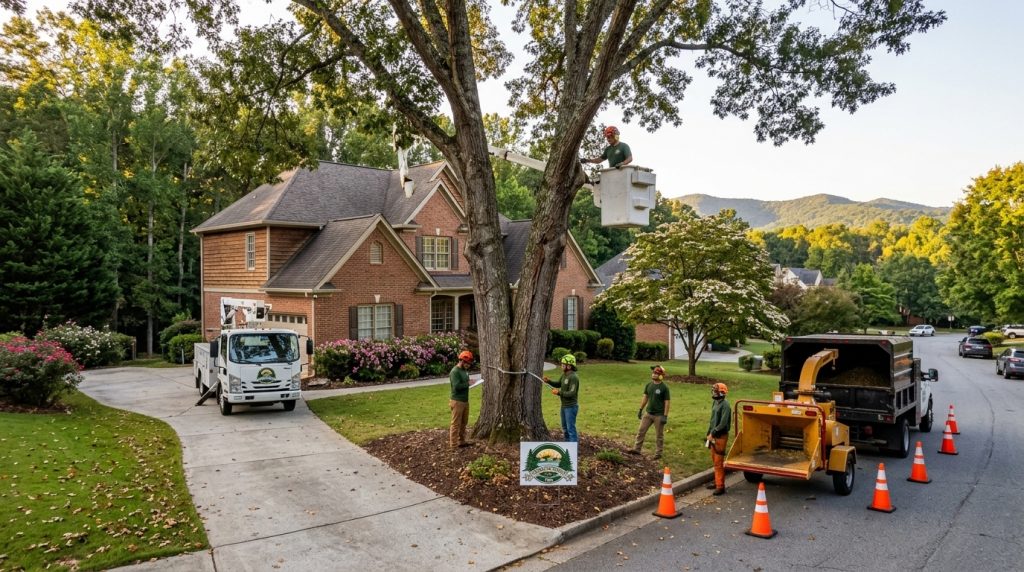
Homes along Lake Acworth Drive and properties backing up to Lake Allatoona face a distinct set of tree removal concerns. Trees growing on sloped lakefront lots serve as natural erosion barriers, and removing them without a plan can destabilize the shoreline. Red clay soil, which dominates the ground composition throughout Cobb and Cherokee counties, is especially prone to washing away once root systems no longer hold it in place.
At the same time, overgrown trees on waterfront lots can block dock access, drop limbs onto boat lifts, and lean dangerously toward the water after storms. Dead trees along the shoreline often need priority removal because they can fall without warning during high winds off the lake.
If your property borders either lake, a tree removal plan should account for:
- Erosion control measures before and after removal
- Stump grinding depth (shallow grinding may be preferable near shorelines to preserve root structure)
- Access logistics, since many lakefront lots have steep grades and limited equipment paths
- Any Army Corps of Engineers regulations for properties on Lake Allatoona

Cherokee County vs. Cobb County: Two Sets of Rules
One of the things that makes tree service in Acworth GA different from neighboring cities is the county boundary. Acworth straddles both Cherokee County and Cobb County, and the regulations governing tree removal differ depending on which side of the line your property falls on.
Cobb County Tree Regulations
Properties in the Cobb County portion of Acworth generally fall under Cobb County’s tree preservation ordinance. For residential lots, you typically need a permit to remove trees above a certain diameter at breast height (DBH). The city of Acworth may also have additional overlay requirements depending on your zoning district, especially in the historic downtown area.
Cherokee County Tree Regulations
The Cherokee County side tends to have fewer restrictions on residential tree removal, though subdivisions with HOA covenants may impose their own rules. Newer developments near Mars Hill Church Road and along the Highway 92 corridor often have tree preservation easements written into their plats.
Before scheduling any removal, confirm which county your property is in and whether your neighborhood has HOA restrictions. Vilchis Tree Services Pro can help you determine what applies to your specific lot when we provide a free estimate in Acworth.

Common Species Requiring Removal in Acworth
The tree species growing in Acworth reflect the broader North Georgia Piedmont landscape, but a few stand out as the most frequent removal candidates.
Loblolly Pines
Loblolly pines dominate the Acworth canopy. They grow fast, often reaching 80 to 100 feet, and their shallow root plates make them vulnerable to toppling in storms. Neighborhoods near North Cobb High School and the Proctor Creek area have particularly dense stands of mature loblollies planted when those subdivisions were developed in the 1980s and 1990s. Many of these trees are now at the end of their healthy lifespan and show signs of pine beetle damage or crown dieback.
Sweetgums
Sweetgum trees are aggressive growers with invasive root systems. Their roots crack driveways, lift sidewalks, and infiltrate sewer lines. In older Acworth neighborhoods near Downtown and Main Street, sweetgums planted decades ago now cause significant hardscape damage. Removal often includes extensive stump grinding to address the lateral root spread.

Eastern Hemlocks
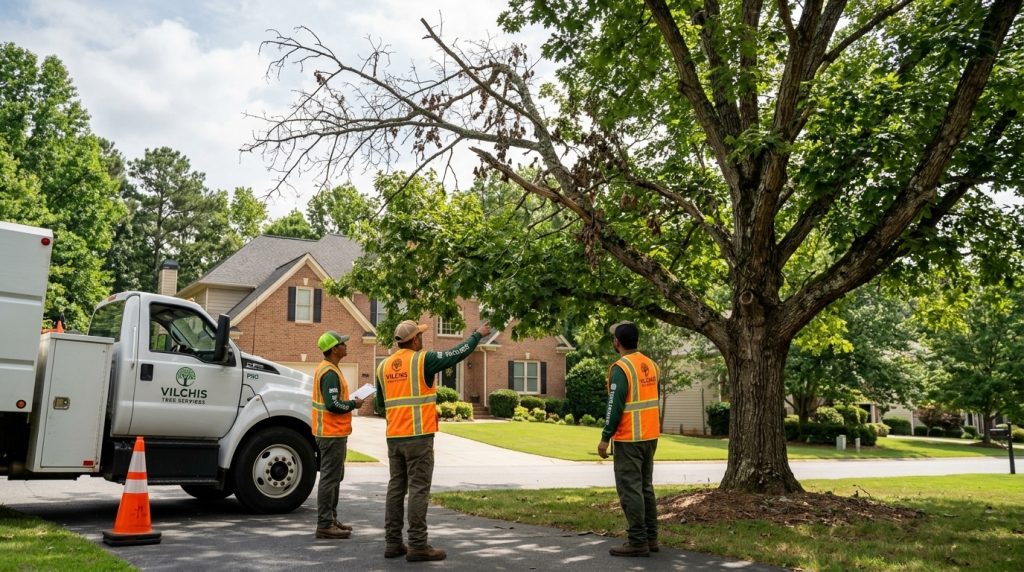
Acworth sits at the southern edge of the eastern hemlock’s range, and the woolly adelgid infestation has devastated these trees across North Georgia. Dying hemlocks become brittle quickly, making them unpredictable when they fall. If you have hemlocks on your property showing thinning needles or white cotton-like masses on the undersides of branches, removal sooner rather than later reduces risk.
Water Oaks
Water oaks grow rapidly but have a relatively short lifespan of 50 to 60 years. They are prone to interior rot that is not visible from the outside. Many water oaks in Acworth’s established neighborhoods are reaching that age, and what looks like a healthy tree can be hollow at the core.

Older Neighborhoods vs. Newer Subdivisions
Tree removal logistics vary significantly between Acworth’s established areas and its newer developments.
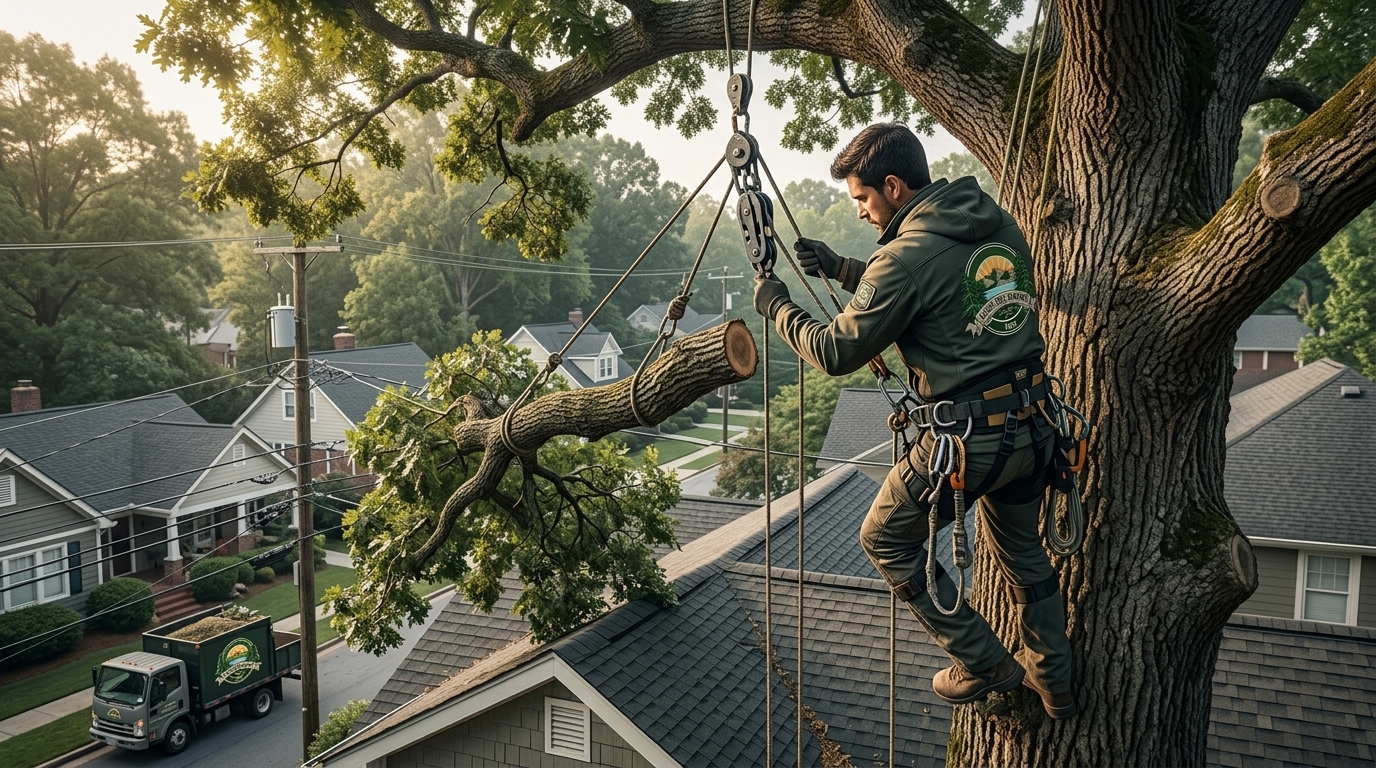
Downtown Acworth and surrounding streets: Homes near Main Street and the historic district often have large, mature trees growing close to structures. Tight lot lines, overhead power lines, and proximity to neighboring homes mean these removals frequently require sectional dismantling rather than felling. Access for heavy equipment can also be limited on narrow residential streets.
Mars Hill Church Road corridor and newer subdivisions: Properties in newer developments tend to have younger trees, but builders often left select large trees in place during construction. These “saved” trees sometimes decline after construction compacts their root zones. The good news is that newer subdivisions typically have wider streets and better equipment access.
Proctor Creek and Lake Acworth Drive areas: These properties often combine mature trees with sloped terrain and water proximity, creating the most complex removal scenarios in the city.

When to Schedule Tree Removal in Acworth
Timing matters for tree removal projects in Acworth. While emergency removals happen year-round (storm damage does not wait for convenient scheduling), planned removals benefit from seasonal timing.
Late fall through early spring (November to March) is generally the best window. Trees are dormant, the canopy is thinner, and the ground is typically drier. Dry ground matters in Acworth because saturated red clay becomes slippery and can make equipment access difficult on sloped lots.
Summer removals are common but come with challenges: heat stress on crews, active bird nesting (some species are protected), and afternoon thunderstorms that halt work.
For guidance on when trimming makes more sense than full removal, read our guide on when you should trim trees in Acworth, GA.