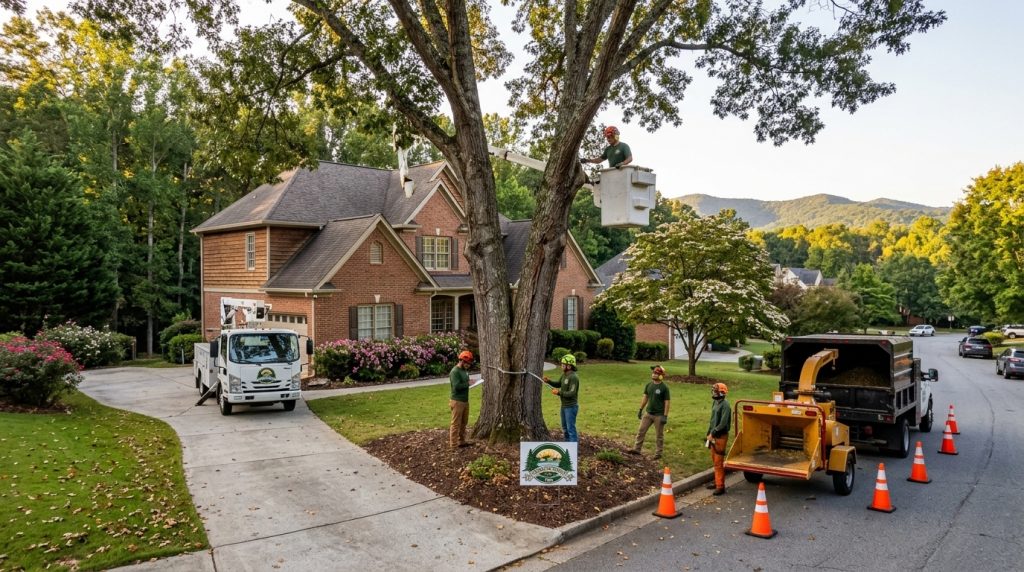
Kennesaw homeowners know the sound: a deep rumble rolling in from the northwest, wind picking up speed, and within minutes, limbs crashing across yards and driveways. Georgia storm season hits hard in Cobb County, and the trees in your yard face real threats from March through September every year.
Whether you are dealing with a tree that just came down or looking for ways to protect your property before the next storm, this guide covers what Kennesaw residents need to know about storm damage tree care.

Georgia Storm Season: What Kennesaw Faces Each Year
Georgia’s storm season brings three distinct threats to Kennesaw properties:
Spring severe thunderstorms (March through May): These storms produce straight-line winds that regularly exceed 60 mph. The spring months generate the most tree damage calls we receive, particularly in neighborhoods along the Acworth Due West Road corridor where mature hardwoods line older lots.
Summer microbursts (June through August): Quick, intense downdrafts that hit without much warning. These events can snap healthy trees at the trunk and scatter debris across multiple properties in seconds. Legacy Park and surrounding subdivisions see frequent microburst activity due to heat convection patterns over paved surfaces.
Ice events (rare but destructive): When freezing rain hits North Georgia every few years, the weight of ice accumulation brings down limbs that survived wind events for decades. Pines and Bradford pears suffer the most.

Why Kennesaw’s Geography Makes Storm Damage Worse
Kennesaw Mountain creates a wind tunnel effect that many residents don’t realize until a storm hits. As weather systems move through Cobb County, the terrain forces wind around and over the mountain, accelerating gusts in the neighborhoods on the eastern and southern slopes.
Properties near Kennesaw Mountain National Battlefield Park, along Old Mountain Road, and in the subdivisions between Stilesboro Road and Dallas Highway experience stronger wind impacts than areas just a few miles away on flat ground. Homeowners in these zones need to take tree maintenance more seriously than average.
The red clay soil common throughout Kennesaw also plays a role. When saturated from heavy rainfall, red clay loses its grip on root systems. Trees that appear stable in dry conditions can topple when their roots lose friction in waterlogged soil.

Most Vulnerable Tree Species During Storms
Not every tree on your property carries the same risk. In Kennesaw, these species cause the most storm damage:
Loblolly Pines
Tall, top-heavy, and brittle in high winds. Loblolly pines grow fast and reach 80 to 100 feet, but their wood snaps under stress rather than bending. A single loblolly falling across your home can cause $30,000 or more in damage.
Water Oaks
Shallow root systems make water oaks prone to uprooting entirely, especially in saturated red clay. They look solid above ground but have surprisingly little anchoring below the surface.
Bradford Pears
Their tight branch structure creates weak crotch angles that split apart under wind or ice load. Bradford pears rarely survive a major storm intact. Most split down the middle, sending large sections across driveways and rooflines.
Sweetgums and Tulip Poplars
Both species grow tall quickly and develop brittle wood as they mature. Their height makes them targets for lightning strikes, which can explode bark and send shrapnel across your yard.

What to Do Immediately After Storm Damage
When a tree comes down on your property during a storm, follow these steps:
- Stay away from the tree. Branches under tension can release suddenly and cause serious injury.
- Check for power lines. If any part of the tree contacts electrical lines, stay at least 35 feet back and call Georgia Power immediately. Never attempt to move branches off power lines yourself.
- Document the damage. Take photos and video from a safe distance before anything gets moved. Your insurance company will need this documentation.
- Call a professional tree service. Storm-damaged trees require trained crews with the right equipment. Chainsaws in untrained hands cause more emergency room visits during storm cleanup than the storms themselves.
- Secure your property. If the tree created an opening in your roof or fence, cover it with a tarp to prevent water damage from subsequent rainfall.
If you have a tree emergency in Kennesaw, Vilchis Tree Services Pro provides emergency tree removal in Kennesaw with fast response times when storms hit our service area. We also offer 24-hour emergency tree removal services for urgent situations that cannot wait until morning.

Emergency Tree Removal Process and Response Times
When Vilchis Tree Services Pro responds to a storm damage call in Kennesaw, our process follows a specific order:
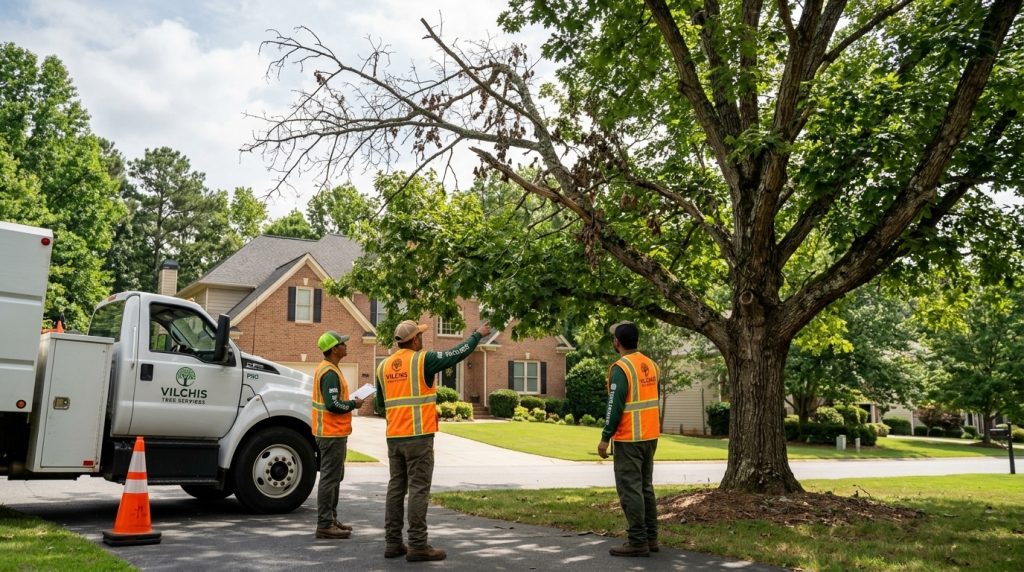
Assessment: We evaluate the tree’s position, structural integrity, and proximity to power lines, structures, or other hazards. This determines our approach and equipment needs.
Stabilization: If the tree poses an immediate danger of further movement, we secure it before beginning removal.
Sectional removal: Storm-damaged trees rarely come down in one piece safely. Our crews work from the top down, removing sections in a controlled sequence to prevent additional property damage.
Debris cleanup: Storm damage cleanup in Kennesaw includes hauling away all wood, leaves, and debris. We leave your property clear.
During major storm events, response times depend on call volume and severity. Trees on structures and trees blocking emergency access routes get addressed first. Vilchis Tree Services Pro has served the metro Atlanta area since 2013, and our crews know Kennesaw’s neighborhoods well enough to route efficiently even when roads are partially blocked.

Preventative Tree Care to Reduce Storm Damage
The best time to address storm damage is before the storm arrives. These preventative services dramatically reduce your risk:
Crown Thinning
Removing 15 to 25 percent of a tree’s interior canopy allows wind to pass through rather than catching the crown like a sail. Tree trimming in Kennesaw performed before storm season is the single most effective way to prevent wind damage.
Deadwood Removal
Dead branches break first in any wind event. Removing deadwood eliminates the weakest links and reduces the debris that hits your roof, vehicles, and landscaping during storms.
Cabling and Bracing
For high-value trees with structural weaknesses (split trunks, heavy lateral limbs, included bark), steel cables and braces provide support that keeps the tree intact during high winds. This is especially relevant for mature oaks in Kennesaw’s older neighborhoods.
Root Zone Care
Compacted red clay soil restricts root growth. Vertical mulching and proper drainage improve root development, giving trees better anchoring against wind and saturated soil conditions.

Insurance Claims for Storm-Damaged Trees
Most homeowner’s insurance policies in Georgia cover tree removal when a tree falls on an insured structure (your home, garage, fence, or shed). Here’s what Kennesaw homeowners should know:
- A tree that falls in your yard but hits no structure is typically not covered for removal costs.
- Most policies cap tree removal at $500 to $1,000 per tree, though the structural damage itself has separate coverage.
- You are responsible for trees that fall from your property onto a neighbor’s property in most cases.
- Document everything before cleanup begins. Photos, video, and a written estimate from your tree service all support your claim.
- File your claim within 48 hours of the event for the smoothest process.
Vilchis Tree Services Pro provides detailed written estimates that insurance adjusters accept, and we work directly with your claims process to keep things moving.