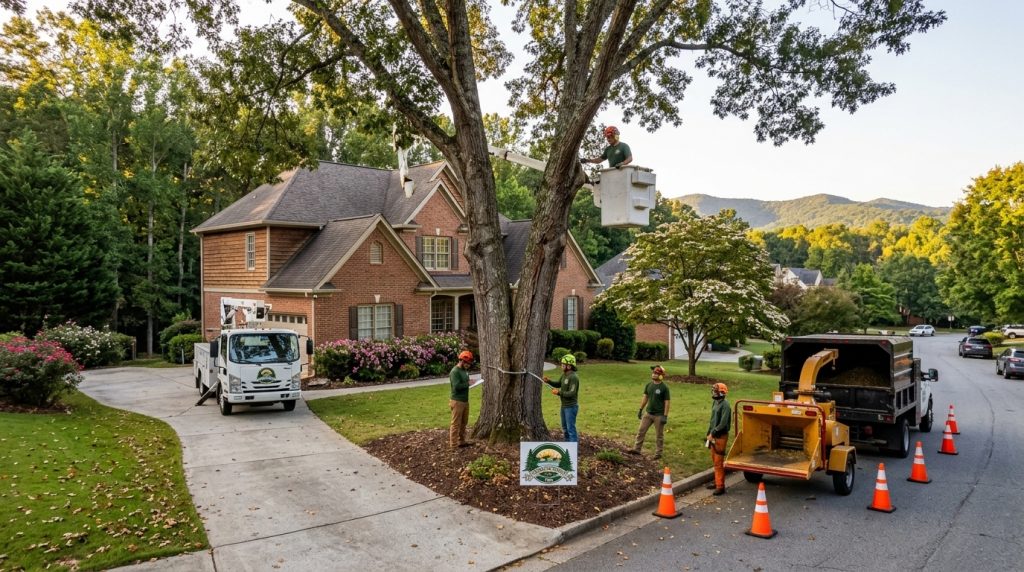
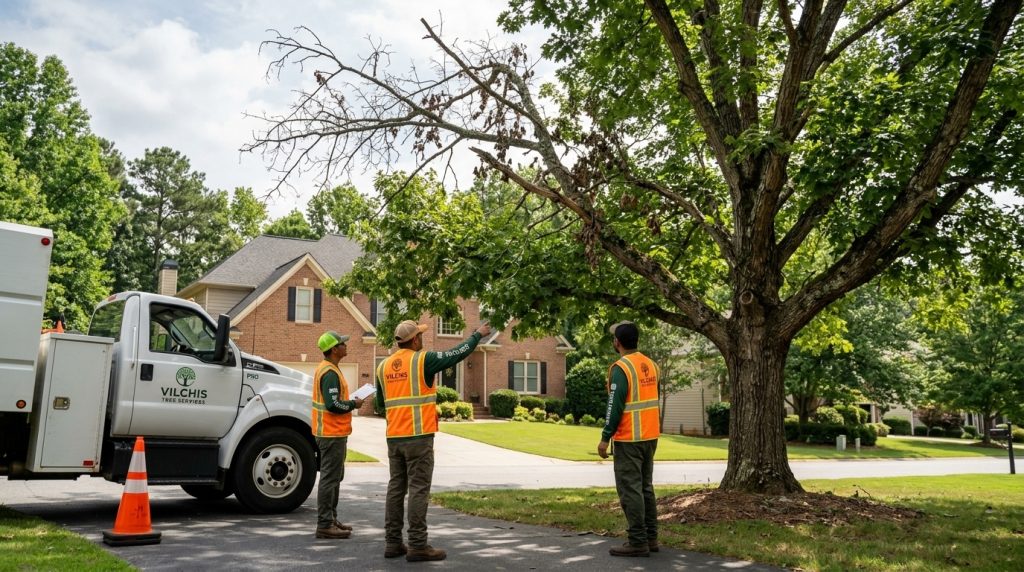
Assessor discussing branches

Tree Branches Over the Roof: Planning a Clearance Assessment in Hiram

A branch above your roof does not automatically mean the whole tree needs to come down. The useful next step is to identify the concern and arrange an assessment: Is a branch touching the building? Has something broken? Is tree growth preventing planned roof work? Those are different problems, and they may need different responses.

For Hiram homeowners, a clear request helps separate routine tree trimming from urgent damage and from repairs that belong to a roofing contractor. Describe what you can see from a safe place. Do not climb onto the roof, use a ladder beside the branch, or try pulling it away from the building.

If a branch has fallen onto the house or is hanging broken, keep people away from the affected area and explain that when you call. Treat suspected electrical involvement as a utility issue, not an ordinary trimming appointment. Call 911 when there is immediate danger.

Start with the problem, not a preferred cutting method

“Please cut this branch” may sound like a complete request. It leaves out why you want the work done and what result matters to you.

A more useful description might be: “The branch near the upstairs gutter appears to touch it when the wind moves it. We want that contact assessed.” Another might be: “Our roofer needs access to this section, and we need to coordinate tree work before the repair.” These are example descriptions, not reports of completed local jobs.

Tell the service team whether the concern involves the roof surface, gutter, siding, chimney area, or an outdoor structure. If you have noticed a recent change, explain what changed and approximately when. Distinguish an observation from a conclusion. “I heard scraping” is useful information; “the tree is unsafe” is a diagnosis that still needs assessment.

The goal of the visit is to decide what work fits the tree and the building. It is not to make every branch conform to a distance selected from an online article.

Is the branch touching the roof, overhanging it, or already damaged?

These descriptions help the assessor understand the starting point:

  • Overhanging without known contact: Explain which part of the building sits beneath the branch and why you are concerned.
  • Touching or apparently rubbing: Identify the contact area from a safe viewpoint. Do not climb up to check it.
  • Broken, hanging, or resting on a structure: Keep away and request guidance appropriate to damaged tree work.
  • Close to a wire: Report the electrical concern and contact the serving utility for direction before arranging ordinary pruning there.

A photograph can help explain where the issue is. It cannot establish the condition of a hidden attachment, replace a site assessment, or certify that an area is safe.

If the only way to obtain a closer image is to stand under the branch, go onto the roof, or approach a wire, skip the photograph. Give a verbal description instead.

What should a roof-clearance assessment cover?

Ask the assessor to explain the proposed result in terms you can recognize afterward. Which branches are included? What contact or obstruction is the work intended to address? Are there concerns that require a separate assessment before the scope is agreed?

The work description should identify the tree and the part of the building involved. A property with several trees along the roofline needs more detail than “trim trees near house.” A simple annotated photograph can support the written scope if it was taken safely and the contractor confirms the markings.

Ask what is outside the proposal as well. Tree work does not necessarily include cleaning gutters, repairing roofing, replacing damaged flashing, or evaluating a leak inside the house. Keeping those responsibilities separate makes it easier to arrange the right people and compare proposals fairly.

If the suggested work changes after an inspection, ask for an updated explanation before authorizing it. The original request may have described only one visible symptom.

Assessor examining branch near g… ecef

Avoid a one-size-fits-all clearance instruction

A fixed measurement copied from another property is not a substitute for assessing this tree. The position of suitable branches, the tree’s condition, and the intended work all matter to the recommendation.

Rather than instructing a crew to remove everything above an imaginary line, ask how the proposed pruning addresses the specific concern. Ask whether the result can be achieved while retaining the tree, and what limitations should be understood if it cannot.

You do not need to choose a cutting technique yourself. You do need an understandable scope and a chance to ask why that approach is being proposed. If removal is recommended instead of trimming, request the reason and discuss the separate removal scope before proceeding.

For an initial service inquiry, see tree trimming in Hiram. The purpose of the inquiry is to arrange an assessment, not to obtain a guarantee from a photograph.

Coordinate with the roofer when building work is involved

If roofing work is already planned, share the relevant timing and access requirements with the tree service. Ask the roofer to identify the area that needs access without treating that request as a prescription for how the tree should be pruned.

Confirm which contractor should work first and who will communicate a schedule change. Avoid booking overlapping work in the same area unless both contractors have agreed how it will be managed. A tree crew and roofing crew should not arrive expecting unrestricted use of the same driveway and work area.

Keep separate records of the agreed tree work and the agreed building repairs. If the roofer reports damage after the branch has been addressed, return that finding to the appropriate contractor rather than assuming the tree work included a roof inspection.

Photographs taken before and after work can help document what was visible. They do not replace a roofing professional’s assessment of the building.

Discuss access without creating new hazards

Tell the service team about locked gates, limited driveway space, pets, and any access that would cross another person’s property. Ask what needs to be moved and wait for instructions before preparing the work area.

Do not move an object that is beneath damaged or hanging wood just to make the appointment easier. Tell the contractor where it is. People and pets should stay outside the work area established by the crew.

If the tree is close to a property boundary, identify that concern before work is authorized. Do not assume a branch over your roof gives you permission to authorize every proposed action. Resolve ownership, permission, and any applicable approval questions with the appropriate parties. This guide does not determine boundary rights.

Assessor photographing roofline … bdc

What should the written estimate say?

Look for enough detail to connect the price to the result you discussed:

  • The tree or trees being assessed and worked on.
  • The roofline or other building area involved.
  • The proposed work and any stated limitations.
  • Whether debris handling and haul-away are included.
  • Access arrangements and any preparation requested from you.
  • Work that belongs to a separate contractor.

If two estimates describe different amounts of work, they are not directly comparable just because both say “tree trimming.” Ask each provider to clarify the differences before deciding.

Afterward, review the agreed scope from a safe location when the crew says the area is available. If a question remains, refer to the specific item in the proposal rather than asking for an unplanned additional cut while work is underway.

Questions homeowners ask

Does a branch above the roof mean the tree must be removed?

No. Overhang alone does not settle that question. Ask for an assessment of the concern and the available options. Damage, tree condition, and the property layout can change the recommendation.

Can I get a definite answer by sending a picture?

A picture may help identify the tree and arrange the visit. It does not show every relevant condition and should not be treated as confirmation that the branch is sound or that a particular method is suitable.

Does tree trimming include roof or gutter repairs?

Do not assume it does. Ask for those responsibilities to be stated separately and arrange the appropriate building professional when repairs or an inspection are needed.

How do I start a request?

Use the Vilchis contact page and describe the location, the visible concern, and any planned roofing work. For a property in Powder Springs, the local tree trimming page provides the corresponding service starting point. Report broken wood or electrical concerns clearly instead of submitting them as routine clearance requests.

Mastodon