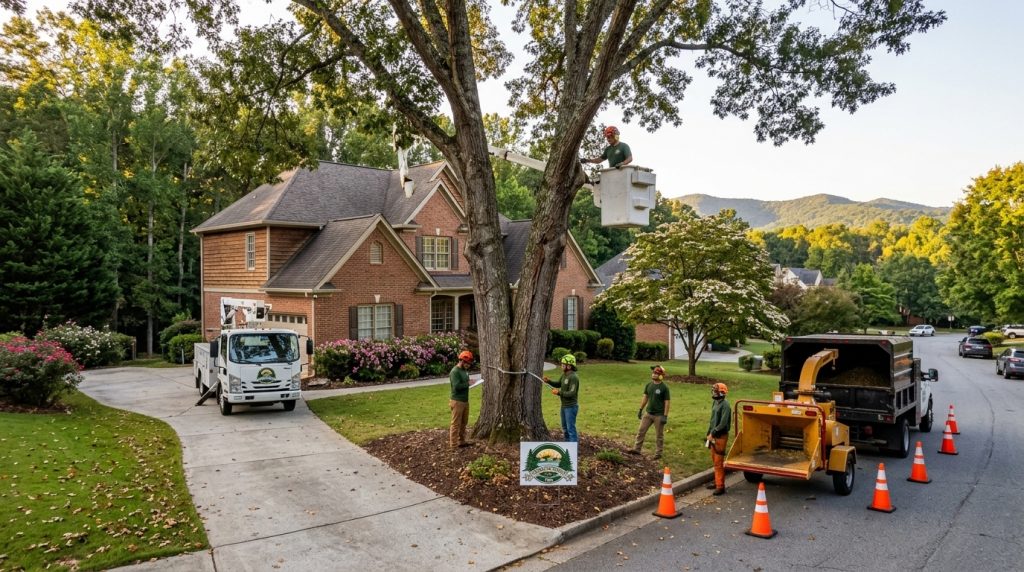
TREE C~

Tree Cabling: When Support May Be Better Than Immediate Removal

Tree work is safest and most useful when the decision begins with the tree’s condition, the targets around it, and the access available on the property. Height alone does not determine whether a tree should be trimmed, supported, monitored, or removed. This guide explains tree cabling: when support may be better than immediate removal for property owners in Metro Atlanta, GA.

Begin with risk and condition

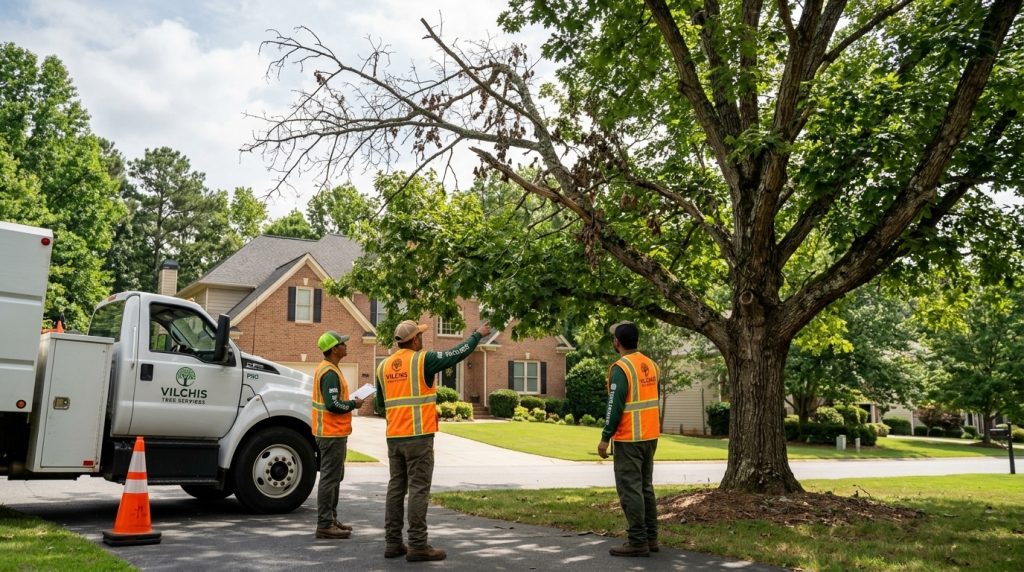
Look at the full system: roots, trunk, major unions, limbs, canopy, soil, recent weather, and anything that could be struck if a part fails. A defect matters more when it is combined with a house, driveway, parked vehicle, utility, play area, or other occupied target.

Warning signs that justify a closer look

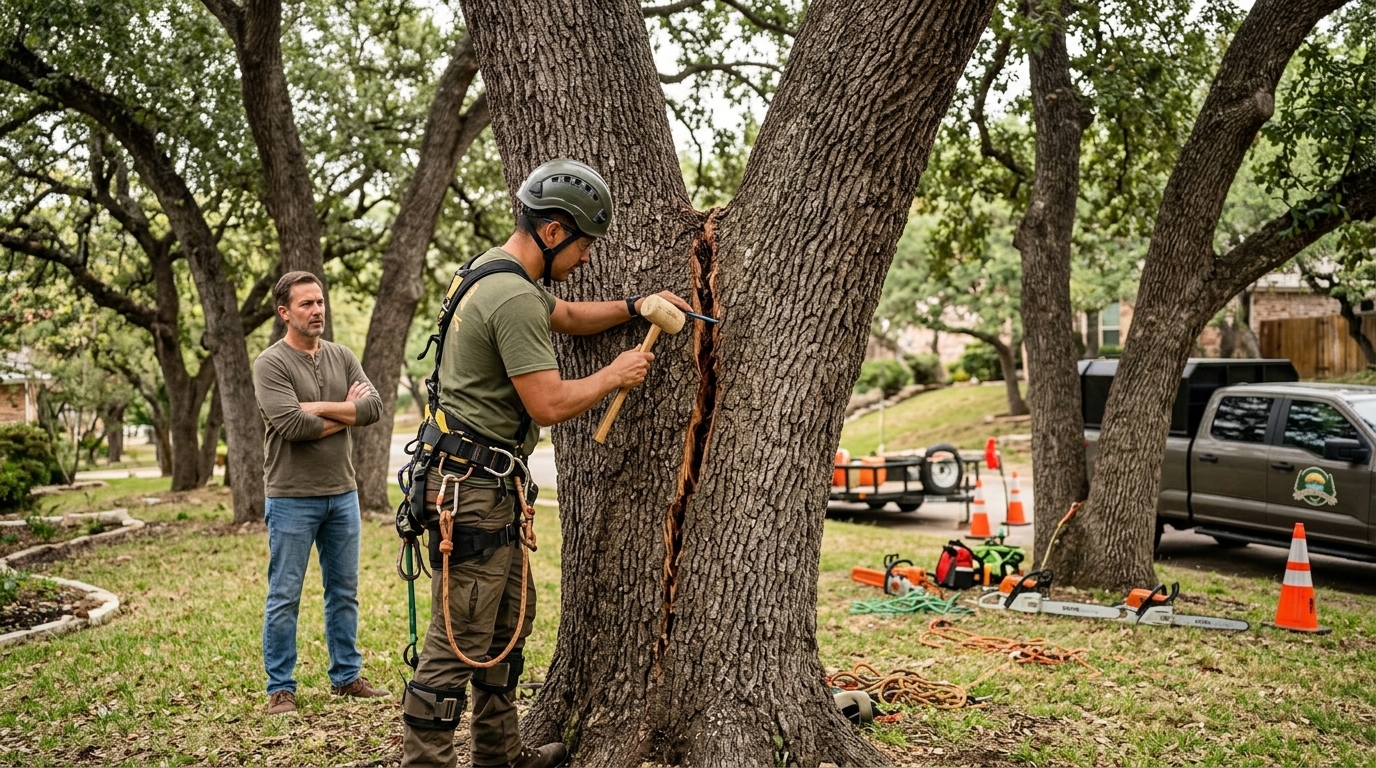
  • Fresh cracks, splits, or movement at a major union
  • Large dead limbs or rapid canopy decline
  • New leaning, lifted soil, or exposed and damaged roots
  • Cavities, decay, or fungal growth around structural areas
  • Storm-broken limbs or hanging branches
  • Repeated failures from the same tree

These signs do not automatically dictate removal. They indicate that the tree and site deserve an on-site evaluation.
 

TREE W~

Trimming, cabling, and removal solve different problems

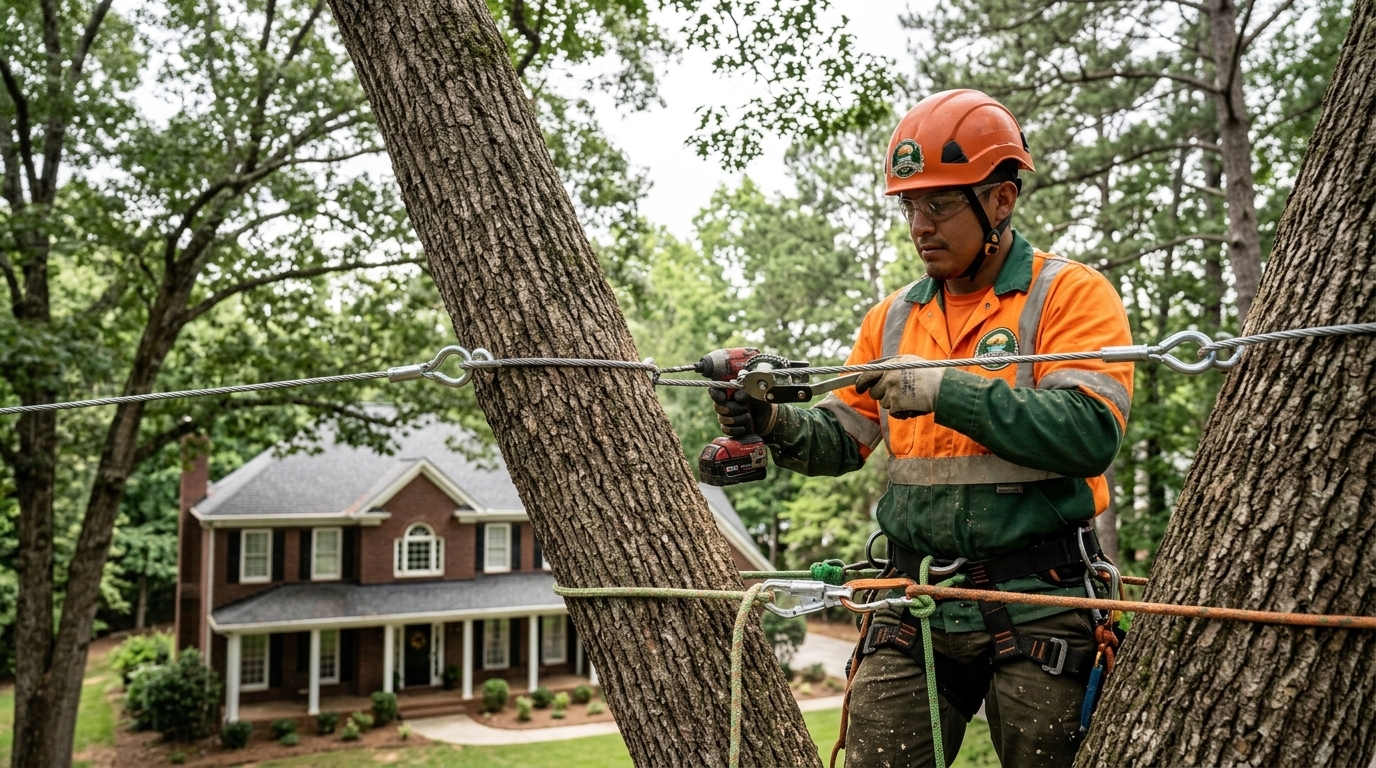
Pruning can remove deadwood, improve clearance, or reduce selected end weight. Cabling may provide supplemental support in some situations, but it does not reverse decay or repair damaged roots. Removal may be the practical choice when structural risk cannot be reduced reasonably through pruning, support, or changes to the surrounding target area.

What changes the scope of tree work

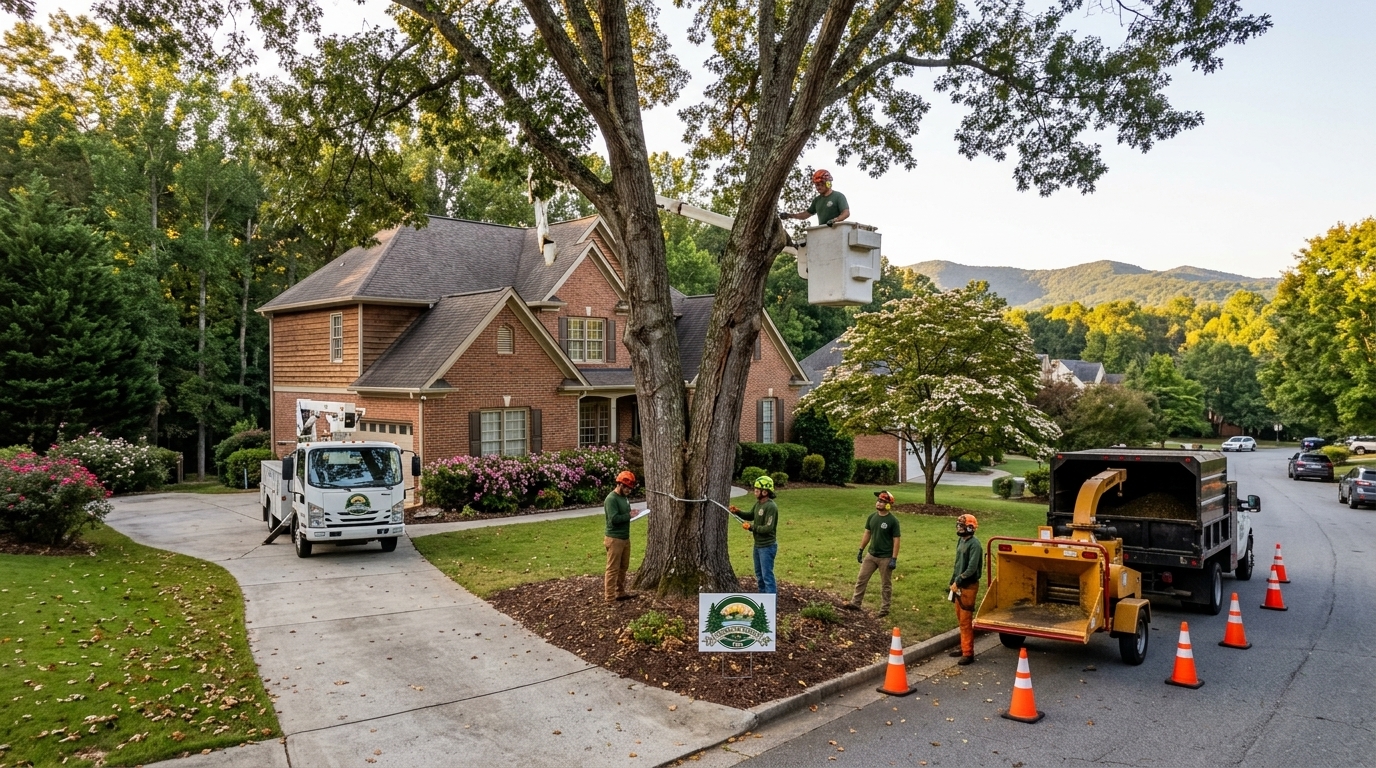
Tree size is only one factor. Species, condition, lean, nearby structures, utility conflicts, equipment access, terrain, rigging needs, debris volume, and stump work all affect the plan. A tree in an open field can be handled differently from a similar tree positioned over a roof or between buildings.

How to prepare the property

  1. Move vehicles, furniture, grills, toys, and other movable items.
  2. Keep people and pets outside the work zone.
  3. Identify irrigation, septic components, gates, fragile paving, and landscaping.
  4. Discuss equipment access and where wood or chips may be staged.
  5. Confirm whether debris removal and stump grinding are included.

Questions to ask before authorizing work

  • What condition is driving the recommendation?
  • Would pruning or support reasonably address the concern?
  • How will nearby structures and landscaping be protected?
  • What equipment and access are required?
  • What cleanup and stump work are included?
 

TREE S~

Get a site-specific recommendation

If you are planning tree work in Metro Atlanta, GA, contact Vilchis Tree Services for an evaluation based on the actual tree, site, and objective.

Mastodon