Warning Signs In The Trunk And Base
Start with the tree’s trunk and the base of the tree, because that is where many serious structural defects show up first.
Cracks, Rot, And Hollow Spots
Look closely at the trunk:
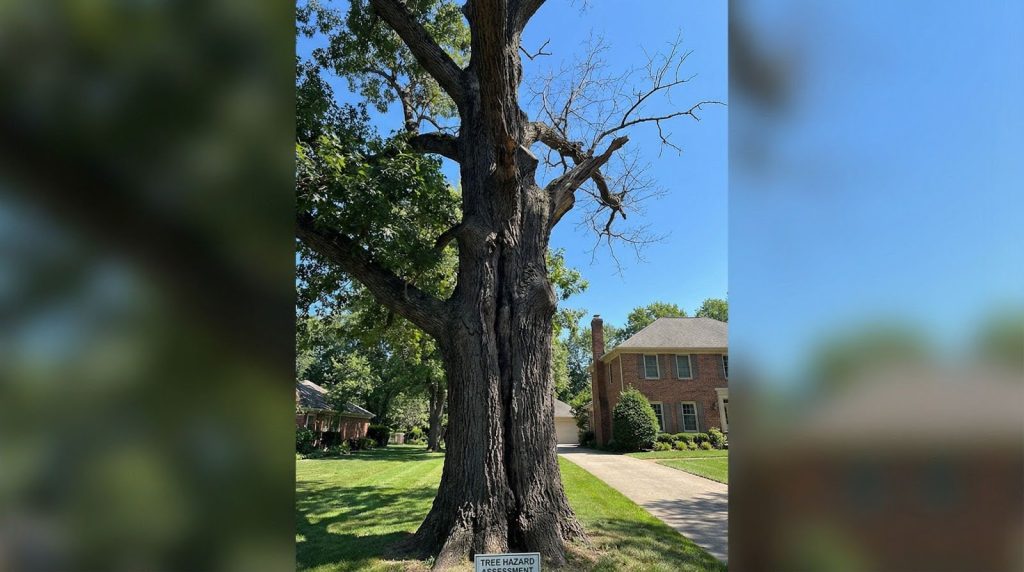
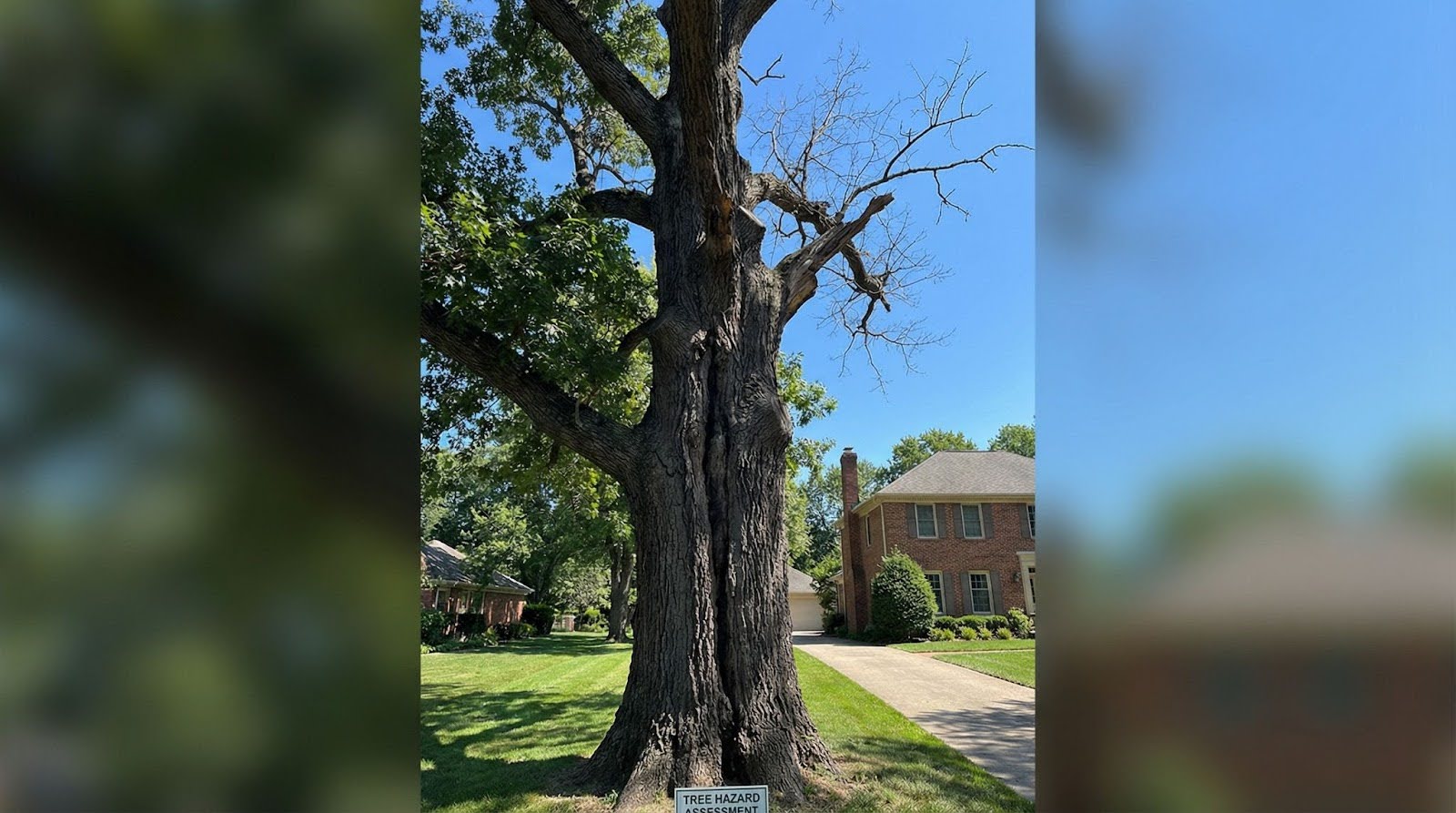
- Vertical cracks, trunk splitting, or long splits running up and down the tree’s structure
- A hollow trunk you can see into, or places that sound hollow when gently tapped
- Missing bark, dead wood, and dead branch stubs along the trunk
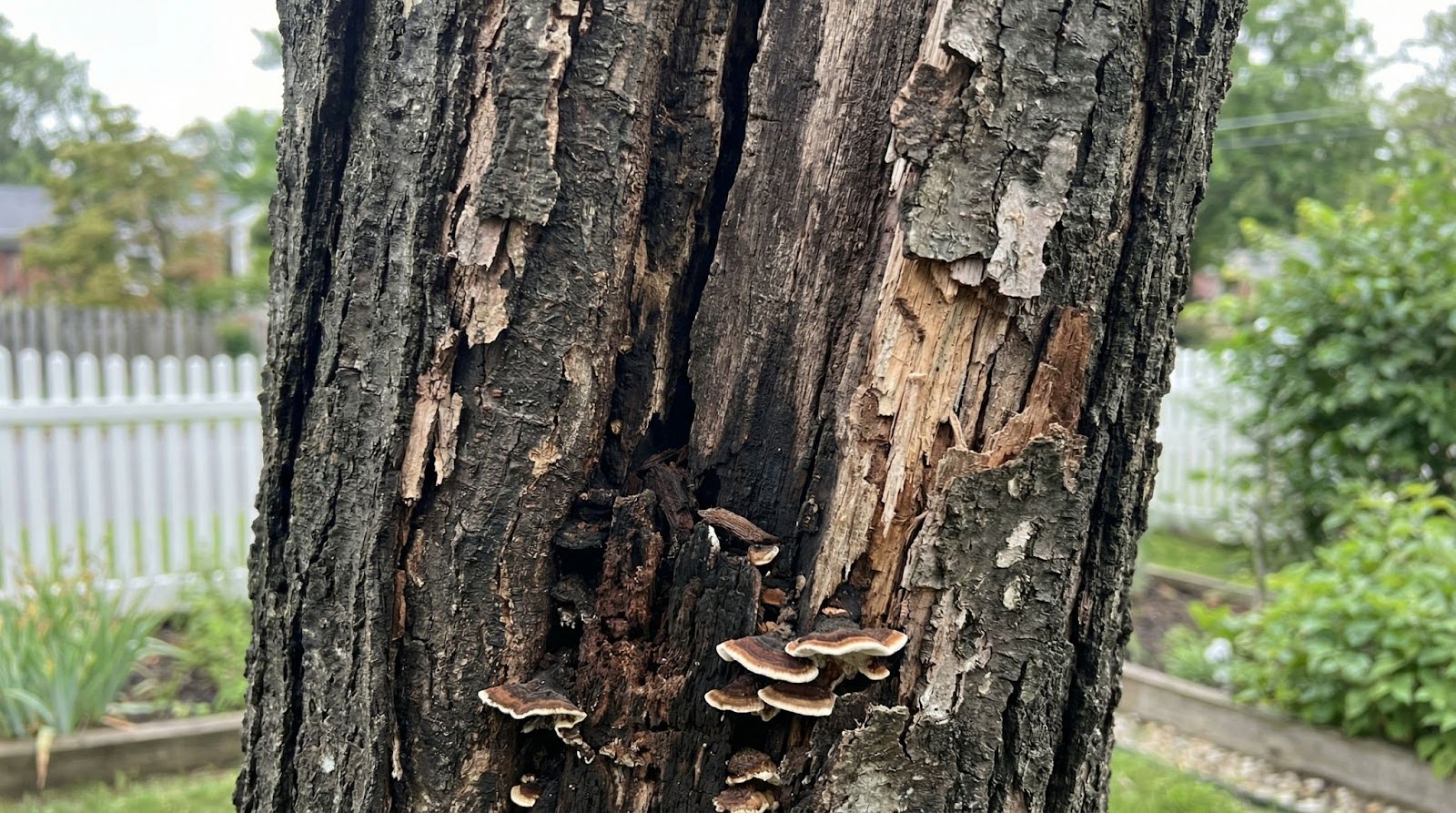
- Mushrooms growing or fungi growing on the bark or at the base of the tree
These tell tale signs can point to internal decay and structural integrity problems. A tree can look green in the crown and still be extremely dangerous if the interior is rotten.
Root Problems And Lean
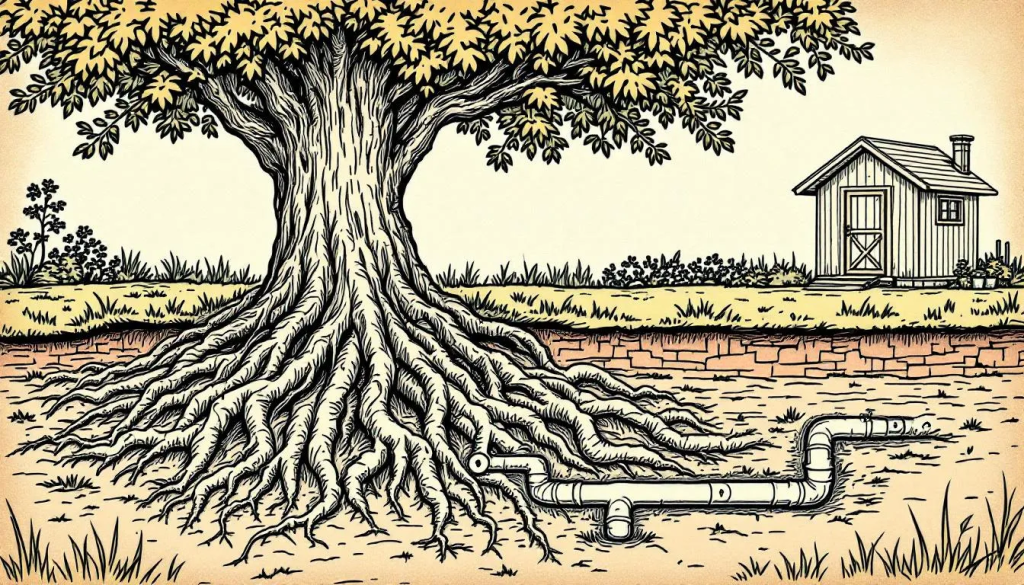
Tree roots act like the foundation of a house. When that foundation is failing, it is just a matter of time before the entire tree becomes unstable.
Watch for:
- Root rot, soft or spongy wood at the base of the tree, or fungi growing around the roots
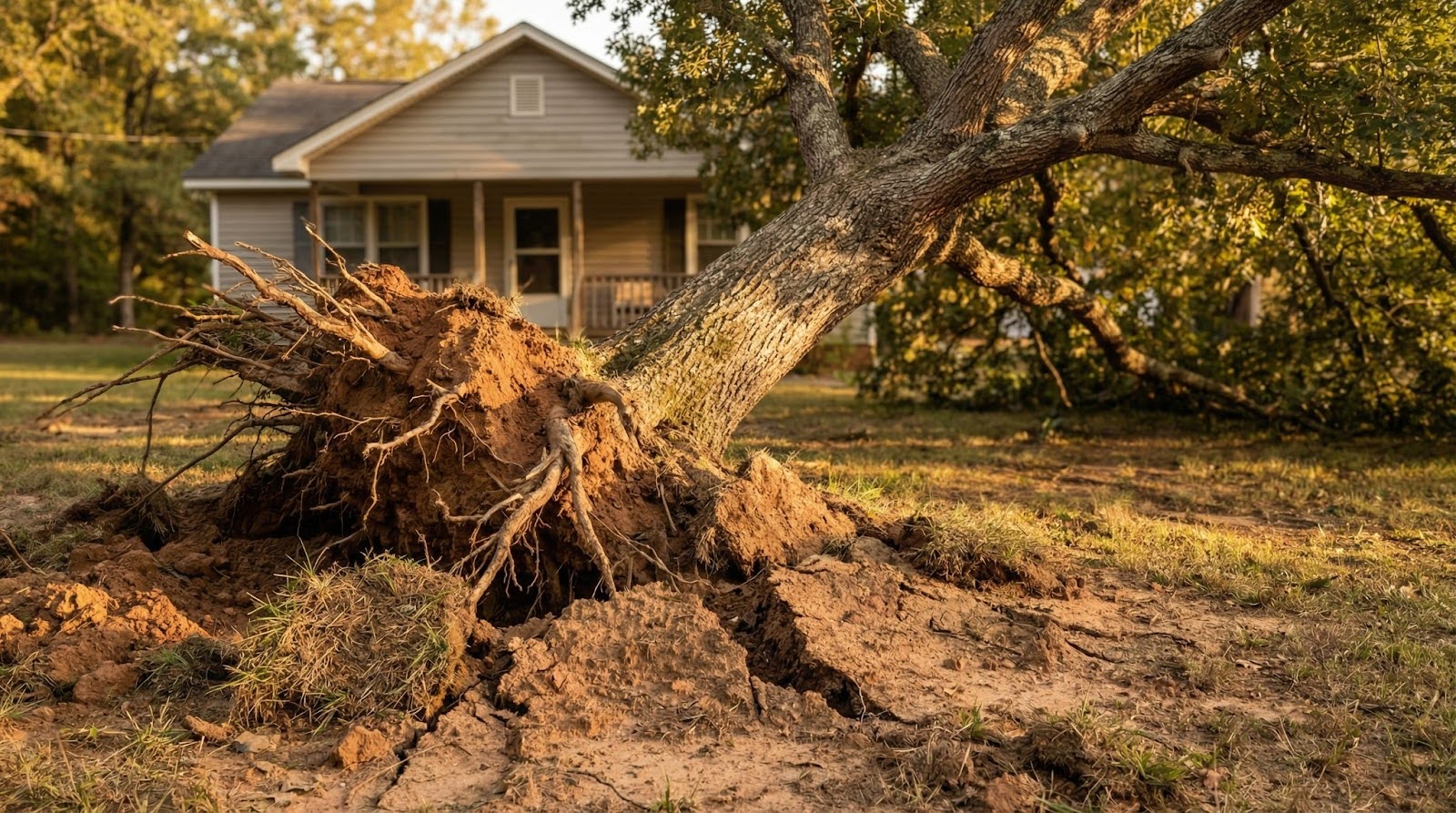
- Root problems such as lifted soil, cracked ground, or roots suddenly exposed on one side
- A leaning tree or sudden lean that you do not remember seeing before
- Tree leaning more after heavy rain or other weather events
Severe root damage can make a tree dangerous even if the branches look fine. If you see a sudden lean or big changes at the base, get that tree inspected quickly.
Warning Signs In The Crown And Branches
Next, look up into the tree’s crown and major branches, especially on large trees near your home.
Dead Or Damaged Branches
Focus on how the branches look during the growing season:
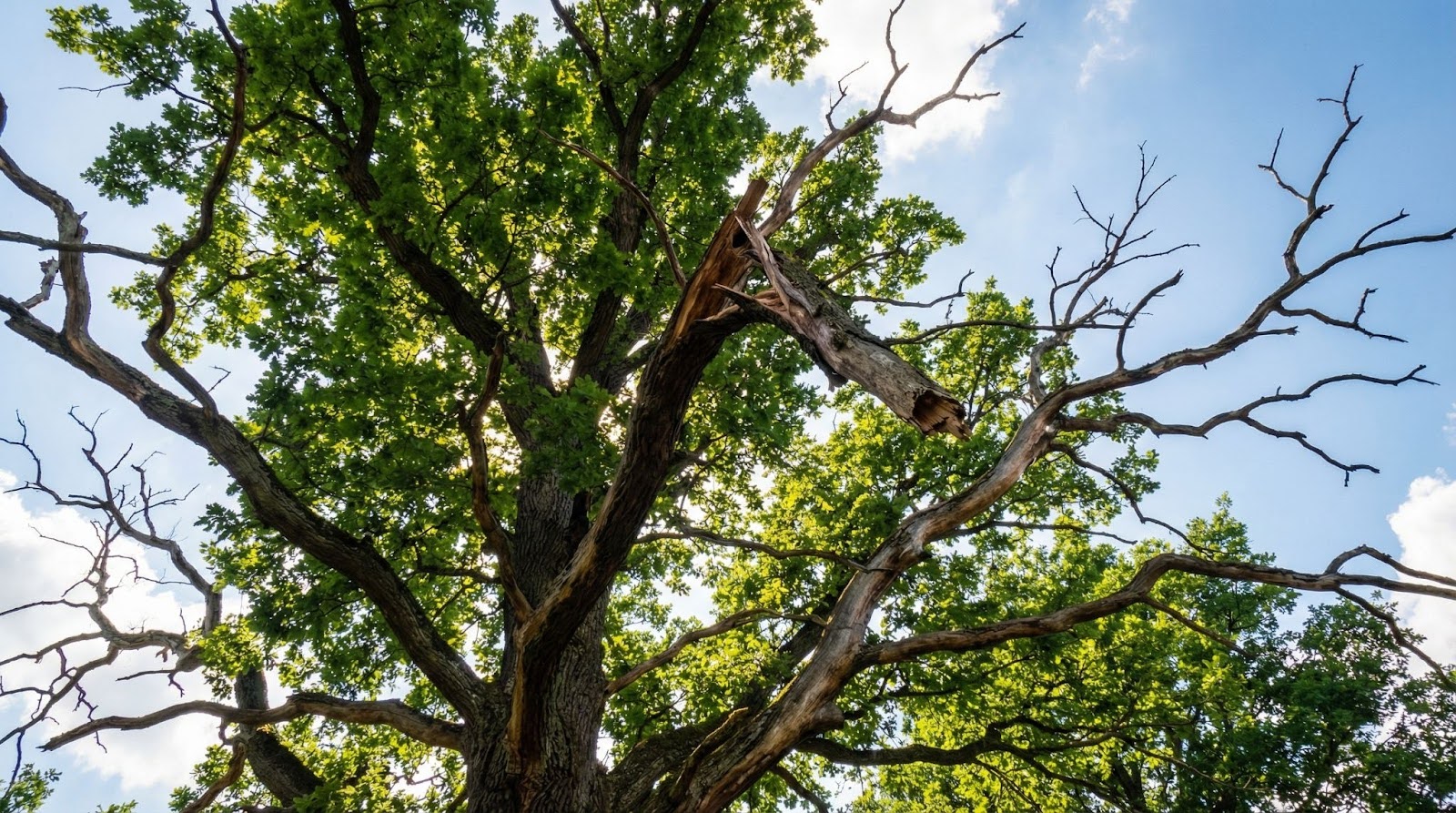
- Dead branches with no leaves in season while other branches are full
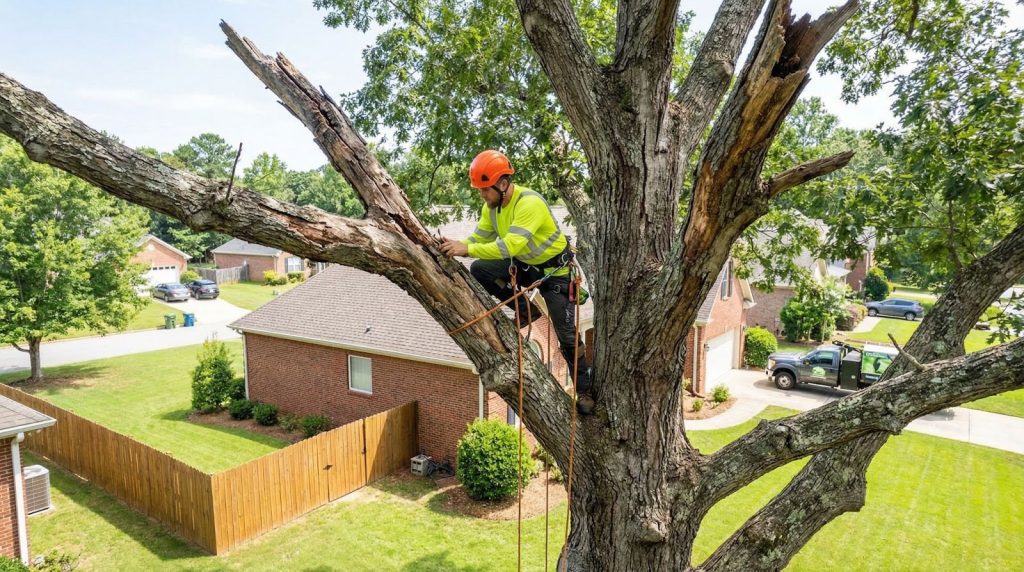
- Broken branches hanging up in the canopy or caught on other branches
- Thin leaf cover only on part of the tree’s crown, while other trees nearby are full
- Many trees in your yard dropping more branches than usual after mild weather
Dead trees or severely stressed trees often show dead wood starting in the upper crown first. These branches can snap and fall without warning, especially in high winds or under heavy snow.
Location, Targets, And How Much Risk You Are Willing To Carry
A tree becomes more dangerous if there is something important under it. The same structural problems on small trees in a back corner are very different from the same issues hanging over a bedroom.
Ask yourself:
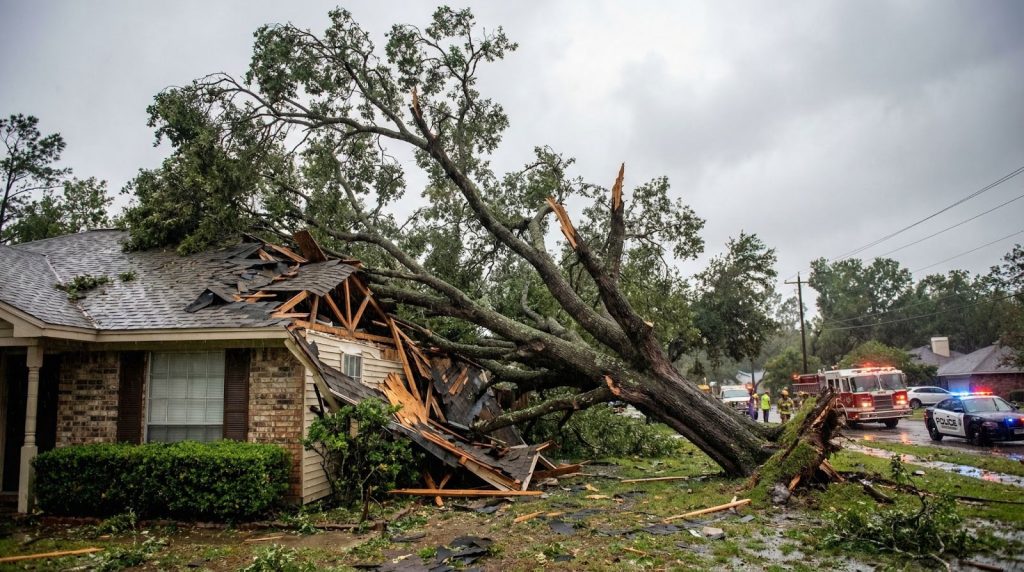
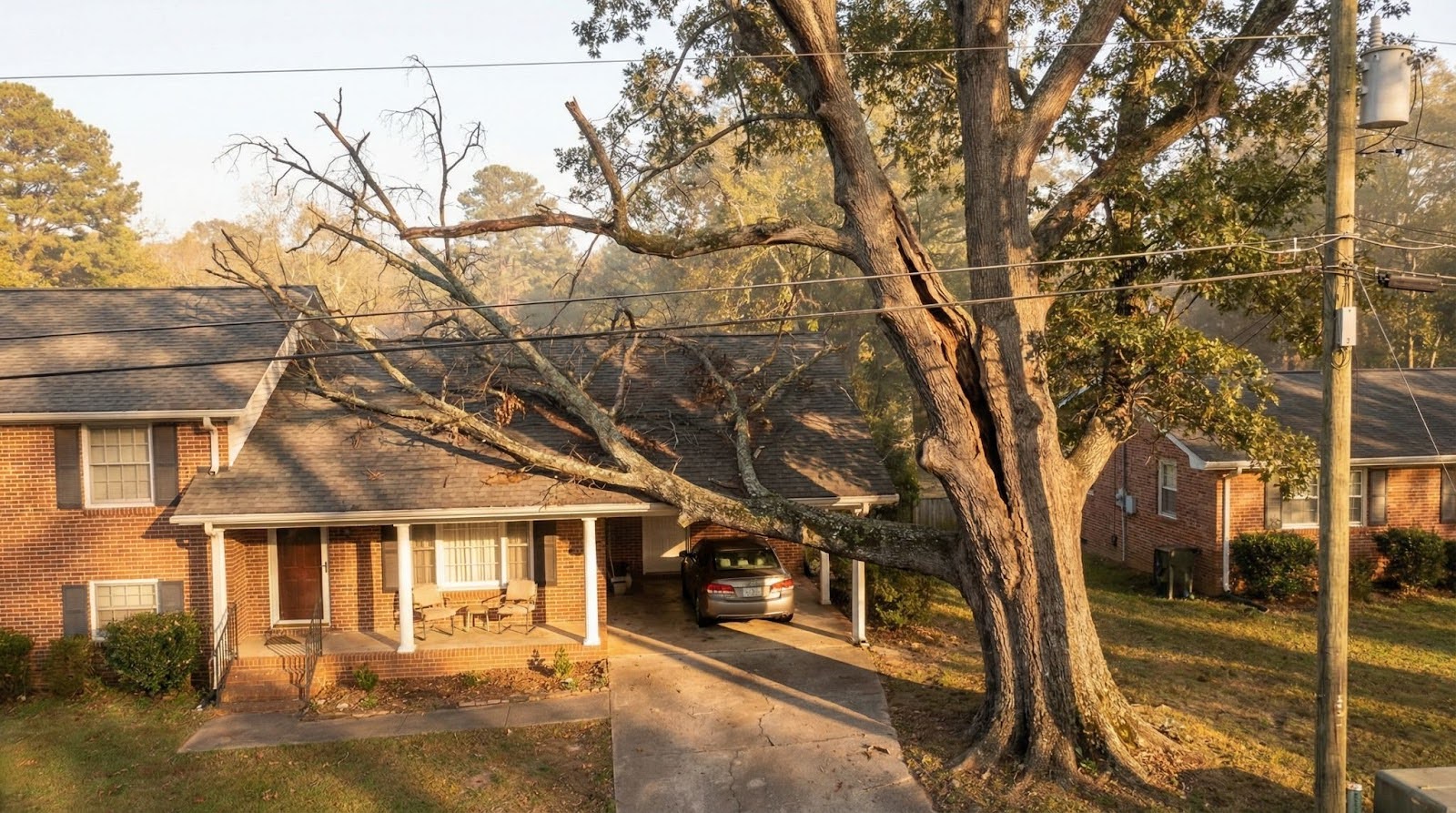
- If this tree falls, what will it hit: roof, vehicles, playset, power lines, or other structures?
- Are there large branches directly over common walkways, the driveway, or outdoor seating areas?
- Is this tree close enough to the house that severe damage would make it hard to live there while repairs happen?
Trees growing in tight spots, over structures, or near power lines deserve extra attention. When a tree dangerous enough to cause major property damage is right next to the house, it is often better to have a local arborist check it sooner rather than later.
When To Call A Professional Tree Service
You do not have to decide on your own whether a tree is safe enough to keep or risky enough to remove. Some warning signs are obvious, but others require training and experience to interpret correctly.
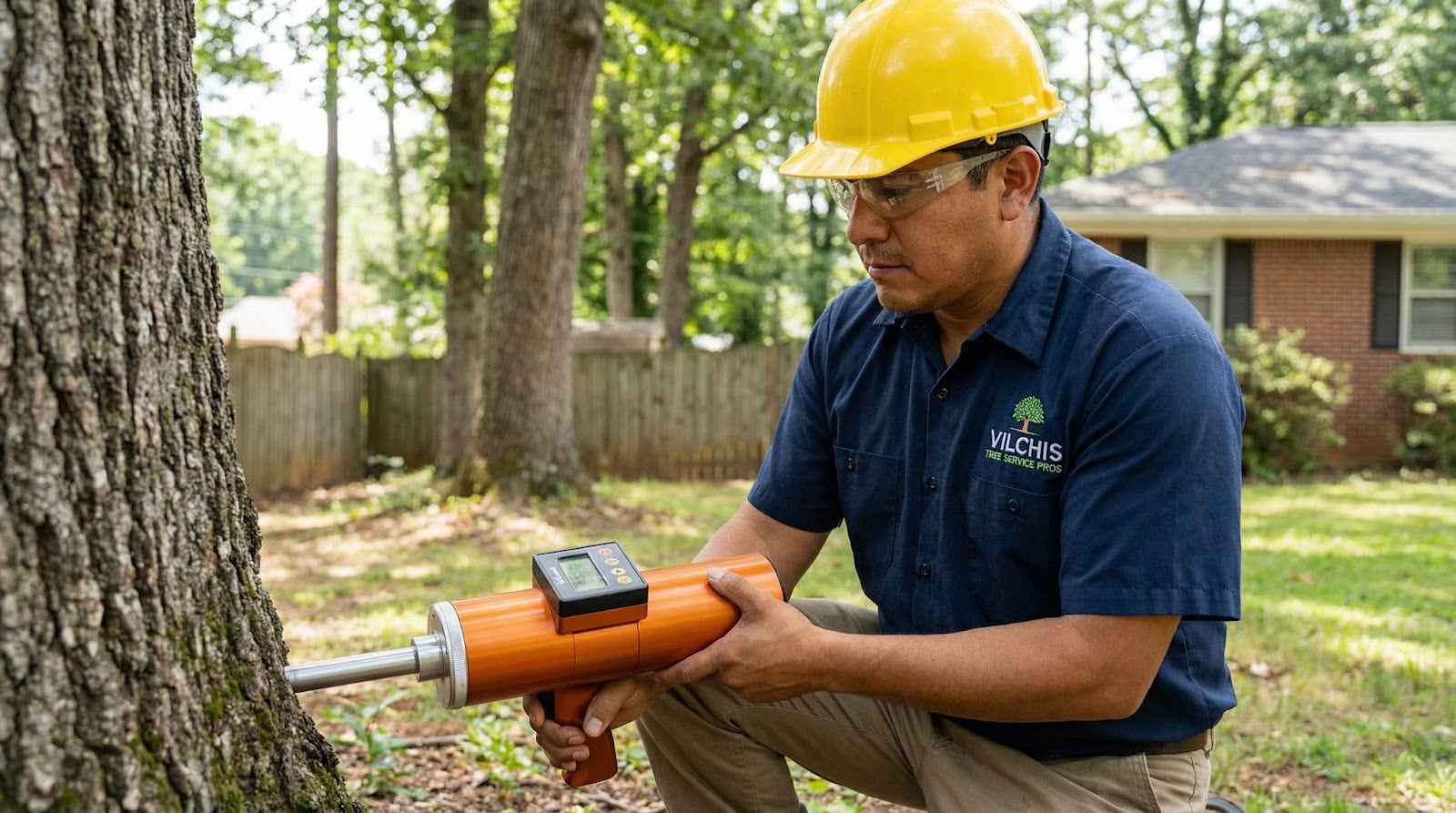
It is time to call a tree service company like Vilchis Tree Service Pros when:
- You see multiple warning signs such as vertical cracks, hollow trunk sections, root rot, or a sudden lean.
- You notice dead trees, dying trees, or hazardous trees close to the house, driveway, or utility lines.
- You are unsure how bad the problem is but your gut says a tree feels like a safety risk.
- You have many trees on the property and want a thorough tree inspection to keep them as safe as possible.
A certified arborist can identify hazards, explain what they mean in plain language, and lay out options. That might be proper pruning to remove large branches, support for mature trees that you want to preserve, or full tree removal where the risk is too high.