Ice Storm Tree Damage in Dallas, GA: Assessment & Emergency Removal Guide
When freezing rain coats North Georgia, ice-damaged trees become one of the most dangerous and costly hazards for Dallas homeowners. Ice can increase the weight of tree branches by up to 30 times, causing sudden failures that threaten homes, vehicles, and power lines. Vilchis Tree Services Pro of Dallas provides 24/7 emergency ice storm service and winter storm damage cleanup to help Paulding County residents recover quickly and safely.
How Ice Storms Damage Trees in North Georgia
Georgia experiences a major ice storm roughly every eight years, with some of the most damaging events on record hitting the northern half of the state. The January 2025 winter storm brought snow, sleet, and freezing rain across North Georgia, prompting a statewide state of emergency and leaving more than 120,000 people without power.
Ice damage occurs when freezing rain accumulates on tree branches, adding significant weight that healthy wood was never designed to bear. Here is how ice accumulation affects trees:
Less than ¼ inch of ice: Minor stress on branches; small twigs and already-weakened limbs may snap.
¼ to ½ inch of ice: Small branches and faulty limbs begin breaking; power outages become common.
More than ½ inch of ice: Crippling damage; large branches break, entire trees may split or uproot, and widespread power outages occur.
When ice exceeds half an inch, even healthy, well-maintained trees can suffer catastrophic failure. Wind compounds the problem by adding lateral stress to ice-loaded branches, accelerating breakage.
Common Types of Ice Damage to Dallas Trees
Freezing rain affects trees in several predictable ways. Recognizing these damage patterns helps Dallas homeowners decide when to call for emergency tree removal.
Branch Breakage
The most common result of ice accumulation is broken branches. Weight increases dramatically as ice builds up, and branches that were healthy before the storm can snap without warning. Hanging or partially detached limbs—sometimes called widow-makers—are especially dangerous because they can fall at any time.
Split Trunks and Codominant Stems
Trees with two or more main stems originating from the same point (codominant stems) are highly susceptible to splitting under ice load. Species like Bradford pears, red maples, and silver maples often develop this growth pattern and are among the first to fail during winter storms.
Uprooted Trees
Saturated or frozen soil combined with the added weight of ice can cause root failure, leading to partially or fully uprooted trees. This is particularly common for trees with shallow root systems or those growing in compacted urban soils.
Crown Loss
When multiple large branches break, trees can lose a significant portion of their crown. If more than 50 percent of the crown is lost, the tree may struggle to survive the following growing season.
Which Trees Are Most Vulnerable to Ice Damage?
Certain tree species and structural characteristics make some trees more prone to winter storm damage than others. In Dallas and Paulding County, watch for these high-risk trees on your property:
Fast-Growing Species with Weak Wood
Silver maples, willows, and Bradford pears grow quickly but develop softer wood that breaks more easily under ice load. These species are notorious for storm damage across Georgia.
Trees with Included Bark
Narrow branch angles with bark trapped between stems create weak attachment points. Red maples and Bradford pears often have this defect, making them prone to splitting.
Pine Trees
While Georgia’s pines can handle moderate ice, they do not recover as well as hardwoods from major damage. If ice causes your pine to lose a large section of the top or main stem, the tree often cannot be saved.
Trees with Large Canopies
The larger the crown surface area, the more ice accumulates. Mature oaks, tuliptrees, and sycamores can collect enormous ice loads, increasing the risk of branch or trunk failure.
Previously Damaged or Diseased Trees
Any pre-existing weakness—old storm damage, decay, pest infestation, or disease—makes trees far more likely to fail when ice adds stress.
Safety Steps After an Ice Storm in Dallas
After freezing rain moves through Paulding County, resist the urge to immediately start cleanup. Ice-damaged trees are unpredictable, and safety must come first.
Wait for the Ice to Thaw
Do not attempt to shake or knock ice off branches. This can cause additional damage or trigger sudden breakage. Allow ice to melt naturally before assessing damage up close.
Stay Away from Downed Power Lines
If a tree or branch has fallen on or near a power line, stay far away and call your utility company immediately. Never attempt to move debris near electrical lines yourself.
Inspect from a Safe Distance
Walk your property and look for hanging branches, leaning trees, cracked trunks, and uprooted root balls. Use binoculars to inspect the upper canopy without standing directly under damaged trees.
Document the Damage
Take photos and videos of all ice damage for insurance purposes before any cleanup begins. This documentation will support your claim and show that you took reasonable steps to protect your property.
Contact a Professional
If you find significant damage; especially trees on structures, blocking driveways, or near power lines—call an emergency tree service immediately. Ice-damaged trees require professional assessment and removal.
When to Call for Emergency Ice Storm Service
Not every ice-damaged tree is an emergency, but some situations require immediate professional attention. Contact Vilchis Tree Services Pro for rapid response tree removal if you have:
A tree or large branch on your house, garage, shed, or vehicle
Ice-damaged trees touching or near power lines
Cracked or split trunks that could fail at any moment
Trees blocking your driveway or access for emergency vehicles
Large hanging branches over walkways, entrances, or children’s play areas
Uprooted trees leaning toward your home or a neighbor’s property
Professional crews have the training, equipment, and insurance to handle hazardous removals safely—including trees in confined spaces, near structures, or entangled with utility lines.
Why Professional Winter Storm Tree Removal Matters
Ice-damaged trees behave unpredictably. Internal cracks, twisted fibers, and compromised root systems can cause sudden failure while you are cutting or even standing nearby. Attempting DIY removal on large or structurally damaged trees puts you at serious risk.
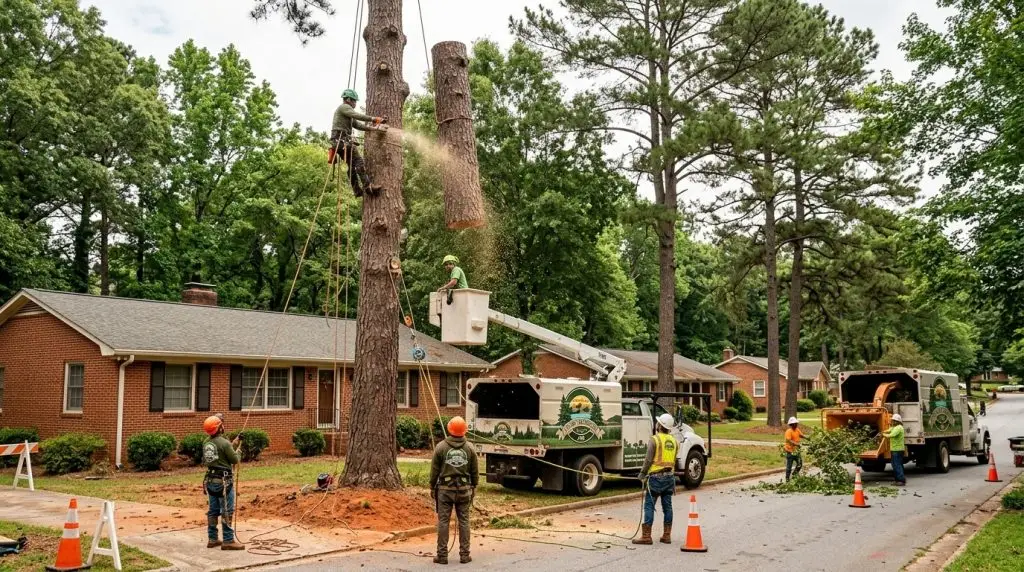
Certified tree removal crews use proper rigging, safety ropes, bucket trucks, cranes, and specialized cutting techniques to dismantle ice-damaged trees safely. Professional winter storm damage cleanup also includes:
Technical removals over roofs, driveways, fences, and vehicles
Coordination with utility companies when trees contact power lines
Controlled lowering of heavy limbs to protect your home and landscaping
Complete debris removal, including brush hauling, log removal, and stump grinding
How Vilchis Tree Services Pro Helps Dallas Homeowners
Vilchis Tree Services Pro of Dallas is a local, fully insured tree company that specializes in fast, safety-first service for Paulding County homeowners. The team provides complete ice storm cleanup for Dallas trees, including emergency removal, structural pruning, stump grinding, and debris hauling.
Emergency ice storm services include:
24-hour rapid response for ice damage tree removal in Dallas, GA
Safe removal of frozen, cracked, or hanging branches near homes and power lines
Cutting and clearing fallen trees from driveways, yards, and structures
Assessment and removal of hazard trees before they cause additional damage
Full debris removal and chipping to restore your property after winter storms
Assessing Ice-Damaged Trees: Can They Be Saved?
After the ice melts and immediate hazards are cleared, homeowners often wonder whether damaged trees can recover. Here are key questions to guide your assessment:
Is more than 50 percent of the crown intact?
Trees that retain at least half their branches typically have enough foliage to sustain themselves through the next growing season. Those with less than 50 percent remaining face a tougher recovery.
Has the main leader been lost?
For species that depend on a central leader for upward growth (like pines), losing the top often means the tree cannot recover its natural form and may decline over time.
Are the wounds large relative to the branch or trunk?
Larger wounds are slower to seal and leave the tree vulnerable to disease, decay, and pests. Multiple large wounds reduce the chance of full recovery.
Is the trunk cracked or split?
Cracks in the main trunk are serious structural defects. A cracked trunk may require removal, even if the rest of the tree looks healthy.
If you are unsure whether a tree can be saved, schedule a professional ice storm assessment. An experienced arborist can evaluate the damage and recommend whether to prune, monitor, or remove the tree.
Preventing Future Ice Storm Damage
While you cannot stop freezing rain, proactive tree care reduces how much damage your property suffers when winter storms hit Dallas.
Prune Regularly
Eliminate codominant stems and weak branch attachments while trees are young. Remove dead, diseased, or crossing branches that are more likely to fail under ice load. Reducing canopy density also decreases the surface area available for ice accumulation.
Remove High-Risk Trees
If you have fast-growing species with weak wood (silver maples, Bradford pears, willows) near your home, consider replacing them with more ice-resistant trees before the next storm season.
Schedule Annual Inspections
A professional arborist can identify structural defects, included bark, and decay that make trees vulnerable to ice damage. Addressing these issues before winter weather arrives prevents costly emergencies.
Choose the Right Trees
When planting new trees, select species with strong wood, good branch structure, and proven resistance to ice. Oaks, hickories, and ginkgos tend to fare better in ice storms than fast-growing ornamentals.
Areas Served in Paulding County
Vilchis Tree Services Pro serves Dallas and surrounding Paulding County communities, including areas near Highway 278, Highway 61, Hiram, and nearby neighborhoods. The team handles both residential and commercial properties—from subdivision lots and rural acreage to businesses that need cleared parking lots and safe access after winter storms.
Local knowledge matters. The Vilchis team understands Paulding County soil conditions, common Georgia tree species, and how repeated winter weather affects them over time.
Get Help from Vilchis Tree Services Pro Today
If your property has ice-damaged trees after a winter storm, do not wait for conditions to worsen. Contact Vilchis Tree Services Pro of Dallas for fast, professional emergency tree removal and ice storm cleanup anywhere in Dallas, GA and Paulding County.
Visit the Dallas service page or call for a free estimate and on-site assessment. A local emergency tree specialist will help you make your property safe again and prepare your trees for the next North Georgia winter storm.