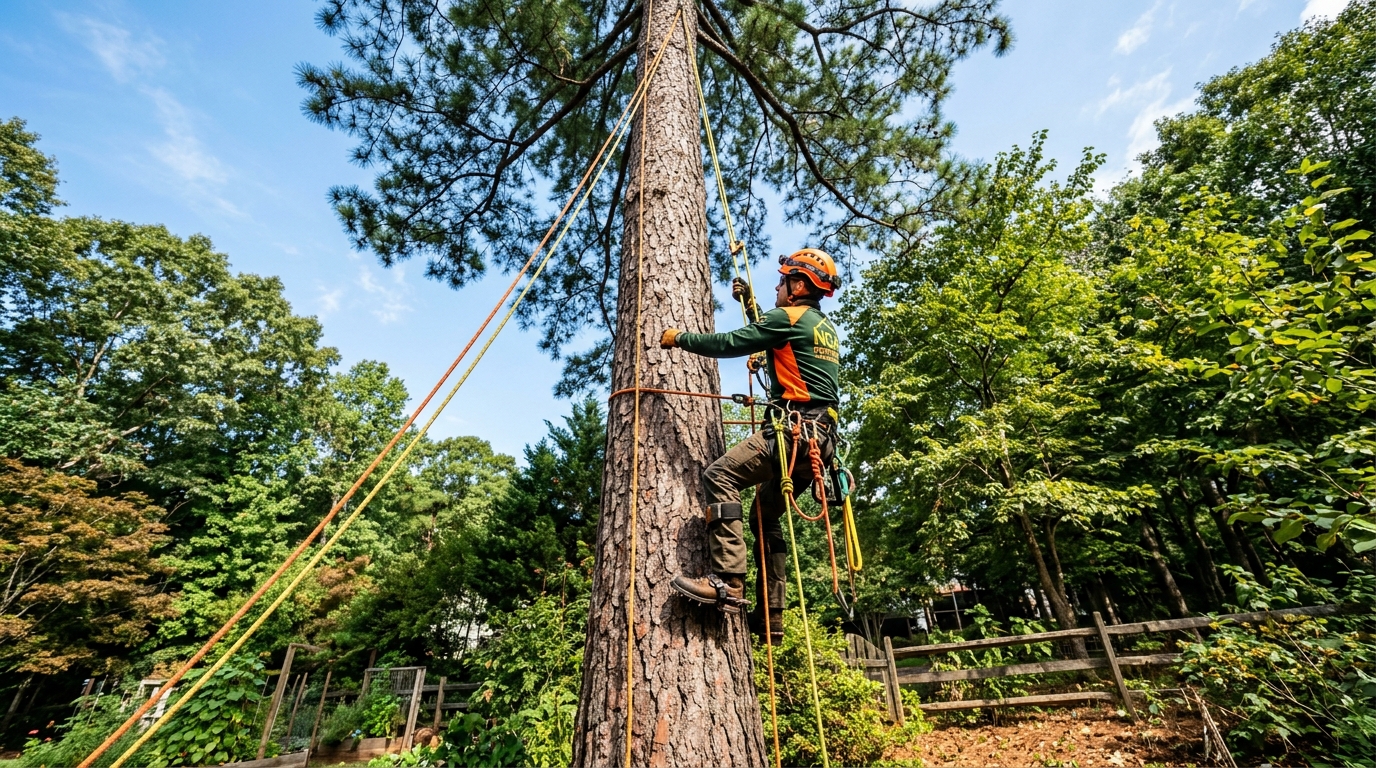
Leaning Trees: When a Lean Becomes a Safety Risk
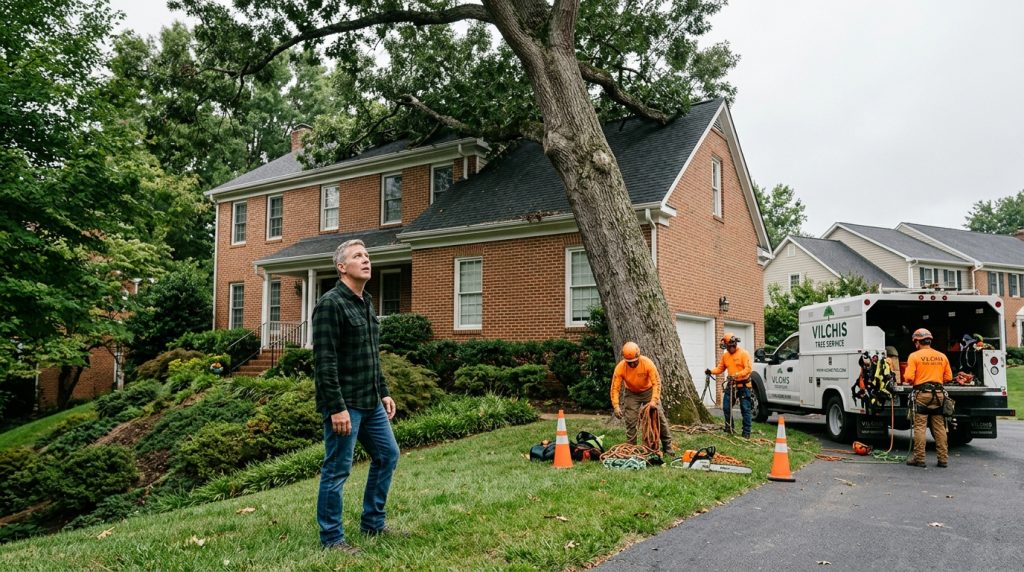
A slight lean can be normal for some tree species, especially if they grew that way from a young age. The real concern is leaning trees that start to tilt more after storms, heavy rain, or soil changes. In Georgia, soft clay soil and strong winds can shift a tree’s roots in just a few hours.
Warning signs a leaning tree may need removal include:
- New or worsening lean compared to last season.
- Soil lifting, cracking, or mounding on one side of the tree.
- Tree’s roots pulling out of the ground or visibly broken.
- Large trees leaning over houses, driveways, or power lines.
Across Kennesaw and Marietta, we see many trees start to lean after repeated storms. During a tree risk assessment, we look at the root system, trunk damage, and the direction of the lean. If the structural support is compromised and the tree is over a target like a home or utility lines, removing the tree is often the best course of action.
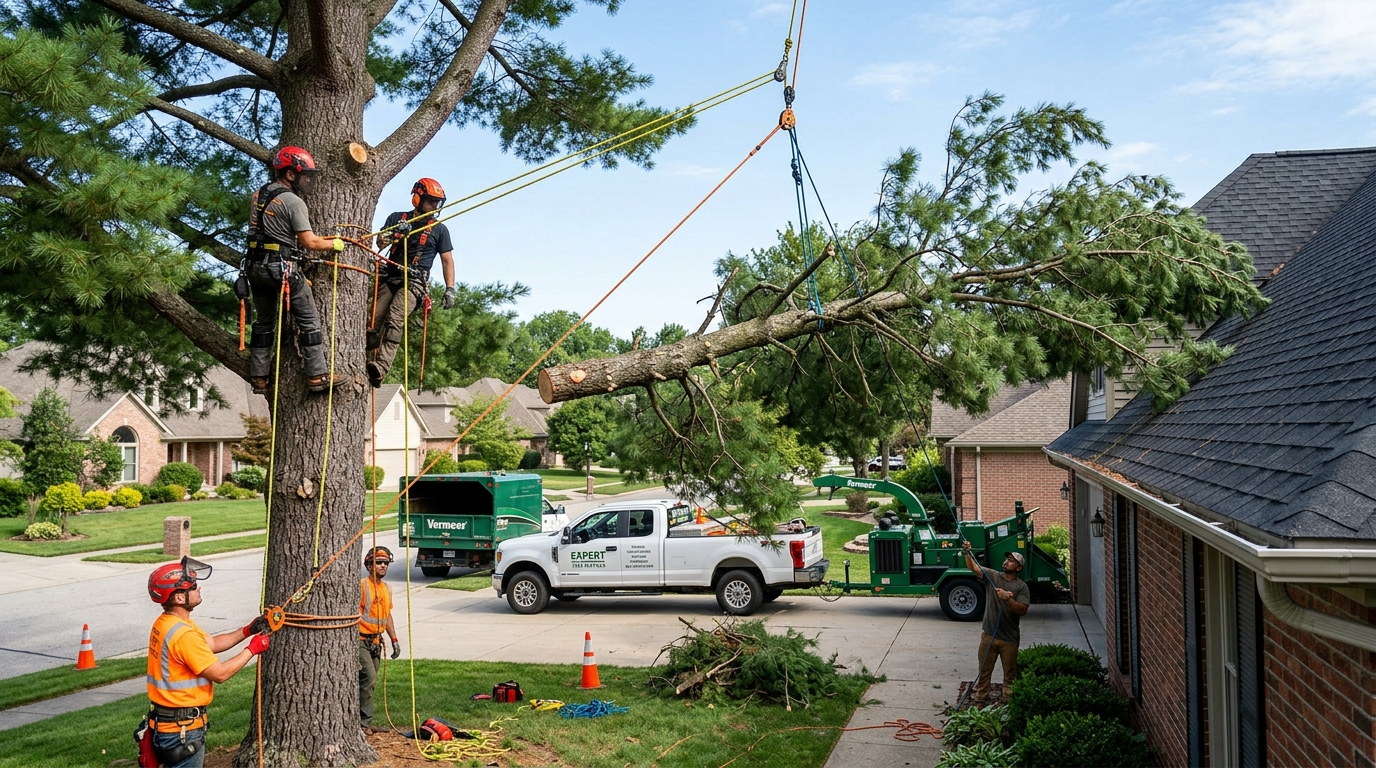
Dead Branches: Small Clues That Point to Big Problems
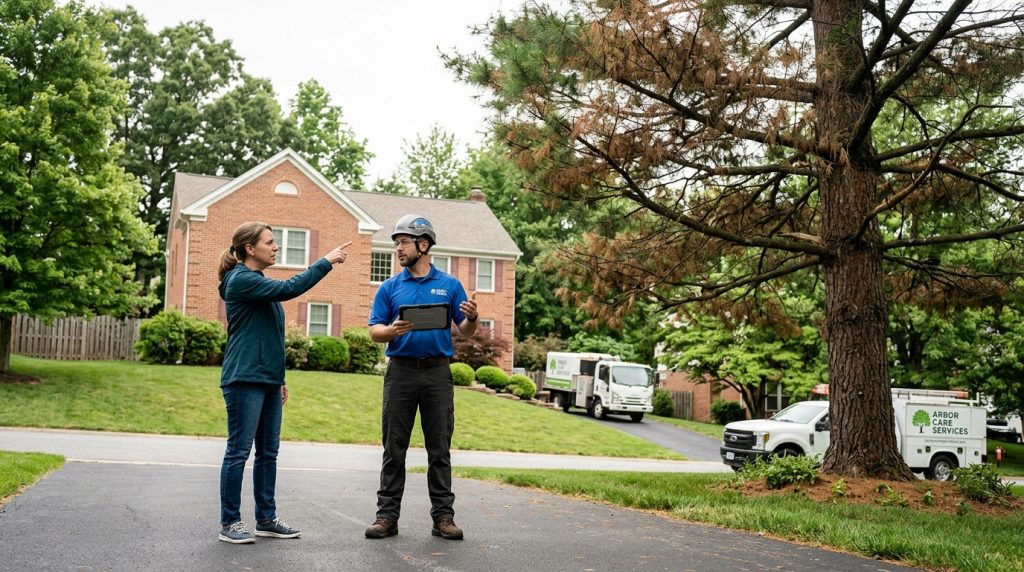
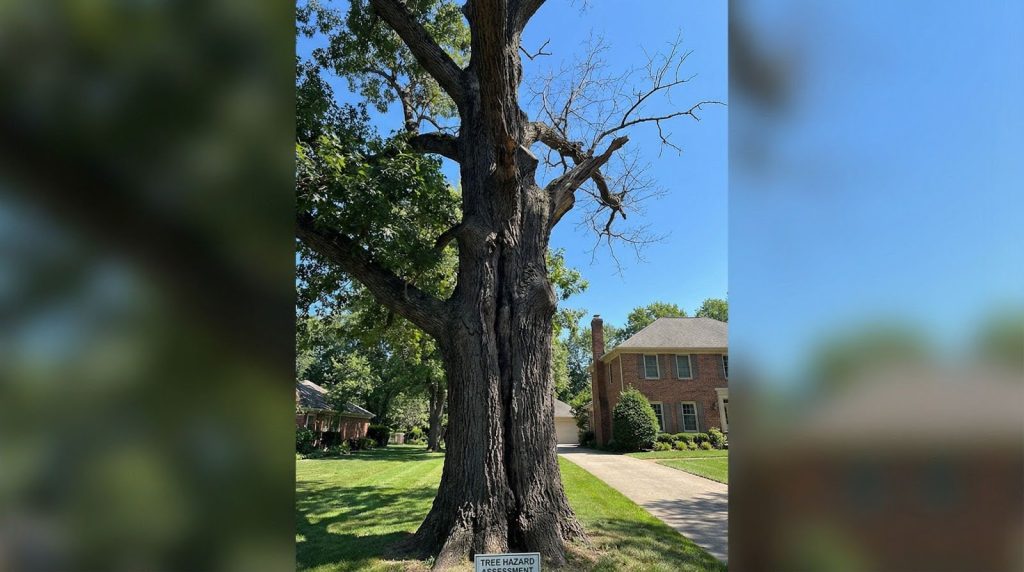
Dead branches and large dead branches in the crown are some of the most common visible signs that a tree is in trouble. Even if the trunk looks solid, dead branches can fall at any time and cause property damage or personal injury.
Look for these signs in the canopy:
- Branches with no leaves during the growing season.
- Small branches that snap easily and are dry inside.
- Large dead branches hanging over roofs, cars, or play areas.
- Sections of the crown that look thin, bare, or uneven.
We see this pattern on many trees in Acworth, Dallas, and Kennesaw after years of stress from drought, pests, or root damage. In some cases, careful pruning can help. In others, the number and size of dead branches show that the tree is dying and may eventually die completely. When that happens, we talk through whether it is safer to remove a tree rather than wait for more limbs to fall.
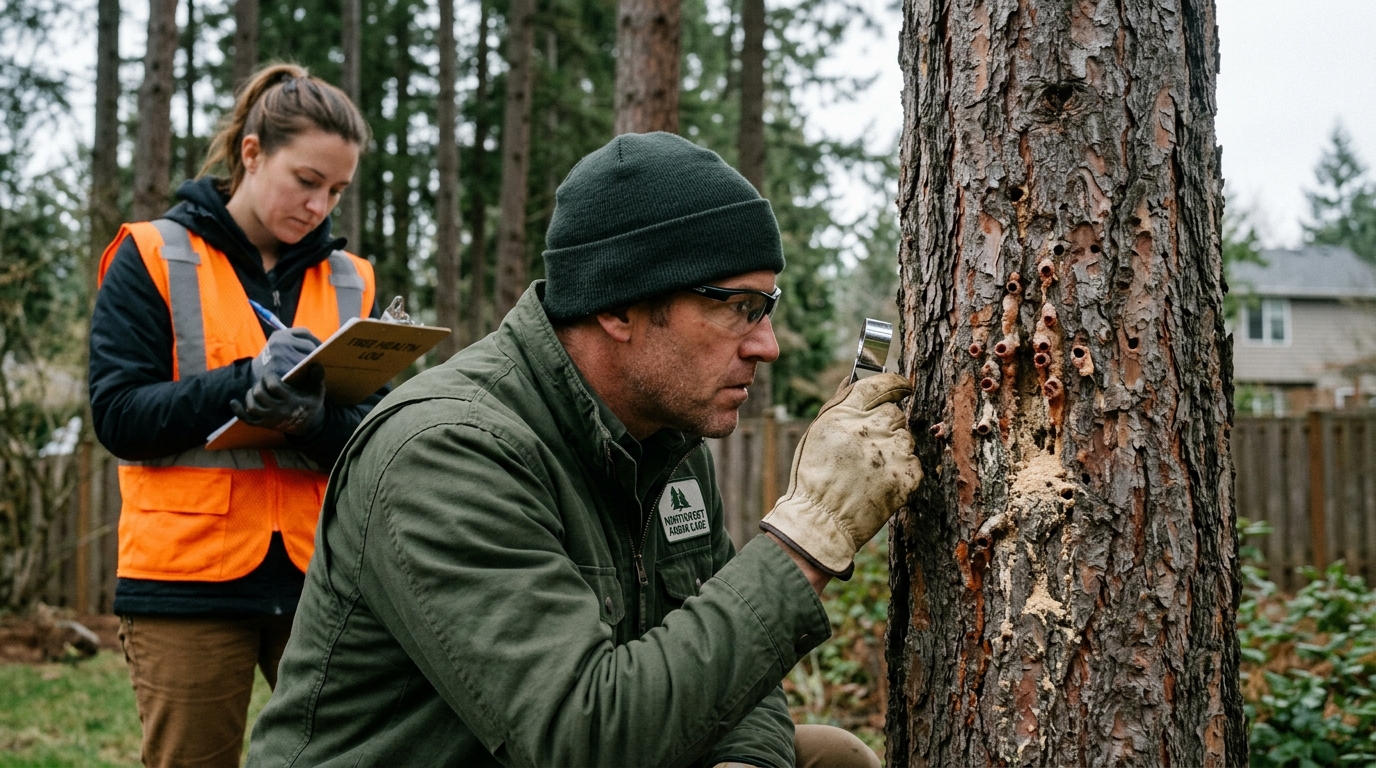
Hazardous Trees: From Healthy Trees to High Risk
Hazardous trees are not always dead trees. Some still have green leaves but have serious structural defects that make them unsafe. A tree becomes hazardous when its structural integrity is weak and it stands where a fall could cause harm.
Common issues that turn healthy trees into hazardous trees include:
- Internal decay or internal rot in the trunk.
- Structural weakness from past topping or poor pruning.
- Trunk damage such as deep cracks or large wounds.
- Root damage that reduces support on one side.
In our tree work across Marietta and the surrounding areas, we look not only at the tree itself but at nearby trees and what sits underneath. The more valuable the property under a high risk tree, the more urgent it is to address the problem.
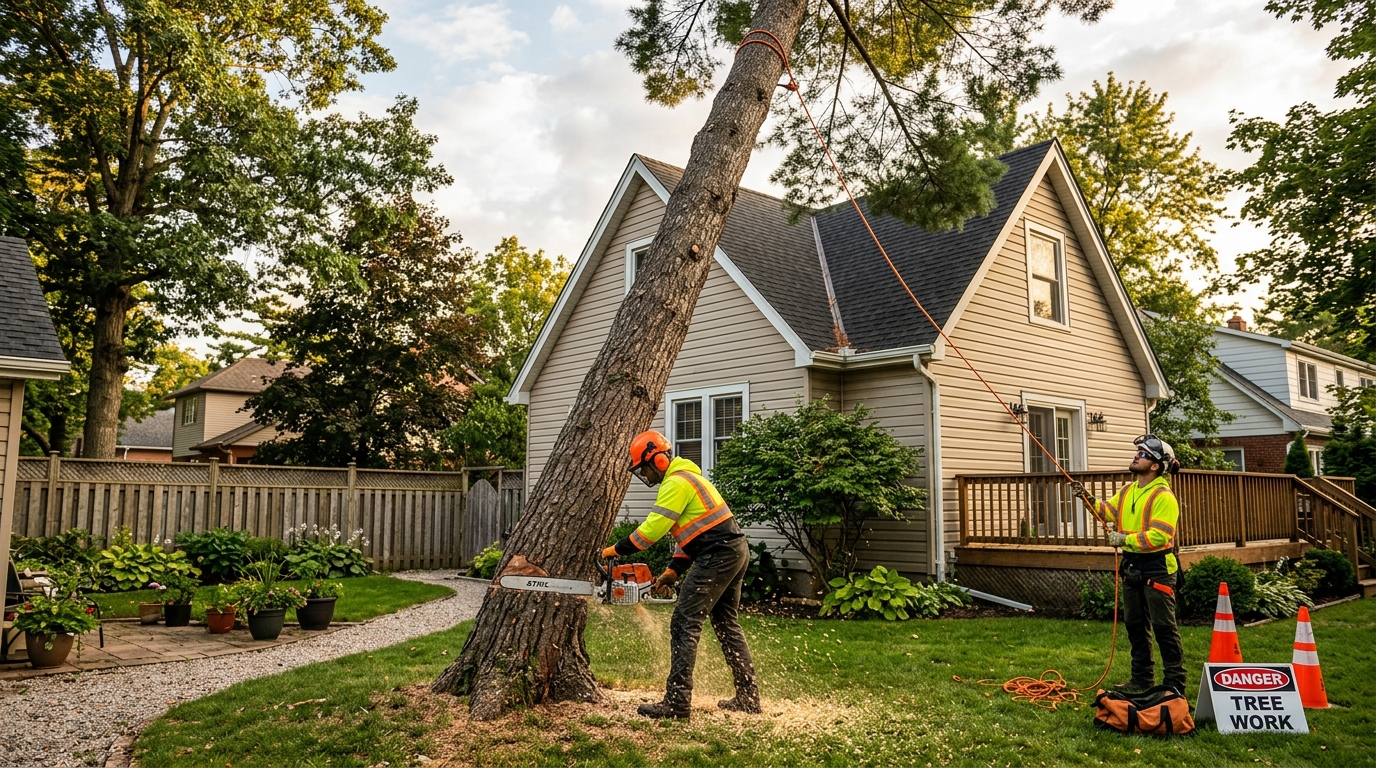
Dying Trees: Visible Signs You Should Not Ignore
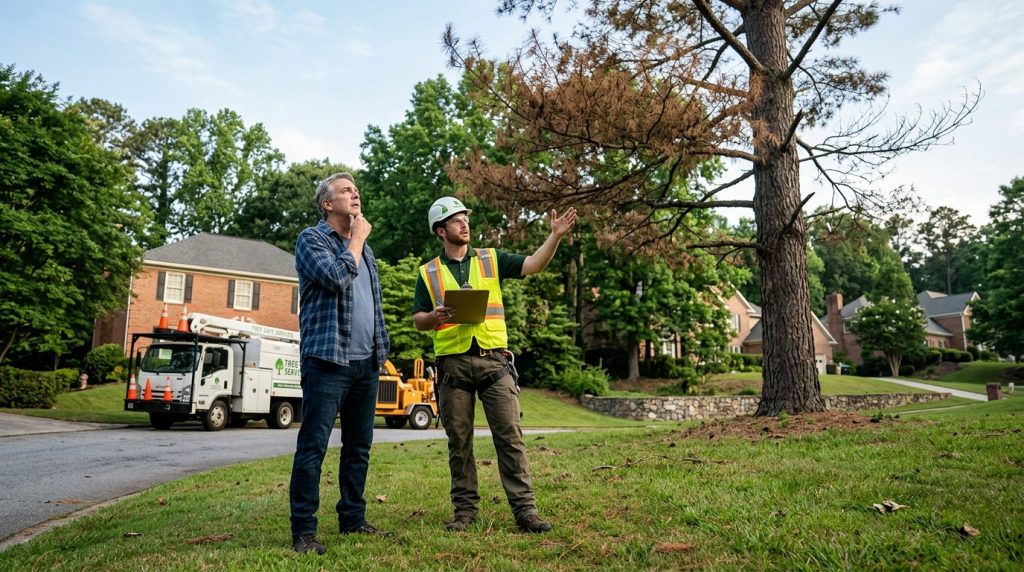
Dying trees often show a combination of problems rather than just one. You might see dead branches, thinning foliage, fungi growing at the base, and bark peeling away all on the same tree. These are clear warning signs that the tree’s overall health is failing.
Visible signs a tree may be dying include:
- Sparse or patchy leaf growth across the crown.
- Many small branches dying back at the tips.
- Bark falling off in large sections, revealing bare wood.
- Epicormic shoots (weak shoots) sprouting along the trunk after stress.
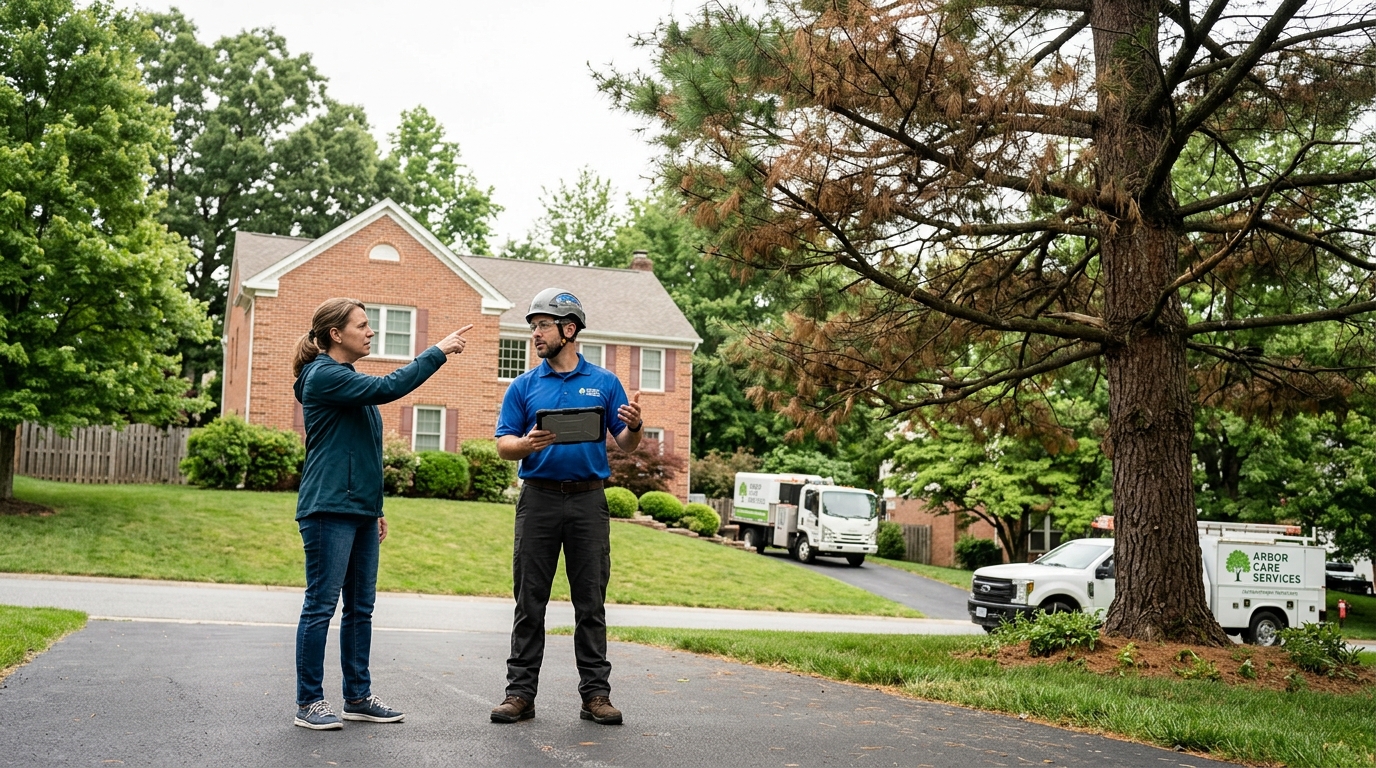
In many Georgia yards, we see trees decline slowly over several years. During this time, homeowners are often unsure whether to keep them or remove them. A certified arborist or experienced tree professional can review all the signs listed above and help you decide whether removal is the only option or if there is still a safe path to keep the tree.
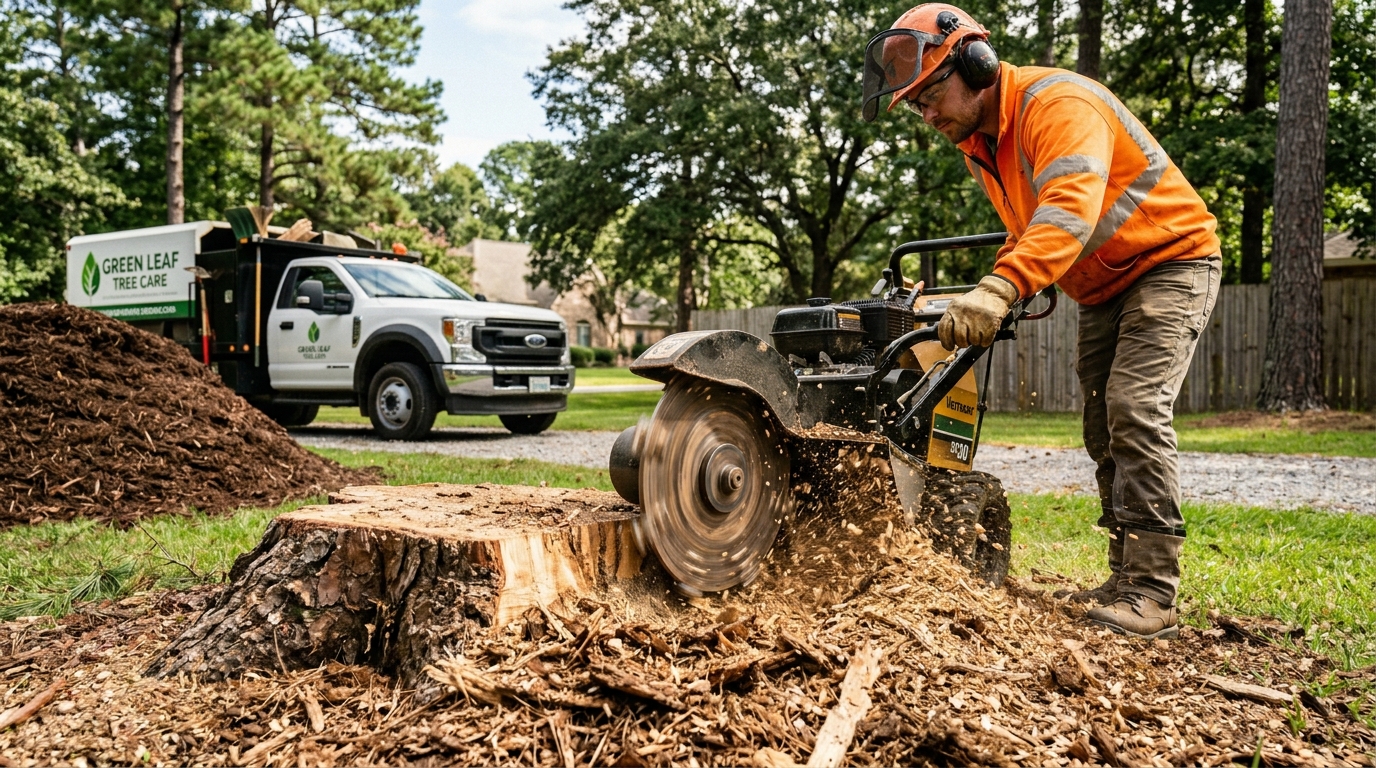
Decaying Roots and Fungi Growing at the Base
A tree’s roots are its foundation. Decaying roots reduce stability and make the tree much more likely to fall in strong winds. Often, the first visible signs of root problems are large fungus or mushrooms growing near the base.
Red flags around the base include:
- Mushrooms growing in clusters at the root flare.
- Large fungus or shelf‑like conks attached to the trunk.
- Soft, spongy wood around the lower trunk.
- Soil that looks sunken or heaved around the tree.
In our Georgia climate, fungi growing at the base usually means internal decay in the roots or lower trunk. Even if the top of the tree still looks green, the structural support at the bottom may be badly weakened. When we see decaying roots and large fungus together, we know the tree is at high risk of failure, especially in high winds. In those cases, removing trees near homes, driveways, or utility lines is often the safest choice.
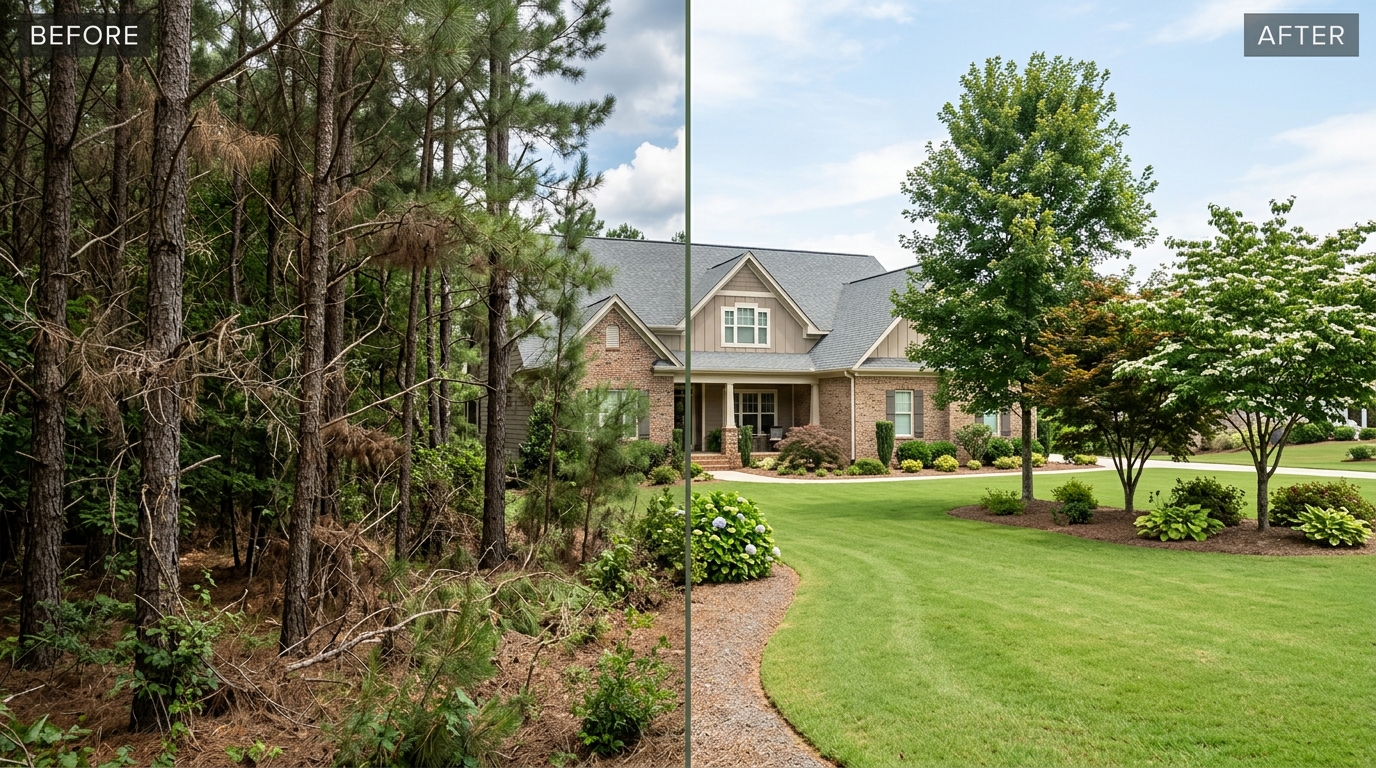
How Much Space a Falling Tree Can Cover
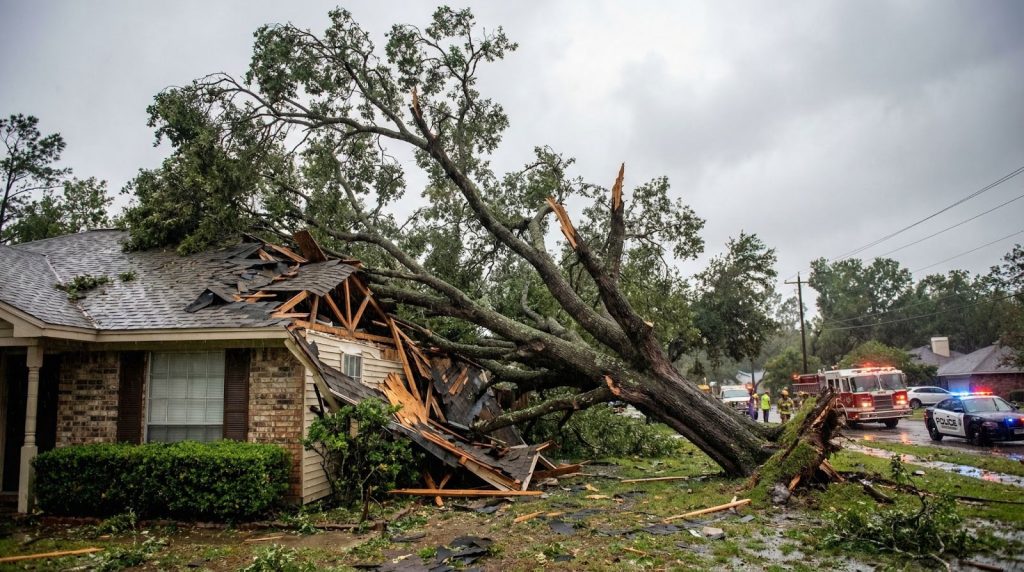
Many homeowners underestimate how much space a full‑grown tree can cover if it falls. A large tree can reach across driveways, into streets, and over neighboring yards. This is why we look closely at location, nearby trees, and what might be hit in any direction.
When we assess how much space a falling tree might cover, we consider:
- Tree height compared to nearby structures.
- Angle of lean and likely fall path.
- Slope of the ground and soil conditions.
- Presence of other trees that could deflect or redirect a fall.
Understanding this helps us judge the safety risk. A tall tree with structural defects directly over a house is much more urgent than the same tree in an open field. By removing a high risk tree before it fails, you reduce the chance of serious structural damage and keep your property safer.
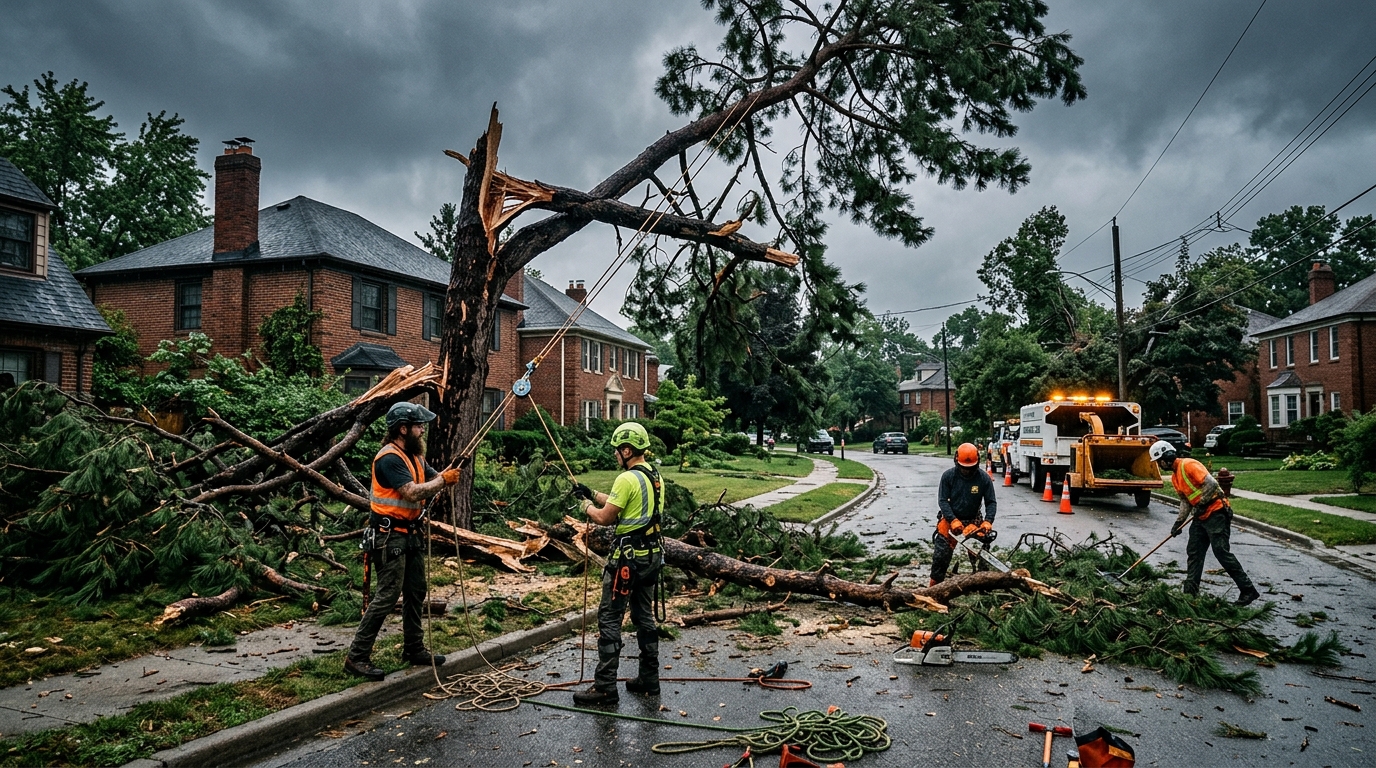
Example: A Fungal‑Damaged Tree Near a Driveway
Recently, we helped a homeowner in Marietta who had a large tree near their driveway. The tree looked mostly green in summer, but there were mushrooms growing at the base and a section of bark missing on one side.
During our tree inspection, we found internal decay and decaying roots on the side facing the driveway. There were also several large dead branches over the parking area. High winds were in the forecast. We explained the safety risk and the many factors involved, including the tree’s height and the potential for trunk failure.
The homeowner chose removal. Once we cut the tree down, you could see how much of the base was hollow. Leaving that tree there would have put cars, family members, and the property’s safety at risk.
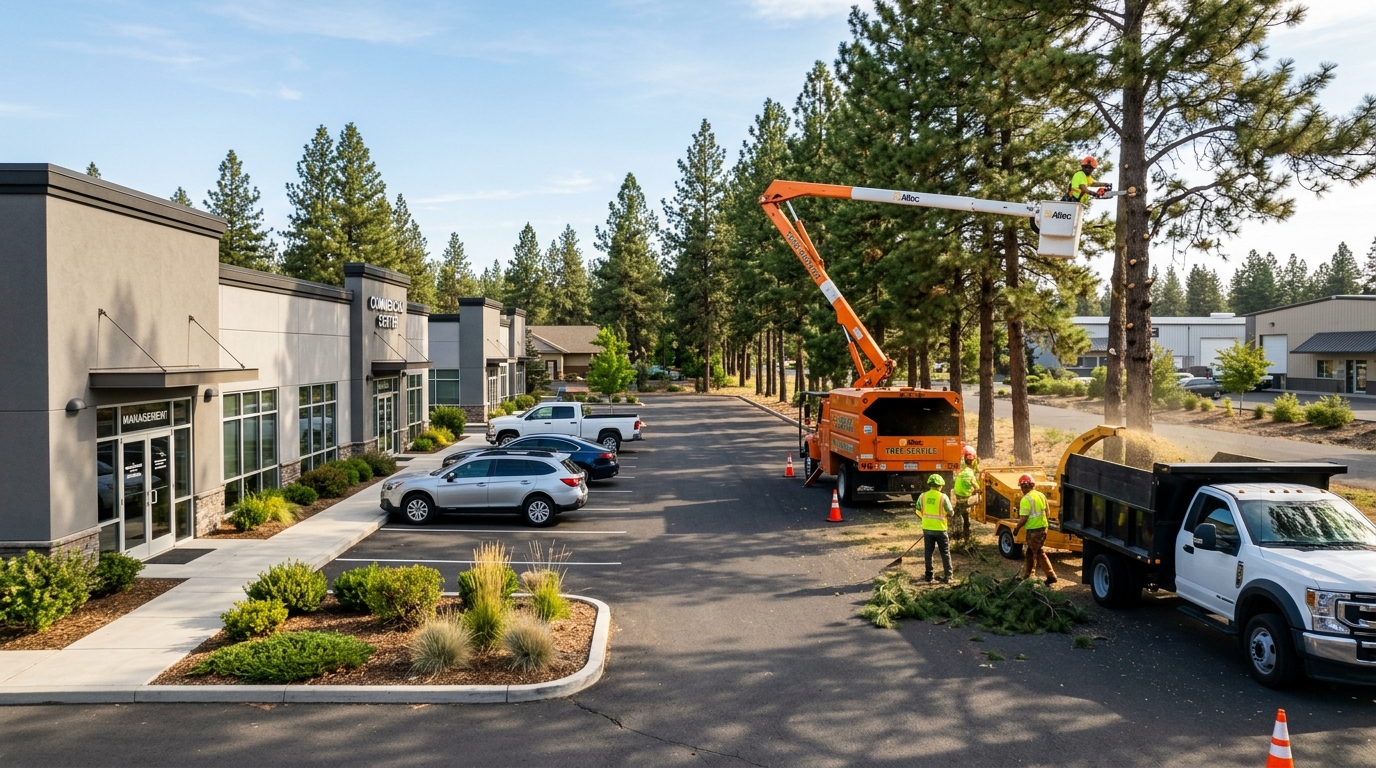
Why a Certified Arborist or Tree Professional Matters
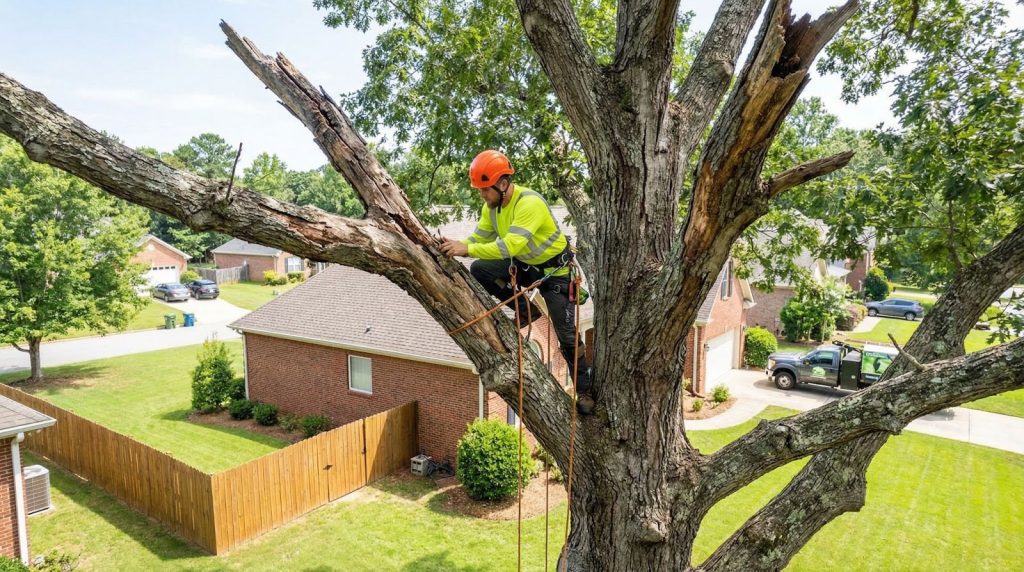
While not every situation needs an ISA certified arborist, working with qualified professionals is important for trees that show multiple warning signs. A trained eye can spot structural defects, internal decay, and root problems that are easy to miss from the ground.
Certified arborists and experienced crews can:
- Perform a thorough tree risk assessment.
- Explain the tree’s condition in simple terms.
- Recommend pruning, bracing, or removal based on risk.
- Work safely around power lines, buildings, and other trees.
In our daily work across Acworth, Kennesaw, Dallas, and Marietta, we act as that professional help for local homeowners. We combine safety, practical experience, and knowledge of how local soil and weather affect trees.